
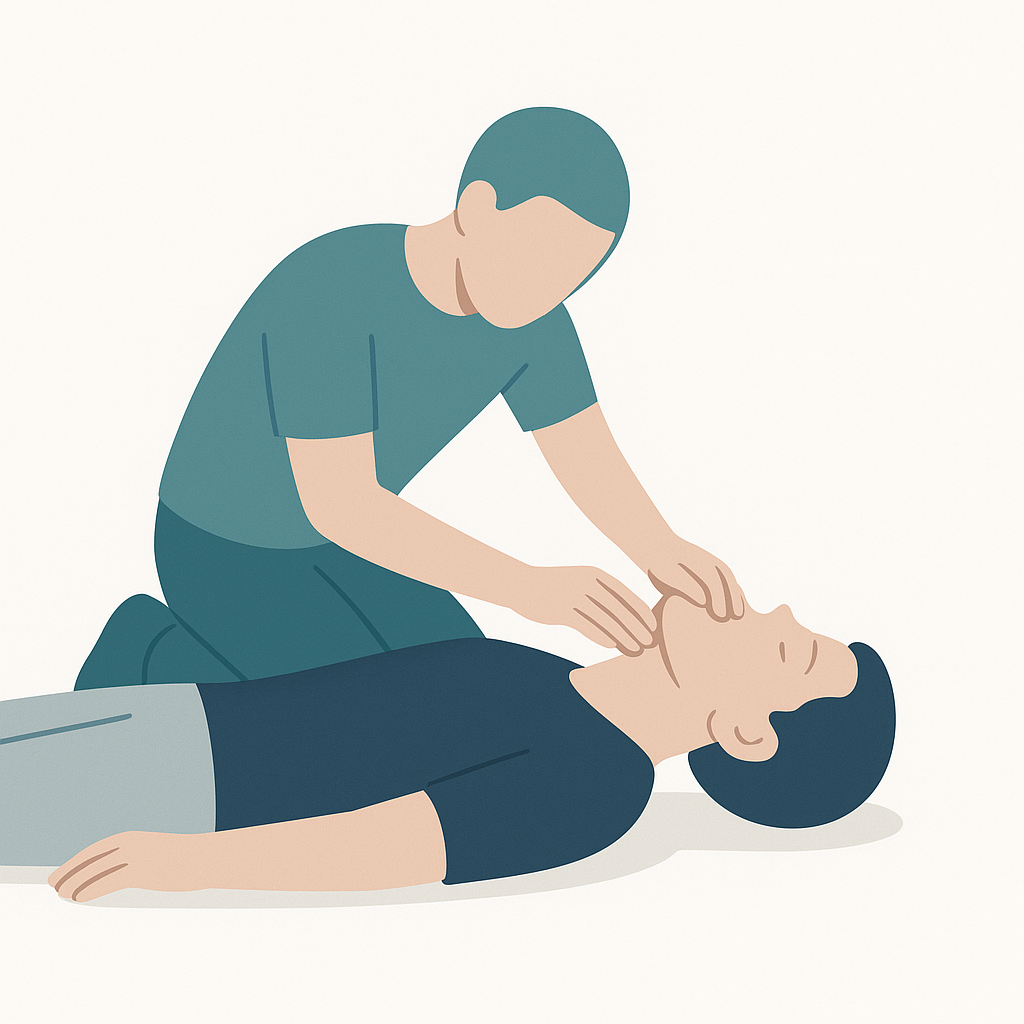
ABC (Airway, Breathing, Circulation)
ABC stands for Airway, Breathing, and Circulation. It is a very important idea used in first aid to help someone who is seriously sick or injured. These three words tell us the order to check and help a person’s body work properly. If one of these three is not working well, the person might be in danger. ABC helps keep life going until medical help arrives.
Airway means the path that air takes to get into the lungs. It starts at the mouth or nose and goes down to the lungs. If the airway is blocked, air cannot get in or out. This is very dangerous because the body needs air to get oxygen. Oxygen is what the body uses to make energy and keep organs working.
Breathing means the act of moving air into and out of the lungs. When a person breathes, their lungs take in oxygen from the air. The body uses oxygen to stay alive. Breathing also helps get rid of carbon dioxide, which is a waste gas made by the body. If breathing stops or is very weak, the person will not get enough oxygen. This can quickly cause harm.
Circulation means the blood flow around the body. The heart pumps blood through blood vessels to bring oxygen and food to all the body parts. Blood also helps take away waste. If the heart stops or blood flow is weak, the body parts will not get what they need to survive.
Why ABC is Important in First Aid
The ABC steps help first aiders find the most serious problems first. The body cannot live without a clear airway. Then it must be able to breathe so the oxygen reaches the lungs. Finally, the heart must keep pumping blood to send oxygen to the whole body. When one step is not working, the next steps cannot work properly either.
In an emergency, people trained in first aid will always start by checking ABC. This way, they know what to do first to help the person. Even if the problem looks small, ABC helps keep calm and take the right actions.
What to Watch For
You might see a person who is not breathing or has trouble breathing. They might make strange sounds, like wheezing, gasping, or choking. Their skin might look blue, pale, or cold. These can be signs that the airway is blocked or breathing is not working.
If the person’s heart has stopped or there is poor blood flow, they might feel weak, faint, or unconscious. Their skin might also be pale, cold, or sweaty. These signs mean circulation is not working well.
If you see any of these signs, follow the ABC steps to help.
How to Check and Help the Airway
The first step is to make sure the airway is open. Sometimes the tongue or something stuck in the throat can block the airway. The person cannot breathe if air cannot flow.
To check the airway, gently tilt the head back and lift the chin. This helps open the airway. If you see something blocking the throat, try to remove it carefully if it is safe and easy to do so.
Helping the airway stay open gives the best chance for air to reach the lungs.
How to Check and Help Breathing
Once the airway is open, check if the person is breathing. Look to see if their chest rises and falls. Listen for breath sounds. Feel if air moves out of their mouth or nose.
If the person is breathing normally, keep watching to make sure this continues. If they are not breathing or breathe in an unusual way, they need help quickly.
Helping with breathing may mean giving rescue breaths or making sure they are in a position that makes breathing easier. Remember to always keep the airway open.
How to Check and Help Circulation
After the airway and breathing are checked, check the circulation. The best way to do this is to see if the person has a pulse. A pulse is the beating of the heart that can be felt in the neck or wrist.
If there is no pulse or the heart has stopped, chest compressions may be needed. This helps the heart pump blood until medical help comes.
If circulation is poor, the person might be pale, cold, or lose consciousness. Help them by keeping them warm and comfortable while you wait for emergency help.
Keeping Safe When Helping
Always make sure the area is safe before helping. You do not want to get hurt too. Look for dangers like traffic, fire, or other risks. If it is not safe, call emergency services and wait for help.
Use protective equipment like gloves or a mask if you have them. Wash your hands before and after giving help if you can. This stops infections from spreading.
When to Call Emergency Services
Call Triple Zero (000) for emergency help if the person:
Is not breathing
Has no pulse or is unconscious
Has a blocked airway you cannot clear
Is very injured or sick in any way
Acts strangely or gets worse quickly
If you are not sure, it is always better to call 000 and ask for help. The operator can give you advice while you wait for an ambulance or other emergency workers.
Remember, calling for help can save a life.
Summary
ABC means Airway, Breathing, and Circulation. It is a simple way to remember what to check first when someone needs first aid.
First, make sure the airway is clear and open.
Next, check if the person is breathing normally.
Then, check the circulation by feeling for a pulse and looking for signs of good blood flow.
Helping with ABC is very important because the body needs air and blood to survive. When someone stops breathing or their heart stops working, emergency help is needed right away.
Always make sure you are safe before helping, and call 000 if the situation is serious. ABC is the start of first aid that can keep a person alive until trained help arrives.
Knowing about ABC can make you more confident in an emergency. You can help someone stay alive and get the right help quickly.