
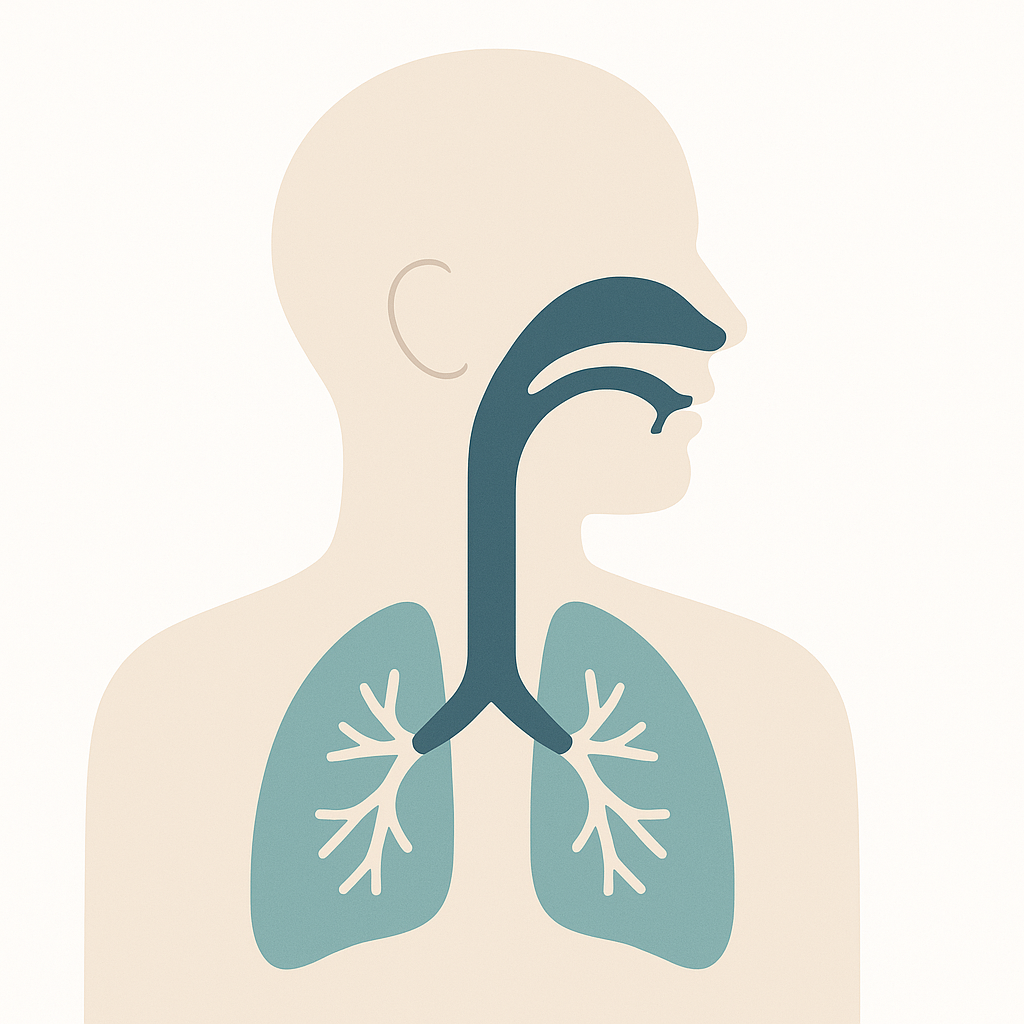
Airway
The airway is the path in your body that lets air go in and out of your lungs. It starts at your mouth and nose, goes through your throat, and down into your windpipe and lungs. The airway is very important because it allows you to breathe. Without air moving through the airway, your body cannot get the oxygen it needs to live.
In first aid, the airway is one of the most important things to check first. If someone’s airway is blocked or not open, they might not be able to breathe properly. When breathing stops or is very weak because of a blocked airway, the brain and body do not get enough oxygen. This can become very dangerous quickly. Helping to keep the airway open is a key part of first aid.
What Does the Airway Do?
The airway carries air from the outside into your lungs. When you breathe in, air travels through your mouth or nose, moves down your throat, and enters your windpipe. The windpipe then sends air into smaller tubes in the lungs so oxygen can enter the blood. When you breathe out, the process goes the other way. The airway lets air go out of the lungs.
Oxygen from the air is needed by every part of the body to work well. Your heart, brain, muscles, and all your cells depend on oxygen to keep you alive. The airway is the route air takes to keep oxygen flowing.
Why Airway Is Important in First Aid
In many emergencies, breathing can stop or become unsafe. This can happen if something blocks the airway, like food, vomit, or swelling. Sometimes, a person’s tongue can fall back and block the airway if they are unconscious. If the airway is blocked, no air can get into the lungs, so the body stops getting oxygen.
In first aid, making sure the airway is clear and open is the first and most critical step in helping someone who is sick or hurt. If the airway is blocked, nothing else can be done until air can reach the lungs. This is why first aiders always check the airway first before helping with breathing or circulation.
How Do You Know if an Airway Is Blocked?
A blocked airway can cause different signs and problems. Some things you might notice include:
– The person cannot speak or make sounds.
– They are coughing very hard, or making strange noises when trying to breathe.
– Their skin may look blue, especially on the lips or face.
– The person may clutch their throat with their hands.
– They might look frightened, panicked, or unable to breathe.
– The person might be unconscious and not responding.
If the airway is fully blocked, the person will try to breathe but no air will move in or out. This is an emergency.
Common Causes of Blocked Airways
Blockages can happen when something gets stuck inside the mouth or throat. Food and small objects are common causes, especially for children. If someone is choking, it means their airway is partly or fully blocked.
Other causes include:
– Swelling of the throat or tongue because of an allergic reaction.
– Fluid or vomit in the mouth blocking the airway.
– Injury to the face or neck that causes swelling or bleeding.
– Loss of muscle control when unconscious, which allows the tongue to fall back.
How First Aid Can Help the Airway
In first aid, the goal is to keep the airway open and clear. This allows air to flow to the lungs and oxygen to reach the body. Here are some general ways first aid helps the airway:
If the person is unconscious but breathing, you can gently tilt their head back and lift their chin. This helps move the tongue away from the back of the throat and opens the airway.
If the person has something stuck in their throat and is choking, special actions might be needed to help clear the blockage. These actions aim to force air into the lungs or push the blockage out.
If the person is vomiting or has fluid in their mouth, you can turn them on their side to let the fluids drain so they do not go into the lungs.
It is important to act carefully so the person does not get hurt more. Always watch the person closely and be ready to get help.
General Safety When Dealing with the Airway
Before helping, make sure the area is safe for both you and the person needing help. If there is any danger, like traffic or fire, move the person only if it is safe and necessary.
Try to calm the person and speak to them softly. Panicking can make it harder for breathing, so staying calm helps.
Keep your hands clean if possible. Wear gloves if they are available and you are helping with mouth care or contact with body fluids.
Watch the person’s breathing and responsiveness at all times.
When to Call Emergency Services
If the person cannot breathe or is choking and unable to cough or speak, call 000 immediately.
Call emergency services right away if the person is unconscious, not breathing, or their skin looks blue or pale.
It is better to get professional help quickly in airway problems because the condition can get worse fast.
Tell the operator what is happening and follow their instructions carefully.
Remember, do not wait too long to call for help. Quick action can save a life.
Summary
The airway is the body’s path for air to go to the lungs. It is very important because breathing depends on a clear airway. If the airway is blocked, the person cannot get air or oxygen, which is very dangerous.
In first aid, checking and opening the airway is the first step when someone is hurt or sick. Helping to clear the airway can help the person breathe again and get the oxygen their body needs.
Make sure the scene is safe before helping. Look for signs of blockage, and call emergency services on 000 whenever the person cannot breathe properly or is unconscious.
Knowing about the airway helps you be ready to help someone in an emergency. Always stay calm and act safely.
Remember, breathing and airway problems need quick action. Your help can make a big difference.