
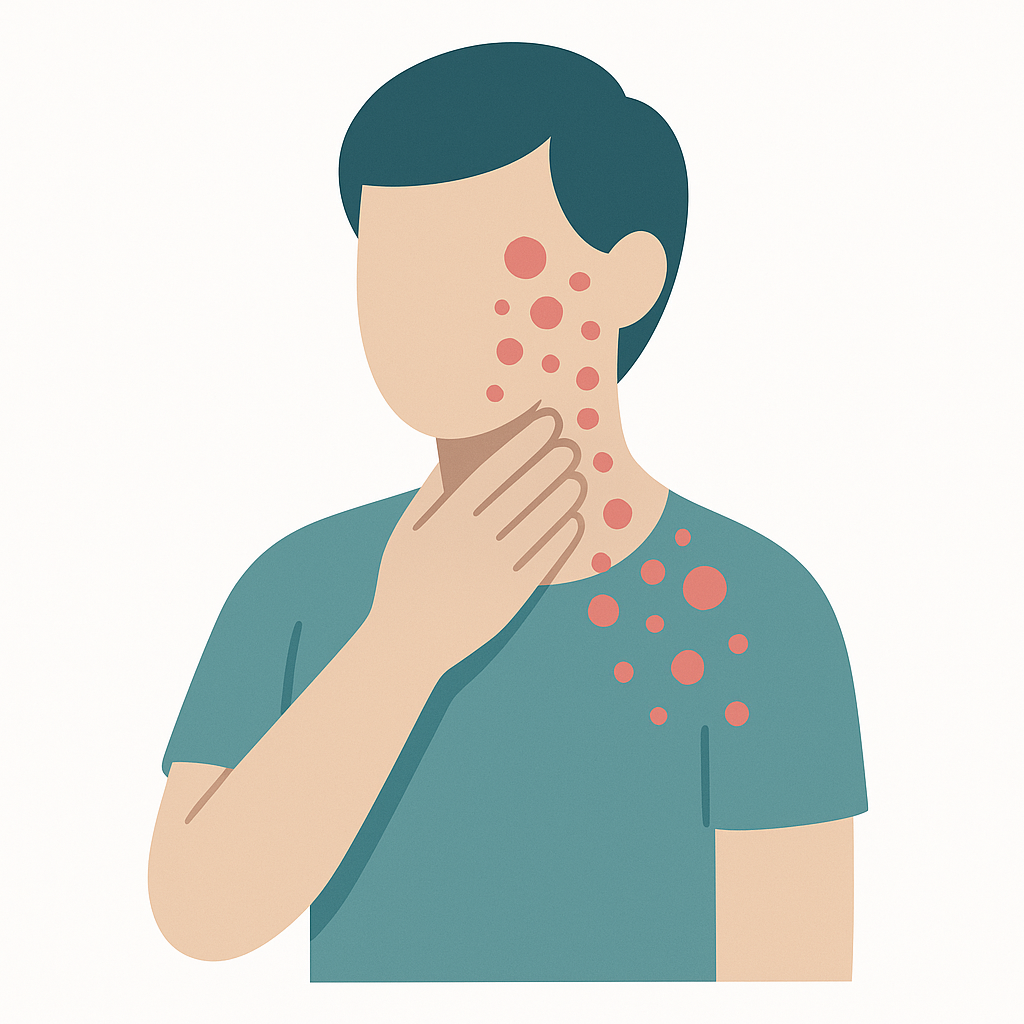
Allergic Reaction
An allergic reaction happens when a person’s body reacts in a strong way to something it thinks is harmful, even if it is usually safe. This “something” is called an allergen. Common allergens include foods like nuts, bee or insect stings, medicines, or things in the environment like pollen or dust. When the body meets an allergen, it tries to protect itself by releasing chemicals that cause swelling, redness, itchiness, or other changes. This reaction can be mild or very serious.
In first aid, knowing about allergic reactions is important because some reactions can be dangerous and need quick help. If someone has an allergic reaction, you might see or hear about changes in their skin, breathing, or how they feel. Understanding what to look out for and how to help can make a big difference.
What Happens During an Allergic Reaction?
When an allergen enters the body, the immune system—our body’s defence system—thinks it is harmful and sends out chemicals like histamine. These chemicals can cause different signs, like swelling, itchiness, or redness. Sometimes the body’s reaction is small, like a rash or sneezing. Other times it can be much bigger and more serious.
The reaction may affect just the skin, or it can affect breathing and blood flow. If the swelling blocks the throat or the person has trouble breathing, this can be life threatening and needs immediate help.
Signs to Watch For
People having an allergic reaction might show different signs depending on how bad the reaction is. Some common signs include:
– Itchy skin or rash
– Hives, which are raised, red, and itchy bumps on the skin
– Swelling of the face, lips, tongue, or throat
– Sneezing or a runny nose
– Difficulty breathing, wheezing, or noisy breathing
– Stomach pain, nausea, or vomiting
– Feeling dizzy, weak, or confused
If the reaction is very bad, it is called anaphylaxis. Anaphylaxis is an extreme allergic reaction that affects the whole body. Signs of anaphylaxis can include:
– Trouble breathing or swallowing
– Swollen face and throat
– A weak or rapid pulse
– Feeling faint or losing consciousness
– Blue or grey lips or face from lack of air
It is very important to recognise these signs quickly.
Why Allergic Reactions Matter in First Aid
First aid is the help given to someone who is hurt or sick before professional help arrives. In the case of an allergic reaction, quick first aid can save a person’s life. Knowing what allergic reactions look like can help you decide when to act and when to call for emergency help.
Some allergic reactions can get worse very fast. For example, anaphylaxis can cause the airway to close or the heart to stop. Without help, a person could die. That is why emergency help must be called if a severe allergic reaction is happening or might happen.
How You Can Help Someone with an Allergic Reaction
If you see someone showing signs of an allergic reaction, here are some things to remember:
Stay calm and keep the person calm too.
Ask if they have any known allergies or carry medicine for allergies, like an adrenaline auto-injector (sometimes called an EpiPen). This device can help stop a severe allergic reaction.
If they have their medicine and know how to use it, help them take it right away.
Watch their breathing closely. If they start to have trouble breathing, it is an emergency.
If the person becomes unconscious but is still breathing, carefully place them on their side in a safe position to keep their airway open.
No matter what, call 000 if the reaction is severe, if the person’s breathing changes, or if they lose consciousness. Emergency services can provide urgent treatment.
General Safety Tips
If you are helping someone with an allergy, try to keep the allergen away from them so they do not get worse. For example, if they are allergic to bee stings, avoid the area with bees.
Do not give them food or medicine unless you are sure it is safe for them.
If they have an allergy medicine device, only help them use it if you know how.
Always be ready to call 000 in Australia if the person is having difficulty breathing, is turning blue, losing consciousness, or their symptoms get worse quickly.
When to Call Emergency Services
You should call 000 right away for serious allergic reactions that might be life threatening. This includes:
– Trouble breathing or noisy breathing
– Swelling of the face, tongue, or throat that blocks airways
– Loss of consciousness or fainting
– Persistent vomiting or stomach pain with other signs
– Signs of shock, such as pale, cold or clammy skin, weak pulse, or confusion
Even if you are unsure, it is better to call for help. Paramedics can assess and treat the person quickly.
Understanding Allergies and Prevention
Some people know they have allergies and carry emergency medicine with them. It helps if friends or family members also understand the allergy and what to do in an emergency. Avoiding known allergens is the best way to prevent allergic reactions.
In some cases, wearing a medical alert bracelet can help others know about the allergy.
If you invite others to your home or share food with someone who has allergies, be careful to avoid the allergen.
Remember that allergic reactions can happen suddenly, even if a person has never had one before. If you see signs of an allergic reaction in someone else, take it seriously and get help.
Summary
An allergic reaction is when the body reacts strongly to something it thinks is harmful, causing symptoms like itching, swelling, or difficulty breathing. In first aid, it is important to notice the signs and get help quickly, especially if the reaction is severe or getting worse. Stay calm, help the person use their allergy medicine if they have one, watch their breathing, and call 000 for emergency assistance if needed. Avoiding allergens and knowing what to do can save lives. Being prepared and understanding allergic reactions helps keep everyone safe.