
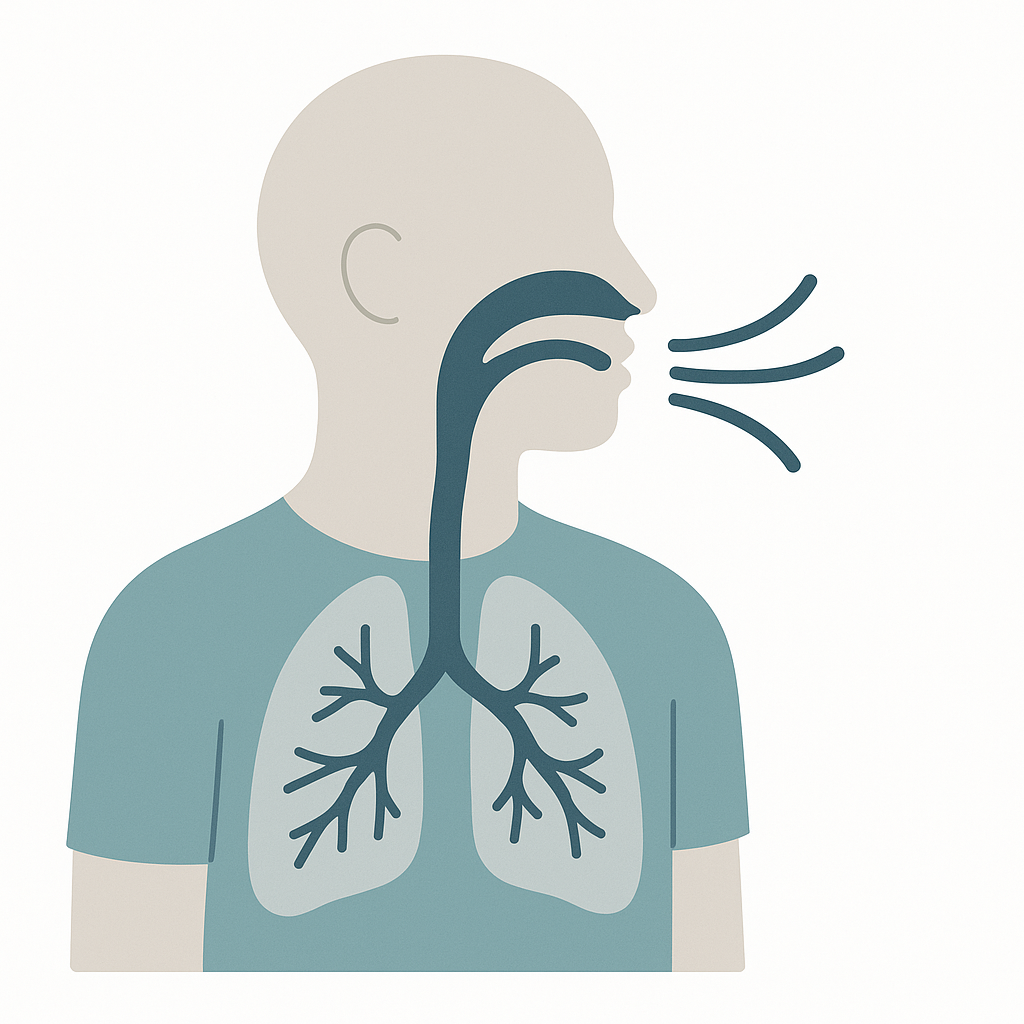
Breathing is the process that brings air into the lungs and sends out the air we do not need. It is how our body gets the oxygen it needs to work properly. Oxygen is a gas in the air that helps our cells make energy. Without breathing, the body cannot get oxygen and will stop working.
Breathing is very important for life. When someone is unconscious or injured, checking their breathing is one of the most important first aid steps. If a person is not breathing or breathing badly, it can be an emergency. Helping someone to breathe properly can save their life.
What happens when we breathe? When you breathe in, air goes through your nose or mouth, then down your throat and into your lungs. Inside the lungs, oxygen moves into the blood. The body then uses the oxygen to make energy and keep you alive. When you breathe out, you send out carbon dioxide, which is a waste gas your body does not need.
In first aid, it is important to check if a person is breathing normally. Normal breathing means the person is taking regular breaths that are not too fast or too slow. You can look to see if their chest moves up and down, listen for the sound of breathing, or feel for air on your cheek. Sometimes people breathe in a strange way or stop breathing, and this needs quick action.
If someone has stopped breathing or is breathing poorly, it could be because of things like choking, drowning, a serious injury, or a medical problem like a heart attack. If you see that a person is not breathing, or their breathing is very hard, irregular, or noisy, you should call for emergency help immediately by dialing 000 in Australia.
While waiting for help to arrive, basic first aid actions may include gently opening the person’s airway to make it easier for them to breathe. This can mean tilting the head back slightly and lifting the chin up to open the throat. These actions help air move freely in and out of the lungs.
It is also important to keep the person safe and comfortable. If the person is unconscious but breathing, placing them in the recovery position can help keep their airway clear and prevent choking if they vomit. If they are not breathing, trained first aid steps like CPR (cardiopulmonary resuscitation) may be needed to help prepare and support breathing until help comes.
In everyday life, breathing problems can show up as trouble catching breath, wheezing sounds, or feeling very tired and weak. If someone tells you they feel like they cannot breathe properly or they have chest pain, it is important to take this seriously. You should stay calm, help them to sit comfortably, and call 000 if the problem is bad or does not get better quickly.
Sometimes allergies or asthma can also cause breathing difficulties. These can make the airways narrow, making it hard to breathe. If you know the person has an asthma inhaler, you can help them use it if they become short of breath. Still, it is important to call for emergency help if their breathing is getting worse or they do not improve.
Breathing can be affected by many things. Smoke, chemicals, or dust in the air can irritate the lungs and cause coughing or trouble breathing. In such cases, getting to fresh air is important. If the person is suffering from smoke inhalation or other serious exposure, call 000 for help.
When you are helping someone with breathing problems, keep your own safety in mind. If the situation is dangerous, such as near fire, fumes, or electrical hazards, do not put yourself at risk. Call emergency services to get trained help.
Remember, breathing is life. If you see someone who is not breathing or is having great trouble breathing, call 000 right away. Your quick action can save a life.
In summary, breathing is how the body gets oxygen from the air and gets rid of waste gases. It is an automatic process, and we usually do it without thinking. In first aid, checking breathing is a key step to see if someone needs urgent help. Understanding signs of poor breathing and knowing when to call emergency services is very important for everyone.
Take care to observe any breathing problems in people you are helping. Stay calm, call for help if needed, and provide simple support like keeping the airway open until experts arrive. Breathing support is one of the most important parts of first aid and can make a big difference in emergencies.