
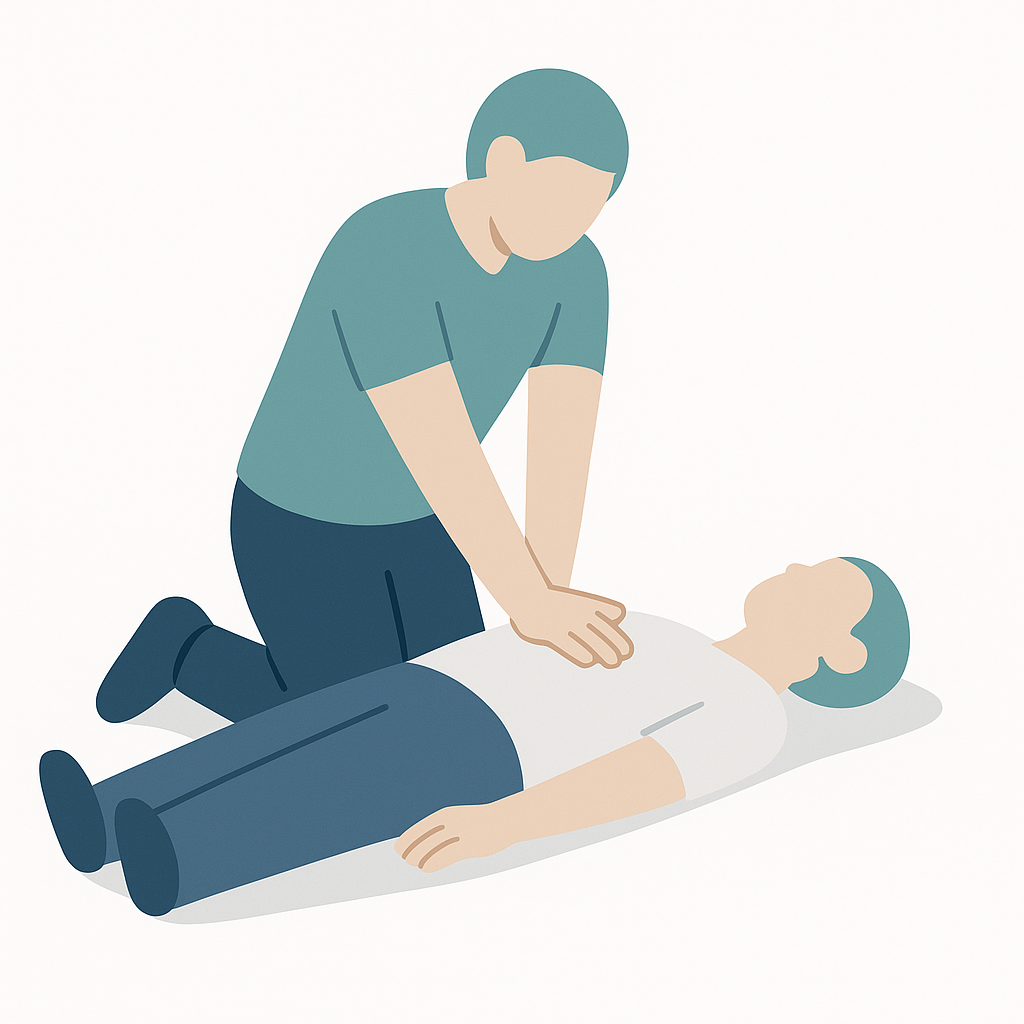
Chest Compressions
Chest compressions are a simple but very important first aid action used in emergencies when someone’s heart has stopped beating well. The heart is a strong muscle in the middle of the chest. It works like a pump to send blood all around the body. Blood carries oxygen and nutrients needed by all parts of the body to stay alive and work properly.
When a person’s heart stops beating properly, blood and oxygen can’t reach the brain and other vital organs. This can happen in cases like a serious heart attack, drowning, choking, or severe injury. If no action is taken quickly, the person can lose consciousness, and their chance of survival becomes very low.
Chest compressions help by pressing down firmly on the chest. This squeezes the heart and pushes blood out to the body. When you stop pressing, the heart fills again with blood. Pressing and releasing over and over helps keep blood flowing until professional help arrives or the heart starts beating again on its own.
Why chest compressions matter
Chest compressions are a key part of Cardiopulmonary Resuscitation or CPR. CPR helps keep a person alive when their heart and breathing have stopped. The main goal is to keep blood moving through the body so oxygen still reaches the brain and vital organs.
Without chest compressions, the brain can suffer damage within minutes because it needs a constant supply of oxygen. This damage can be permanent and life-changing. Early chest compressions increase the chance that the person’s heart will recover and that they will survive.
When you do chest compressions, you take action quickly. This can make the difference between life and death. Always think of chest compressions as a way to keep the heart pushing blood until help arrives.
What you might notice in an emergency
If you see someone suddenly collapse and they do not respond when you call them, they may be unconscious. Check if they are breathing normally by looking at their chest to see if it rises and falls.
If they are not breathing or they are breathing abnormally (for example gasping or making strange noises), their heart may have stopped working properly. This is when chest compressions can help.
Remember, it is important to call emergency services straight away by dialing 000. They can send trained medical help fast.
What chest compressions feel like
To give chest compressions, you press down hard and fast on the centre of the person’s chest with your hands one on top of the other. The chest presses down about 5 to 6 centimetres (about 2 to 2.5 inches) in adults. Then you let the chest come back up fully before pressing down again.
Doing this pushes the heart to pump blood through the body. You do this around 100 to 120 times every minute. This speed is about the same as the beat of the song “Stayin’ Alive”.
Always stay calm and steady while doing compressions. It can be tiring, but it is very important.
Who can do chest compressions?
Anyone can learn how to do chest compressions. Even without formal training, a person can help by pushing firmly on the chest if someone’s heart stops and they are not breathing properly.
If there are other people nearby, ask someone to call 000 while you start chest compressions. If you are alone, call 000 first if you can. Then start chest compressions right away.
You don’t need to worry about doing it perfectly. The most important thing is to begin compressions as soon as possible.
Safety when giving chest compressions
Chest compressions are done on a person who is unconscious and not breathing properly. It is important to make sure the area is safe before starting. Look around for dangers such as traffic, fire, or electrical hazards.
If possible, place the person on a flat, hard surface. This gives the best support for compressions to work.
If the person has an object in their mouth or food causing choking, try to remove it if you can do this safely before starting chest compressions.
Chest compressions may cause some injuries like bruising or broken ribs. This is okay because the goal is to save the person’s life. Don’t be afraid to press hard enough even if it might hurt the person.
When to stop chest compressions
Keep giving chest compressions without stopping until:
The person starts to breathe normally or move
Trained medical help takes over
You are too exhausted to continue
It becomes unsafe to stay where you are
If someone else can take over, swap to keep the compressions going.
Chest compressions are tiring, but every push helps keep the person alive.
What chest compressions do not do
Chest compressions alone do not fix the heart. They do not restart the heart’s natural rhythm like some medical machines do. Their job is to keep blood flowing until medical help arrives or more advanced treatment, like defibrillation, can be given.
Because chest compressions only help move blood by manual pushing, they work best when started as soon as possible.
Chest compressions should always be combined with other emergency actions if possible. This includes checking and opening the airway and giving rescue breaths if you are trained and confident.
Remember to call 000 in any serious emergency so ambulance paramedics can provide full care.
Summary
Chest compressions are a life-saving action in first aid. They help keep blood moving when someone’s heart stops beating properly. Pressing hard and fast on the chest pushes the heart to pump blood, giving oxygen to the brain and other organs.
You should begin chest compressions if a person is unconscious and not breathing normally. Always call 000 for emergency help right away.
Even if you have no training, starting chest compressions quickly can save a life.
Being calm, pressing firmly in the middle of the chest, and keeping a good rhythm are the main things you need to know.
Chest compressions are one of the most important first aid skills you can use to help someone in a medical emergency.