
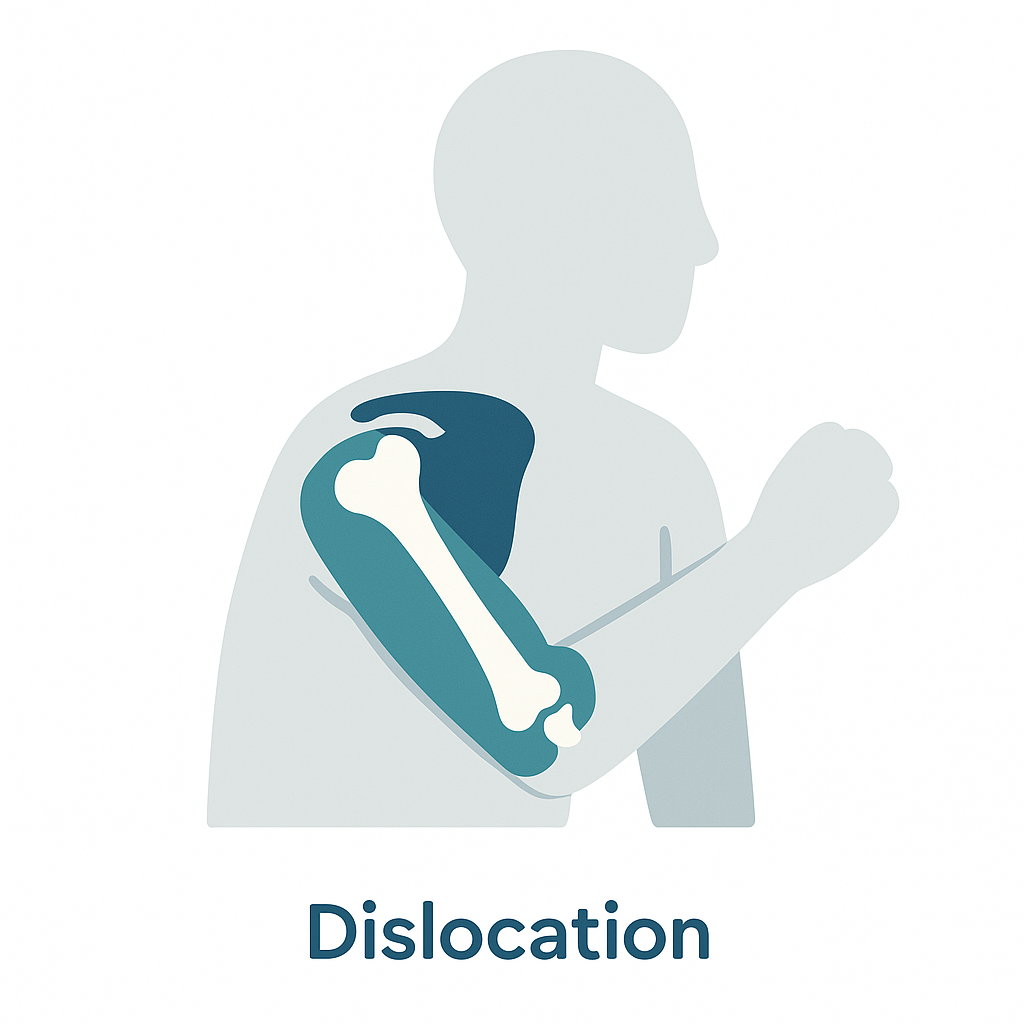
Dislocation
A dislocation happens when the bones in a joint move out of their normal place. Your joints are where two or more bones meet. Some common joints are your shoulder, finger, or knee joints. When a joint is dislocated, the bones are no longer joined properly, causing pain and difficulty moving the area.
Dislocations are important to know about in first aid because they can hurt a lot and need careful care. A dislocated joint can also damage important parts like ligaments, nerves, or blood vessels. Knowing what to do can help keep the injury from getting worse until help arrives.
What Does a Dislocation Look Like?
You can often tell if someone has a dislocation because their joint might look strange or out of place. For example, a shoulder joint might look sunken or misshapen. A finger might be bent in a way it normally does not bend.
The person with the dislocation usually feels sharp or severe pain right away. They may not be able to move the joint at all. Sometimes, the swollen area might look tender or bruised. The skin around the joint might appear red or warm.
Parts of the Body and Dislocations
Joints are made to let your bones move in different directions. Ligaments are strong bands that hold bones in place at joints. When a dislocation happens, these ligaments can stretch or tear.
Nerves and blood vessels near the joint can also get hurt when a bone moves out of place. This might make the area feel numb, tingly, or cold. The skin might also look pale or bluish if blood flow is blocked.
Why Should You Be Careful?
Dislocations are painful and can cause damage if not looked after properly. Trying to move or push the joint back into place can cause more harm. It is very important not to try to fix a dislocation yourself unless you are trained to do so.
If nerves or blood vessels are hurt, the joint and limb might not get enough blood. This can lead to serious problems or lose feeling or movement in the part of the body below the injury.
What To Do First
If you think someone has a dislocation, the first step is to help them stay calm. Keep the injured person still and try to stop them from moving the joint.
Comfort the person and encourage them not to use the injured limb. You can help support the joint in the position it is in right now. Use something soft like a rolled-up towel or clothes to keep it steady and still.
Applying a cold pack wrapped in a cloth to the injured joint can help reduce pain and swelling. Do not put ice or cold directly on the skin.
Calling for Emergency Help
If the dislocation is very painful, the joint looks badly out of place, or the person cannot move the limb, call emergency services immediately by dialing 000. This is very important if the person has trouble walking, numbness, or loss of feeling below the injured joint.
Also call 000 if the injury happened after a fall from a height, a car accident, or other serious incidents. Early medical help is needed to avoid long-term problems.
What Not To Do
Do not try to push or pull the bone back into the joint. This can cause more damage to the ligaments, nerves, or blood vessels around the joint.
Do not move the injured limb a lot. Keep the person as still and comfortable as possible.
Avoid giving the injured person anything to eat or drink if you think they might need a hospital visit.
Why Medical Help Is Needed
Only trained healthcare workers should attempt to put a dislocated joint back in place. This is called a “reduction.” They might use pain medicine and special techniques to do this safely.
After a dislocation is fixed, medical staff will usually cover the joint with a splint or sling to stop it from moving while it heals. They may also check for any damage to nerves or blood vessels and may order X-rays to understand the injury better.
Healing takes time. The person might need to rest and avoid putting weight or pressure on the joint for weeks.
How to Help Prevent Dislocations
Some dislocations happen from accidents or falls. Sometimes they happen during contact sports or exercise.
Wearing protective gear, warming up before exercise, and using safe techniques can lower the chance of dislocation.
If someone has had a dislocation before, the joint might be weaker and at higher risk for future dislocations.
Summary
A dislocation happens when bones move out of their joint. It is painful and changes how the joint looks and works. First aid means keeping the person calm, still, and comfortable without trying to fix the bone.
Apply cold if you can and call 000 if the injury looks serious. Emergency help is important to avoid damage to nerves and blood vessels and to make sure the joint heals properly.
Remember that dislocations need care from trained health workers. Stay calm and act carefully to help someone with this injury.