
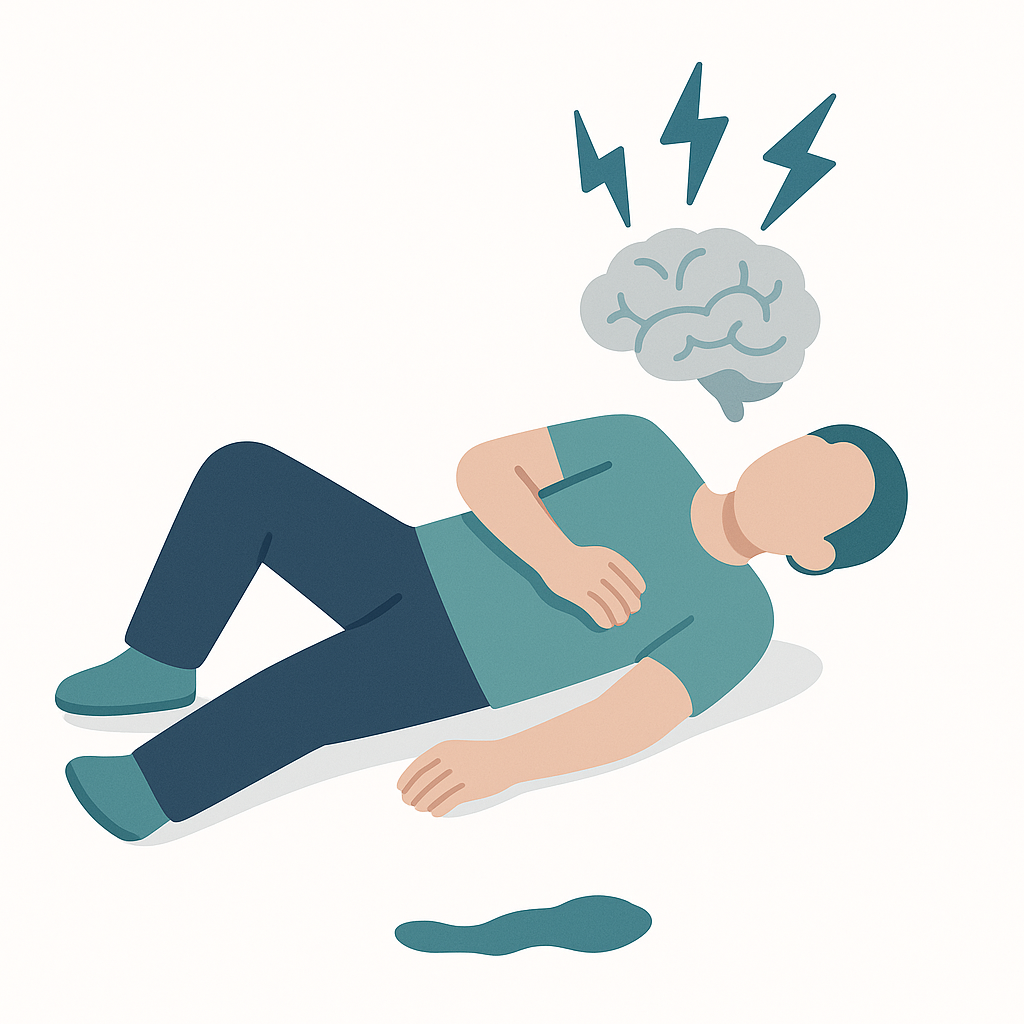
Epilepsy is a condition that affects the brain and causes a person to have seizures. A seizure happens when the brain’s normal activity is disturbed and there is sudden, uncontrolled electrical activity in the brain. This can cause changes in how a person looks or acts for a short time. Epilepsy is important to know about in first aid because someone might have a seizure in front of you, and it helps to understand what to do to keep them safe.
Epilepsy is not contagious. It is a long-term condition, but many people with epilepsy live normal, active lives. Seizures can happen for many reasons, but people with epilepsy often have repeated seizures over time. Each person’s seizures can look different, and some may be more serious than others.
When someone has a seizure, they might suddenly stop what they are doing and fall to the ground. They may shake their arms and legs, their body may stiffen, or they might lose consciousness and not respond. Sometimes, a person might just stare blankly or seem confused and not remember what happened. These are signs that a seizure is happening or has just happened.
In first aid, it is important to stay calm if you see someone having a seizure. Your job is to keep them safe while the seizure lasts. Do not try to hold them down or stop their movements. You should gently protect their head by placing something soft like a folded jacket underneath it if you can. Move any dangerous objects away so they don’t hurt themselves. Check that they are breathing and time how long the seizure lasts.
Most seizures stop on their own in a few minutes. After the seizure, the person might be sleepy, confused, or tired. This is called the recovery phase. Stay with them until they are fully awake and help them sit in a safe and comfortable place. Speak calmly and reassure them because they might feel scared or embarrassed.
There are some situations where you must call emergency services. In Australia, this means calling triple zero (000) for an ambulance. Call 000 if the seizure lasts longer than five minutes. Also call immediately if the person has another seizure right after the first one, if they don’t wake up after the seizure stops, or if they are injured during the seizure. Call for help if the person is pregnant, has diabetes, or if the seizure happened in water.
It is important not to put anything in the person’s mouth during a seizure. This can hurt them or cause choking. Do not give them food, drinks, or medicine until they are fully alert. Let the seizure stop naturally and provide care afterward. Remember, the person cannot control the seizure, and it is not a sign of mental illness or something they can stop by trying hard.
Epilepsy can be caused by various factors. Some people are born with it, while others develop it after an injury, illness, infection, or due to changes in the brain. Some triggers can cause seizures for people who have epilepsy. These things might include missing medicine, lack of sleep, stress, flashing lights, or alcohol. Knowing what might cause seizures helps people manage their condition.
If you see someone having a seizure, staying safe is your main goal. If the situation is not serious, you can help by keeping track of the seizure time and making sure the person does not hurt themselves. If the person has epilepsy and is known to have seizures, it might be helpful to find out from them or bystanders if this is normal for them.
Always respect the person’s privacy and treat them with kindness. Seizures can be scary to watch, but with calm actions, you can support the person well. After the seizure, encourage them to see a doctor if needed and help them avoid injury or embarrassment.
In summary, epilepsy is a condition that causes seizures. Seizures are sudden bursts of brain activity that change how a person looks or acts for a short time. When helping someone with a seizure, keep them safe, do not interfere with their movements, protect their head, and call emergency services if needed. Knowing these simple steps can make a big difference and help keep someone safe until expert help arrives.