
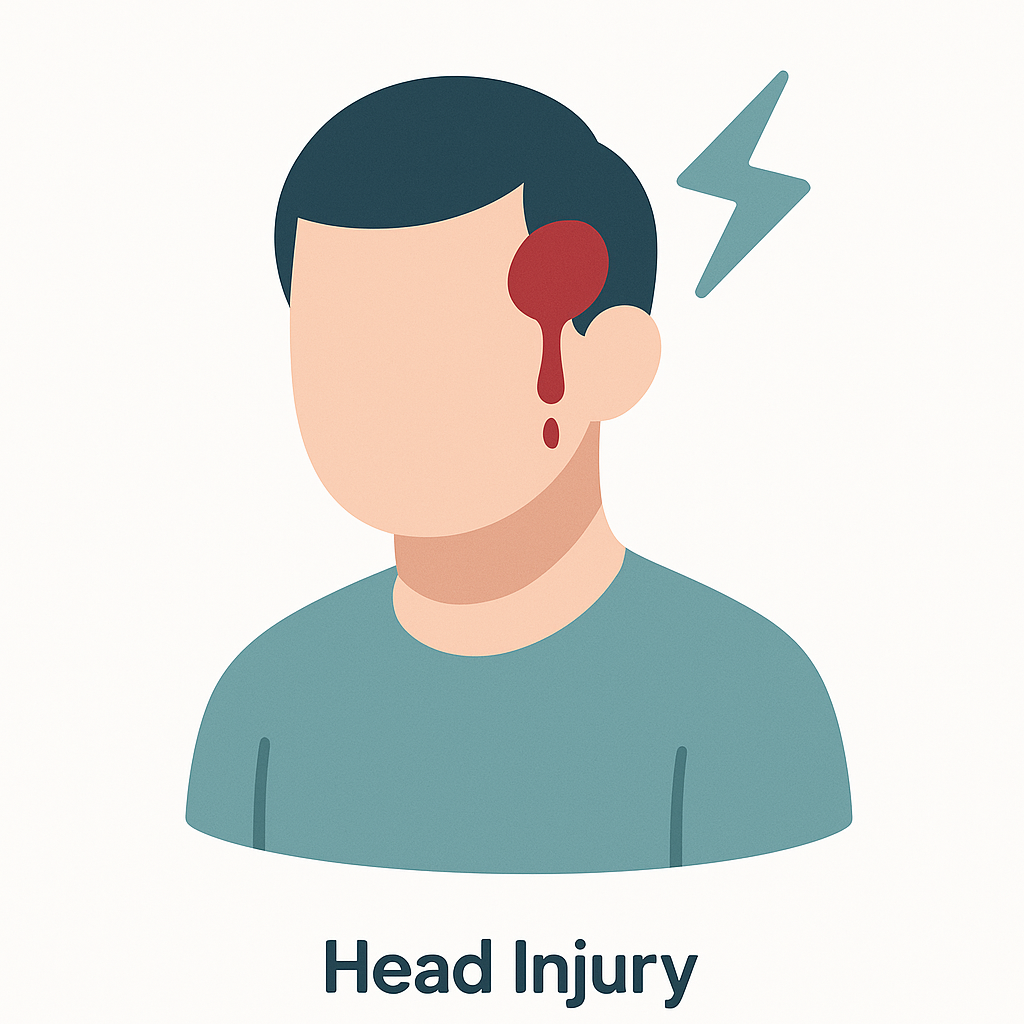
Head injury means any kind of harm or damage to the head. This can include the scalp, skull, or the brain inside the skull. Head injuries happen when the head is hit, bumped, or jolted. Sometimes, falling down, car accidents, sports injuries, or other accidents can cause a head injury. Knowing about head injuries is important because the brain is fragile and controls many things in the body. If the brain is hurt, it can affect how a person moves, thinks, or feels.
A head injury might be small, like a bump on the head, or very serious when the brain is hurt. Some head injuries cause cuts or bruises on the outside of the head. Others cause problems inside the skull, which might not be visible but can still be dangerous. That’s why if someone hits their head, it is important to watch them closely and give first aid if needed.
When someone has a head injury, you might see swelling or blood on their head. They could have a cut or bruise, or their head might look deformed or out of shape. The person might feel dizzy or confused. They could say that they have a headache, feel sick, or even lose memory about what happened before the injury. Sometimes they might feel very sleepy or have trouble waking up. It’s important to take all these signs seriously.
A serious head injury can cause bleeding inside the head. Inside the skull, there is no extra space for extra blood or swelling. This can push on the brain and stop it from working properly. If a person has a serious head injury, they might stop moving parts of their body or stop breathing well. This is an emergency, and you should call 000 for help right away.
First aid for a head injury is about keeping the person safe and helping until an ambulance or doctor arrives. One main thing to do is to keep the person still and calm. Moving their head or neck too much could cause more damage, especially if the injury is from a strong hit or fall. If the person is awake, try to keep them calm and still. If they are confused or sleepy, see if you can gently wake them up now and then.
If the person is bleeding from a cut or wound on the head, put something clean and soft on the cut and press gently to stop the bleeding. Do not press too hard in case there is a fractured skull underneath. Just gentle pressure is enough. Cover the cut with a clean cloth or dressing. If blood soaks through, add more cloth on top but do not take away the first cloth.
Watch the person carefully for signs that their condition might be getting worse. If the person vomits or throws up, or if they become more confused or sleepy, this means their head injury might be very serious. You should call 000 right away. Other signs that need urgent help include sudden weakness, seizures (shaking or jerking body parts), trouble breathing, uncontrollable bleeding, or if the person cannot respond at all.
While waiting for emergency services, try to keep the person comfortable. If they are awake and breathing normally, encourage them to lie down with their head and shoulders slightly raised. This helps reduce swelling inside the head. Do not let them lie flat if it makes them feel sick. If the person is unconscious but breathing, place them in the recovery position if you know how. This helps keep their airway clear and protects them if they vomit.
Avoid giving the person anything to eat or drink in case they need surgery or their condition gets worse. Also, do not give them medicines to reduce pain or swelling unless a doctor tells you to. These medicines might cause problems later on.
Preventing head injuries is very important. Wearing helmets when riding bikes, scooters, or skateboards helps protect the head. Using seat belts in cars and making homes safe from falls can also reduce the chance of getting hurt. Supervision of children and careful play can keep many accidents from happening.
Remember, not all head bumps are serious, but if you see any signs of confusion, vomiting, weakness, or unconsciousness after a hit to the head, call 000 immediately. It is always better to be safe and let health professionals check the person’s head injury.
In summary, a head injury is any harm done to the head or brain. It can show with cuts, bumps, dizziness, or confusion. First aid is about keeping the person still, controlling bleeding gently, watching closely for changes, and calling for emergency help when needed. Knowing how to recognise a serious head injury can save a life. Always be careful, and when in doubt, get help quickly.