
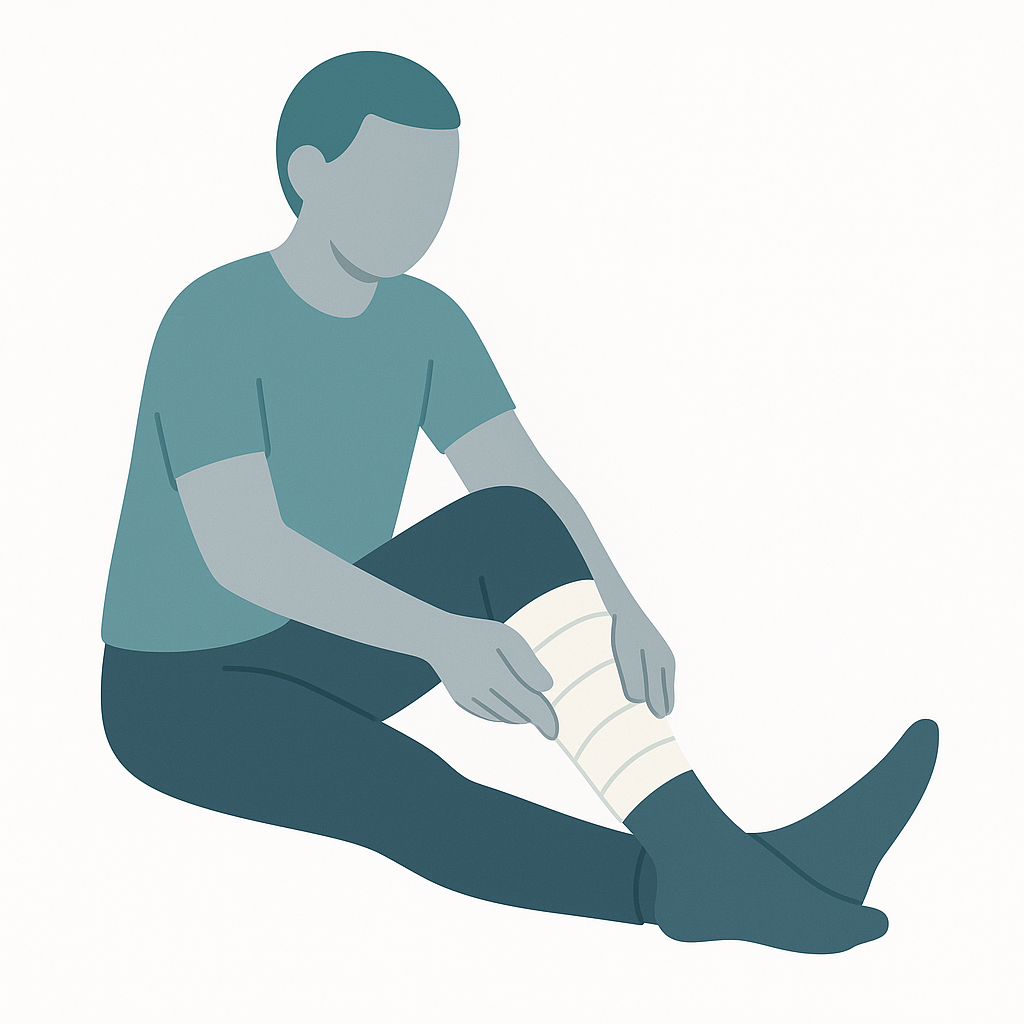
Pressure immobilisation is a way to care for a person who has been bitten or stung by certain animals, like snakes, spiders, or some sea creatures. It helps slow down the spread of harmful venom in the body. This method is often used in first aid before medical help can arrive.
Pressure means gently pushing on the area with a tight bandage, and immobilisation means keeping the bitten or stung limb still so it does not move. Together, pressure immobilisation helps trap venom near the bite or sting site and stops it from travelling quickly through the body.
This way of giving first aid is very important in certain emergencies. For example, if someone is bitten by a snake or a funnel-web spider, applying pressure immobilisation can save their life. The venom can damage the body, so slowing down how fast it spreads helps doctors have more time to treat the person safely.
When a bite or sting happens, you might see a red mark, swelling, pain, or blistering on the skin. The person may also feel sick, dizzy, weak, or have trouble breathing. Even if the bite or sting looks small, it can still be serious.
First aid with pressure immobilisation should start as soon as possible after the bite or sting. The general idea is to put a firm but not too tight bandage over the whole bitten limb. This is different from just wrapping the spot where the bite happened. The bandage needs to go from the fingers or toes up to above the elbow or knee, depending on where the bite is.
After applying the bandage, it is important to keep the limb still. Encourage the person to stay calm and try not to walk or move the injured limb. Moving can help venom spread faster through the body.
While doing this first aid, always check that the bandage is not so tight it stops blood flow. If the person’s fingers or toes turn blue, pale, or feel cold, the bandage may be too tight and should be loosened slightly.
If you are caring for someone with a bite or sting that needs pressure immobilisation, call emergency services right away by dialing 000 in Australia. Do this even if the person seems okay at first. The person will need medical help quickly, as some venoms can cause serious problems.
Keep watching the person for any signs of changes, such as difficulty breathing, swelling in the face, or loss of consciousness. If any of these happen, tell the emergency operator as soon as possible.
While helping, always stay safe yourself. If the bite or sting is from a snake or spider, try not to touch the animal again. Keep the area safe to prevent others from being bitten. If the bite happened in water, get the person out safely without putting yourself in danger.
Pressure immobilisation is a simple but powerful first aid technique. It does not cure the bite or sting but helps protect the person until a doctor can give the right medicine, called antivenom.
Remember not to cut the bite, try to suck out venom, or put ice on the area. These actions can make the injury worse. Just focus on pressing firmly with a bandage and keeping the limb still.
In summary, pressure immobilisation is used to help people bitten or stung by venomous animals. It involves wrapping the affected limb with a firm bandage from the fingers or toes to above the joint, then keeping the limb still. This helps slow venom from spreading. It is important to call 000 for help and to watch the person carefully until medical professionals arrive.
Knowing about pressure immobilisation can give you confidence to act calmly in a snake or spider bite emergency. It can help save lives by giving injured people the best chance for quick treatment and recovery.