
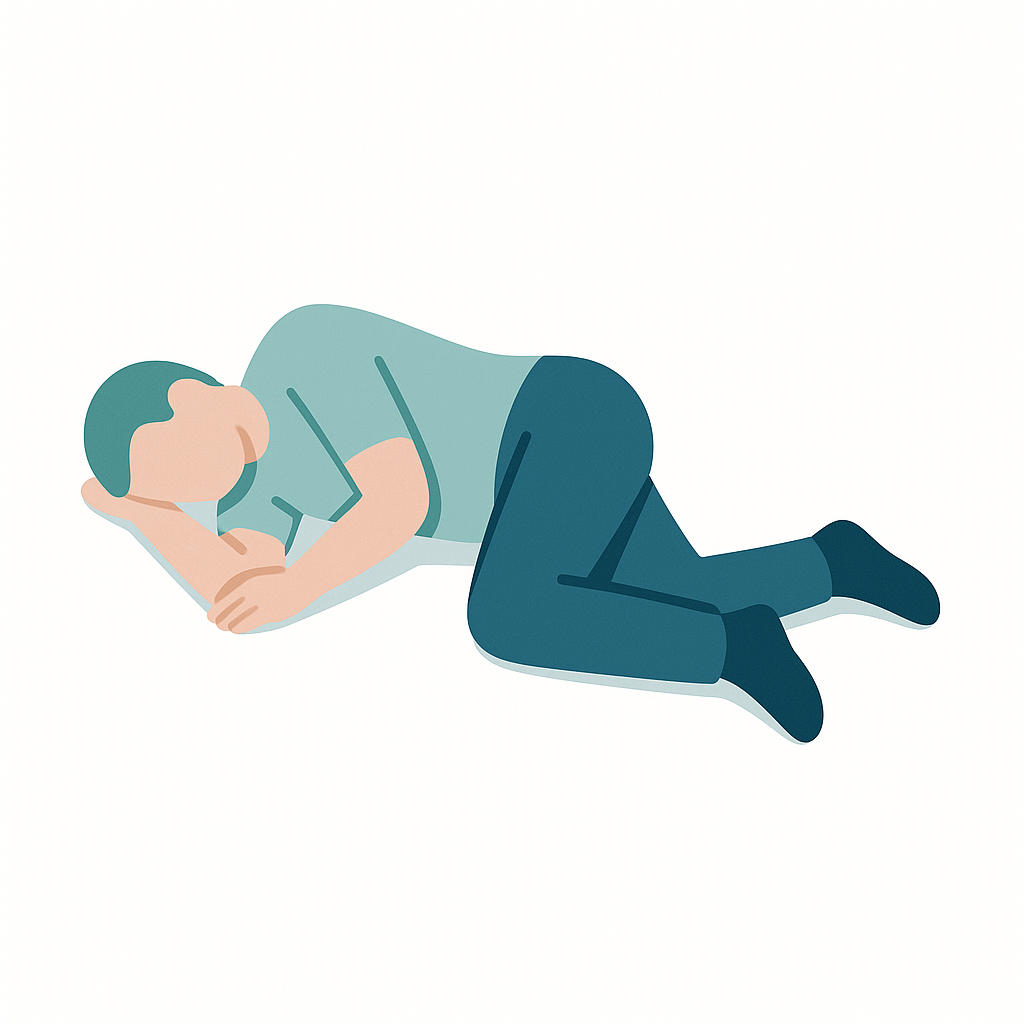
Recovery position means placing a person who is unconscious but breathing in a special way to keep their airway open and safe. The recovery position helps stop the tongue from blocking the throat and prevents fluid like saliva or vomit from causing choking. It is an important step in first aid because it keeps the person comfortable until emergency help arrives.
When someone is unconscious, they can still breathe, but their body may relax too much. This can cause the tongue to fall back and block the airway. If the airway is blocked, the person might not get enough air into their lungs. The recovery position helps keep the airway clear by using gravity to drain any fluids away from the throat. It also stops the person from rolling onto their back, which can make breathing harder.
You might see someone who is unconscious after an injury, a faint, or sudden illness. They will not respond to you but will be breathing normally. You can check their breathing by looking, listening, and feeling for breath on your cheek. If the person is breathing but not awake, placing them in the recovery position can make a big difference to their safety.
The recovery position is important because it helps protect the person’s airway and lungs. It lowers the risk of choking and makes it easier for them to breathe. Even if you are not trained in first aid, knowing this safe position can help you keep someone safe while waiting for an ambulance or other emergency services to arrive.
To stay safe when helping someone unconscious, first check the area is safe for you and the person. Do not move the person if they have a suspected neck or back injury unless they are in danger where they are. If you need to move them into the recovery position, do it carefully to avoid hurting them more. Always call emergency services on 000 if the person is unconscious or not breathing well.
Here are the main things to watch for when thinking about the recovery position. The person should be breathing normally but not responding. They may not open their eyes or answer you. It is important to stay with them and keep checking their breathing until help arrives. If their breathing stops or changes, start CPR if you know how or ask someone else to help.
The recovery position helps keep the airway clear by making the person’s body lie on their side. One arm is placed out in front to support them, and the head is tilted slightly back and up so that air can flow freely. The other leg is bent to stop the person from rolling over onto their stomach or back. This position uses gravity to help fluids drain out of the mouth so they do not block the throat.
While the recovery position is a simple step, it can save a life. It reduces the chance of choking and helps the person breathe well until emergency services can give more help. The best care is always to call 000 in Australia if someone is unconscious. Emergency operators can guide you through what to do next and send trained help quickly.
Remember, the recovery position is part of what you can do before the ambulance comes. It is not a treatment but a way to keep the person safe and comfortable. Always keep watching the person’s breathing and be ready to act if they stop breathing or get worse.
In summary, the recovery position means putting someone who is unconscious but breathing onto their side with good support. It helps keep their airway clear and stops choking. It is easy to do, safe, and very important in looking after someone before medical help arrives. Call 000 right away if you find someone unconscious, and if you can place them in the recovery position, do so gently and carefully.
Knowing about the recovery position gives you confidence to help someone in an emergency. You may never need to use it, but if you do, it could make a big difference. Acting quickly and calmly can keep the person’s airway open and stop more serious problems until paramedics take over.