
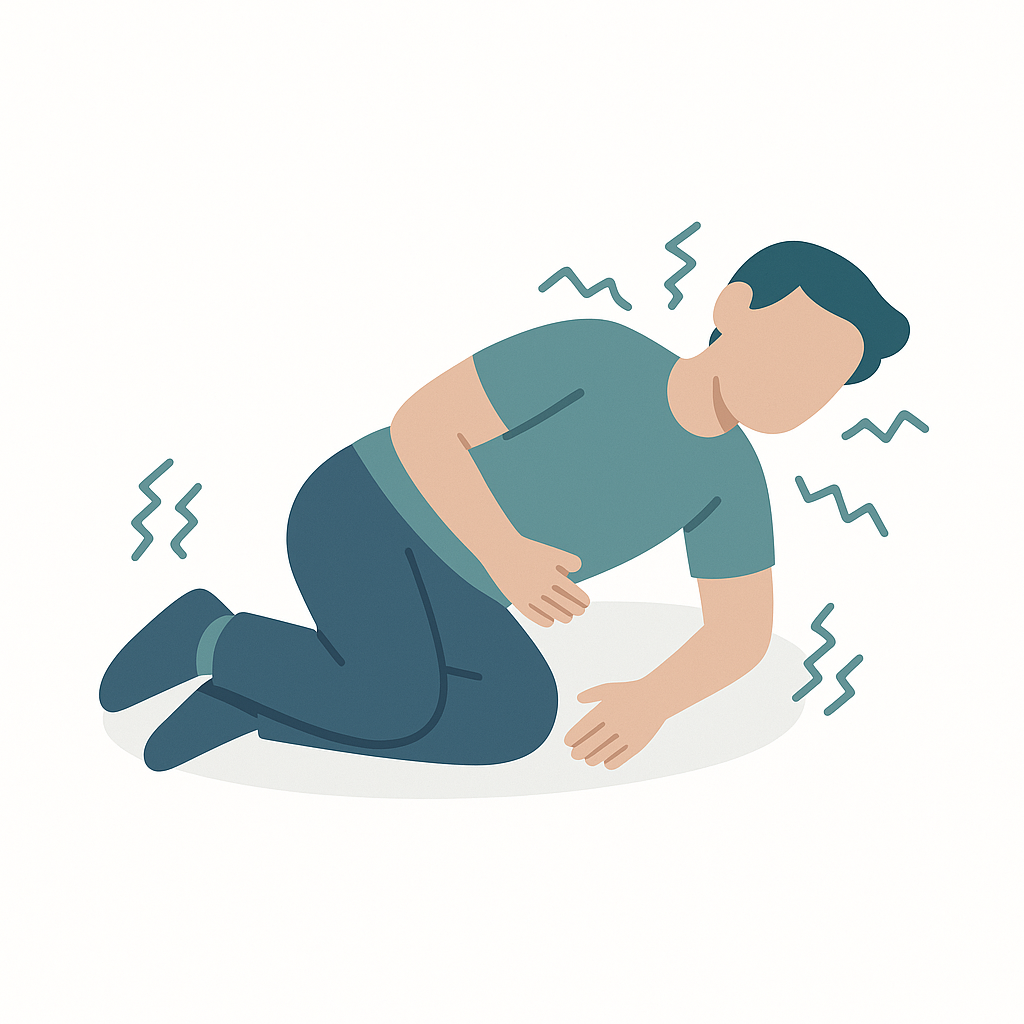
Seizure
A seizure is when a person’s brain has a sudden burst of electrical activity that causes their body to act in unusual ways. This can mean they shake quickly, lose control of their movements, or become confused for a short time. Seizures can happen to anyone. They can be scary to see, but knowing what to do can help keep the person safe.
Seizures happen because the brain sends out too many signals all at once. The brain is like a control centre for the body. When it works well, it sends clear messages to muscles and organs. But during a seizure, the messages get mixed up. This causes things like jerking arms or legs, staring blankly, losing awareness, or falling down.
Seizures are important to know about in first aid because they can happen suddenly and in many different places. If someone has a seizure, they need help to stay safe until the seizure finishes or emergency services arrive. Understanding what a seizure looks like can make it less frightening and help you give the right support.
What You Might Notice During a Seizure
A seizure can last from a few seconds to a few minutes. Signs of a seizure can be very different depending on the type of seizure. Some common signs are:
The person suddenly falls down or collapses without warning.
Their whole body or some parts of their body shake quickly and uncontrollably.
They may seem to freeze and stare blankly for a short time.
They might stop breathing properly for a brief moment.
Their face or lips could turn blue.
They may bite their tongue or cheek.
They could lose control of their bladder or bowel.
After the seizure, the person may be tired, confused, or sleepy for a while. This is called the recovery phase.
Different Types of Seizures
There are many types of seizures, but two common types are generalised seizures and focal seizures.
Generalised seizures affect the whole brain. The person might lose consciousness and have strong muscle jerks. This is sometimes called a tonic-clonic seizure.
Focal seizures affect only part of the brain. The person might look confused, have unusual feelings, or move one part of their body strangely.
You might not know the exact type of seizure, but you can still help by keeping the person safe.
Why Seizures Happen
Seizures can happen for many reasons. Some people have epilepsy, which means they get seizures often. Others might have a seizure because of:
A head injury.
A very high fever.
Missing their medicine for epilepsy.
Taking some kinds of medicine or drugs.
A stroke or another illness.
Seizures can also happen if someone has an infection or low blood sugar.
If you see someone having a seizure for the first time, they need medical help to find out why it happened.
How to Help Someone Having a Seizure
Your main goal is to keep the person safe and comfortable until the seizure stops. You do not need to try to stop the seizure. Here are some simple steps:
Stay calm and stay with the person.
Try to gently move them to a safe place away from sharp or hard objects.
Protect their head by placing something soft under it, like a cushion or folded jacket.
Do not hold the person down or try to stop their movements.
Don’t put anything in their mouth. They do not swallow their tongue during a seizure, and putting things inside their mouth can cause choking.
If they are lying down and not breathing well, try to gently roll them onto their side after the shaking stops. This helps keep their airway clear and prevents choking.
Keep track of how long the seizure lasts. Most seizures stop within a few minutes.
Be calm and reassuring when the seizure ends. The person may be confused or tired, so explain what happened and stay with them until they feel better.
When to Call for Emergency Help
In Australia, call 000 immediately if:
The seizure lasts more than 5 minutes.
The person has one seizure after another without waking in between.
They hurt themselves during the seizure.
They have trouble breathing or do not start breathing again after the seizure.
It is their first seizure.
They are pregnant or have other serious medical conditions.
If the person does not recover normally after the seizure, get emergency help.
In less serious cases, if you are unsure, it is better to call 000 to get advice.
What Not to Do During a Seizure
Do not panic or try to restrain the person.
Do not put anything in their mouth, such as fingers, food, or water.
Do not try to give them medicine or food until they are fully alert and aware.
Do not shake or splash water on them.
Do not leave them alone during or after the seizure.
General Safety Tips About Seizures
It is important to stay calm and remember that most seizures end on their own without lasting harm.
Make the area safe by moving objects that could hurt the person.
Try to help the person lie on their side after the seizure to keep their airway clear.
If the person has epilepsy, they may carry medicine or equipment. Do not interfere with these unless you are told to do so.
After the seizure, give the person time to rest and recover.
Seizures are not usually contagious, so it is safe to be close to someone having one.
Understanding Seizures in First Aid
Knowing about seizures helps you stay calm and help others safely. Seizures can look frightening but are often short and stop by themselves. Your role is to protect the person and get help if needed, not to treat the seizure itself.
By watching carefully and calling 000 in serious cases, you can make a big difference. Seizures often need a healthcare check to find out the cause and plan proper care. But as a first aider, your main job is to support and keep the person safe.
Remember, if you see a seizure, stay close and stay calm. Help the person gently and call emergency services if the seizure lasts too long, or you see danger. This simple help keeps people safe and can save lives.
Summary
A seizure is when the brain sends out sudden, extra messages, causing unusual movements or shaking. It can be scary but usually stops on its own. Your job in first aid is to keep the person safe, protect their head, get them away from danger, and call 000 if needed. Don’t put anything in their mouth or try to stop movement. Stay calm and stay with them until they recover or help arrives. Seizures can happen for many reasons, and medical help may be needed to find out why.
Knowing these basics helps everyone feel ready to help if a seizure happens near them. Safety, calmness, and calling for emergency help when needed are the keys to good first aid for seizures.