
Snake bite
A snake bite happens when a snake’s teeth break the skin and sometimes inject venom into the body. Venom is a kind of poison that can cause serious health problems. Snake bites can be scary, but knowing what to do can help save a person’s life or prevent serious harm. This page explains what a snake bite is, what signs to watch for, and how to provide first aid in a calm and safe way.
What is a snake bite?
A snake bite happens when a snake bites a person with its sharp teeth. Some snakes have poison on their teeth called venom. When they bite, venom can enter the body through the skin. Not all snake bites have venom though. Some snakes are harmless and only cause a small wound that might hurt for a little while.
In Australia, there are some very venomous snakes. Their venom can affect the body in many ways. It might stop the blood from clotting, damage nerves or muscles, or cause pain and swelling. Because venom can be dangerous, it is very important to get help as soon as possible if bitten by a snake.
What does a snake bite look like?
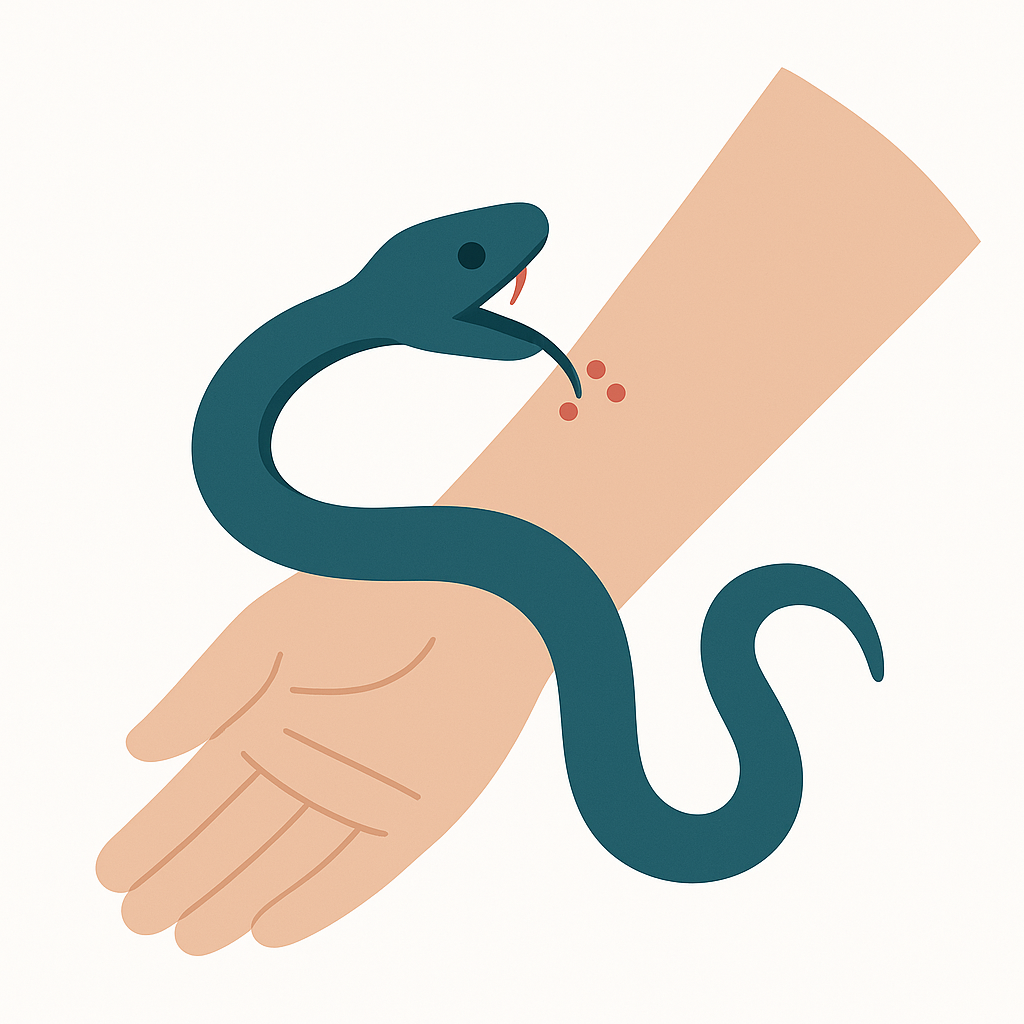
A snake bite usually leaves one or two small, sharp marks on the skin. These are the teeth marks. Sometimes these marks are hard to see, especially if the bite is in a hairy area or if the skin is dark. The area around the bite might become red, swollen, or painful.
Other signs to watch for after a snake bite include dizziness, trouble breathing, weakness, or feeling very sick. Sometimes, people can feel numbness (like pins and needles), blurred vision, or have a heartbeat that feels strange. These signs mean the venom is affecting the body and need urgent medical help.
Why is a snake bite serious?
A snake bite can be serious because the venom can hurt important parts of the body. It can stop blood from working properly, cause muscles to stop working, or even make it hard to breathe. The effects can happen quickly or take some time to start.
Some people might feel okay at first but then get worse later. Because of this, it is very important to see a doctor or call emergency services, even if the bite looks small or the person feels okay.
What to do if someone has a snake bite
If someone is bitten by a snake, try to keep them calm. Moving around a lot can make the venom spread faster through the body. Ask the person to lie down and keep the bitten area still and low, if possible. This can slow down how fast the venom moves.
Before you touch the bite, make sure it is safe. Stay away from the snake and do not try to catch it. It is more important to keep safe than to chase the snake.
Cover the bite with a clean, soft cloth or bandage. Do not wash the bite or put things like ice or a tourniquet on it. Putting ice or tight bands on the limb can harm the tissue.
If possible, try to remember what the snake looked like. This can help medical workers know what kind of snake it was.
Sending for help
Call 000 immediately if the bite looks serious or if the person feels bad. Tell the operator there is a snake bite, and give your location. Emergency services can send an ambulance quickly.
If you cannot call 000, get the person to an emergency hospital as fast as possible. Snake bites need expert care. Hospitals have medicines called antivenom that can stop the venom from working.
What not to do after a snake bite
Do not try to suck venom out of the bite. This is not helpful and can make things worse by spreading infection.
Do not cut or make deep cuts on the bite. This can increase bleeding and cause more damage.
Do not give the person anything to eat or drink if they feel very sick or dizzy, as they might need treatment right away.
Avoid putting a tourniquet (a tight band around the limb) on the bitten area. Tourniquets can stop blood flow and cause more harm.
General safety tips to avoid snake bites
Many snakes live in the wild or tall grass. When you are outside, watch your step. Wear boots and long pants if you are walking in areas where snakes might live.
Do not put your hands or feet into holes or places you cannot see. Snakes like hiding in dark, quiet spots.
If you see a snake, stay calm and move away slowly. Do not try to touch or move it.
First aid safety at snake bite scenes
Stay calm to help the bitten person feel calm too. Anxiety can make heart rate go up and spread the venom faster.
Keep the person still and comfortable while waiting for help.
If you are alone and bitten, try to get help as quickly as possible without walking a long way.
Remember that your safety is the most important thing. Do not try to catch the snake or put yourself in danger.
When to call emergency services
Call 000 right away if the person:
Looks very sick or weak
Has trouble breathing or swallowing
Is confused or losing consciousness
Has severe pain or swelling that gets worse quickly
Is bitten on the head, neck, or chest
If you are not sure, it is always better to call 000. Emergency services are trained to give advice over the phone until help arrives.
What happens at the hospital?
At the hospital, doctors will check how the person is feeling and look at the bite carefully. They might give medicine called antivenom if the snake was venomous. Antivenom helps stop the venom from working in the body.
Doctors watch the person for signs of problems like bleeding or breathing trouble. They might give pain relief, fluids, or other treatments as needed.
Most people recover well if they get help quickly.
Summary
A snake bite happens when a snake’s teeth break the skin and may inject venom. It can cause pain, swelling, and serious problems if the venom spreads.
Stay calm and keep the bitten person still. Do not wash or squeeze the bite and do not apply tight bands.
Call 000 for emergency help right away.
Try to remember what the snake looked like but do not chase or try to catch it.
Safety and quick action are very important to help the person recover from a snake bite.
Knowing what to do can save a life and help someone get the right care quickly.