
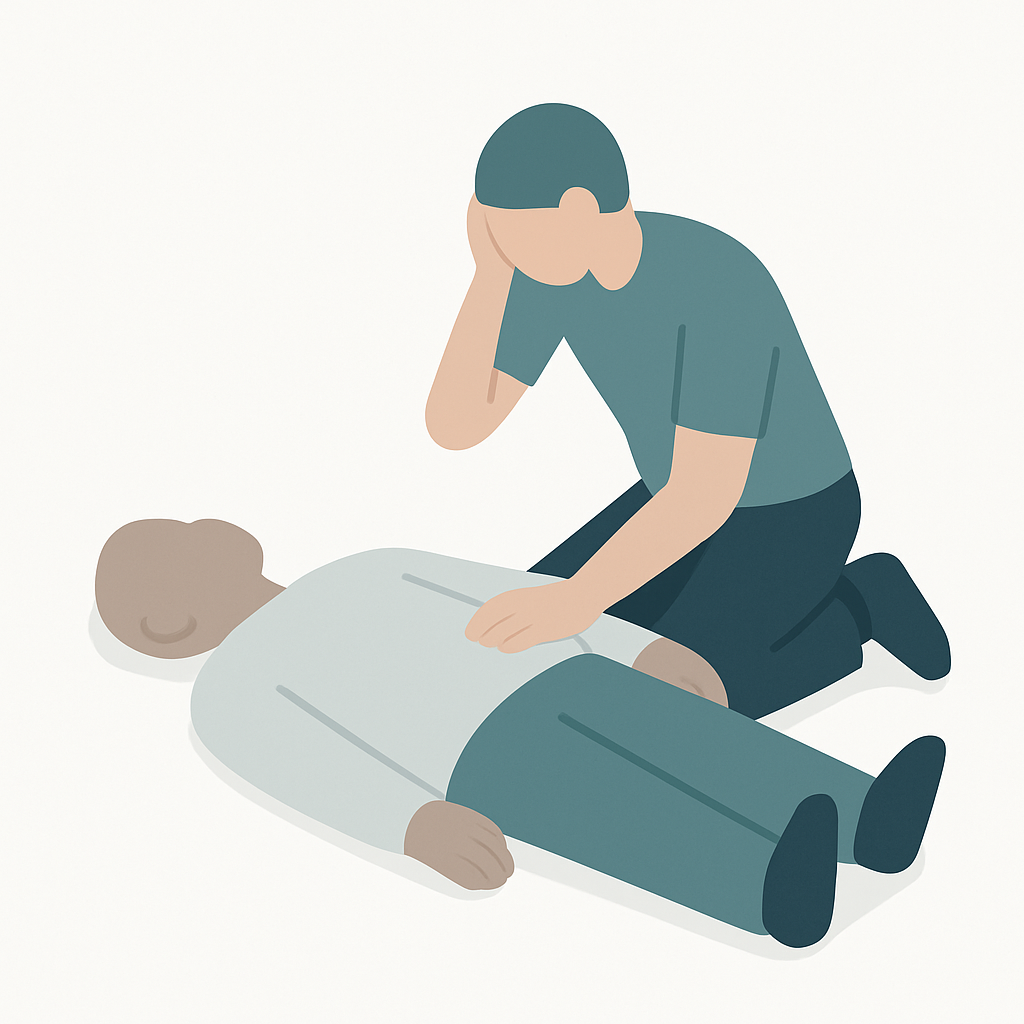
Unconscious means a person is not awake and cannot respond to what is happening around them. They do not answer when you speak to them or touch them. When someone becomes unconscious, it means their brain is not sending clear signals to the body to stay alert and aware. This can be because of many reasons, such as an injury, illness, or a sudden change in their body.
In first aid, knowing how to recognise and care for an unconscious person is very important. Being unconscious is a serious condition that may need emergency help. You need to act safely and quickly to keep the person’s airway open and help them breathe until help arrives.
Unconsciousness can be different from being asleep. A person who is asleep can be woken up by talking to them or touching them softly. An unconscious person cannot be woken no matter what you do. They do not react to noise, touch, or movement.
Sometimes a person may be only partly unconscious and seem very sleepy or confused but will still respond a little. This state is called being “semi-conscious” or having a reduced level of consciousness. It is also a serious sign and needs careful attention.
Unconsciousness can happen suddenly or after some time, depending on what caused it. For example, a person may faint from heat or pain and become unconscious for a short time. Or they may fall unconscious because of a head injury or if they are not getting enough air.
If you see someone who is unconscious, the first step is always to make sure it’s safe for you to help. Look around for anything dangerous like traffic, fire, or broken glass before going near the person. Do not put yourself at risk.
After checking safety, try to gently wake the person by talking to them loudly or shaking their shoulder lightly. Do not shake too hard because this could make injuries worse. If there is no response, treat them as unconscious.
When a person is unconscious, they may stop breathing or their breathing may be weak or irregular. It is very important to check if their airway is clear so they can breathe as well as possible. The airway is the path air takes from the mouth and nose to the lungs.
One common problem in unconscious people is that their tongue can fall back in their throat and block the airway. This stops air from reaching the lungs and can cause serious harm quickly. So, part of first aid for unconscious people is making sure their airway is open.
If the person is breathing normally, place them in the recovery position. This means laying them on their side in a way that keeps the airway open and lets any fluids, like saliva or vomit, drain out of their mouth. This helps stop choking.
If the person is not breathing or not breathing normally, call emergency services straight away by dialing 000 in Australia. Then, start CPR (cardiopulmonary resuscitation) if you know how, until an ambulance arrives. CPR helps keep blood and oxygen moving in the body.
It is important never to leave an unconscious person alone. Stay with them and watch their breathing until qualified help arrives. If you need to leave, make sure someone else stays with the person or call for help.
Keep the person warm and comfortable but do not try to move them unless they are in danger. Moving someone with a possible spine or neck injury could cause more harm.
Unconsciousness can happen for many reasons. Some common causes are fainting from low blood sugar or dehydration, head injury from a fall or accident, stroke, seizures, heart problems, or poisoning. Sometimes a person can be unconscious during an overdose or severe allergic reaction.
If a person was injured before becoming unconscious, it is important to be extra careful when moving or touching them. Injuries to the head, neck, or spine may need special care to avoid making the injury worse.
If the person has any special medical information you can find, like a medical alert bracelet or card, this can help emergency services understand what might have caused the unconsciousness.
Calling emergency services by dialing 000 is important if the unconscious person:
– Does not wake up after you try to rouse them
– Is not breathing or is breathing strangely
– Has a seizure or a fit
– Is injured after a fall or accident
– Has poisoning, overdose, or suspected allergic reaction
– Is pregnant, a child, or elderly with new unconsciousness
Making the call quickly helps get trained help to the scene fast. Let the operator know clearly what you see and what you have done. Follow their advice until help comes.
In summary, unconscious means a person is not awake or responding. It is a serious condition needing quick and careful action. Always keep the person’s airway open and check their breathing. Call 000 if the person does not improve or if they are not breathing well.
Stay calm and give the person your full attention until emergency workers take over. Your quick and gentle care can save a life when someone becomes unconscious. Knowing what to do helps you feel ready to help in an emergency.