
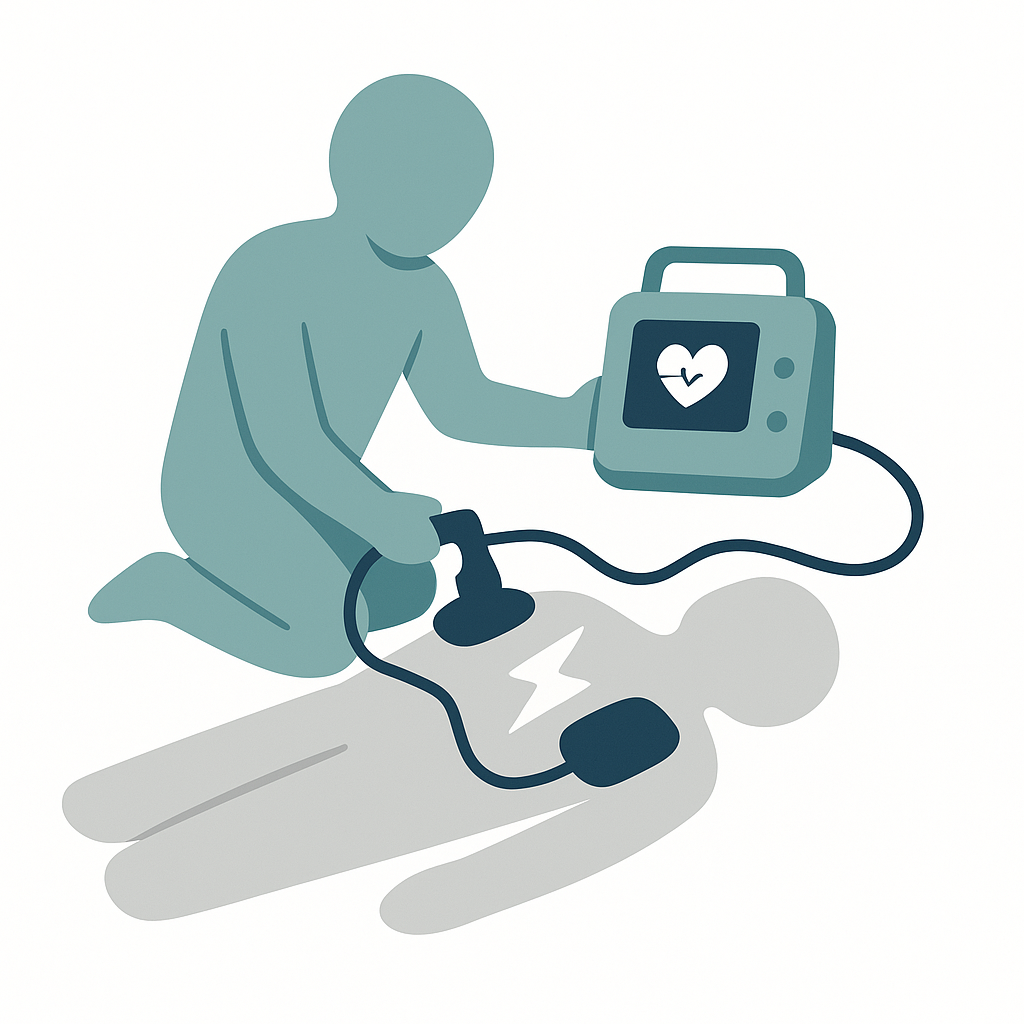
Defibrillator
A defibrillator is a device used to help someone whose heart has stopped working properly. The heart is a strong muscle that pumps blood around the body to give all parts of us the oxygen and nutrients they need. Sometimes, the heart can start beating in a very fast and irregular way that does not pump blood well. This is called a heart rhythm problem. A defibrillator gives a quick electrical shock to the heart. This shock can stop the irregular heartbeat and help the heart start beating normally again.
Defibrillators are very important in first aid because they can save lives during a heart emergency. When someone’s heart stops beating properly, blood does not flow to the brain and other organs. This can quickly lead to unconsciousness and death if not treated. Using a defibrillator is part of the chain of survival, which means the steps to help a person in a life-threatening emergency.
What a Defibrillator Does
The main job of a defibrillator is to make the heart beat return to a normal rhythm. When the heart beats irregularly during a condition called sudden cardiac arrest, the heart’s pumping action stops. This is very dangerous and needs emergency help fast. The defibrillator sends an electrical shock through the chest to the heart muscle. The shock stops the bad rhythm and gives the heart a chance to restart as it should.
You might see this device in public places like shopping centres, airports, schools, or workplaces. It is usually easy to spot because it is kept in a clear box on the wall. Many defibrillators speak or have clear instructions to help people use them, even if they are not trained.
Why Defibrillators Are Important in First Aid
A defibrillator is used in emergencies when someone is unconscious and not breathing normally because of a sudden heart problem. It is one of the best tools to help save a life in these situations. The quicker the defibrillator is used, the better the chance the person has to recover. This is because the brain and other organs need blood and oxygen to survive. If the heart cannot pump blood, those organs are starved.
People who are first at the scene of an emergency can make a big difference. Using a defibrillator as soon as possible is a key part of helping someone who has collapsed with a heart emergency. It works best when used with other important first aid steps like calling emergency services by dialling 000, doing CPR (cardiopulmonary resuscitation), and keeping the person as safe and comfortable as possible until more help arrives.
When You Might Need to Use a Defibrillator
You might have to use a defibrillator if you find someone who suddenly falls down and does not wake up. They might not be breathing or breathing normally. The person may be completely unresponsive and not moving. This could mean their heart has stopped pumping properly.
If you see this, call 000 immediately to get an ambulance on the way. Then, follow the steps to help the person, which could include starting CPR and using the defibrillator if one is available. Early use of the defibrillator can improve the chance the person’s heart will start working again.
How the Defibrillator Helps You Help Others
Defibrillators in public places are often called Automated External Defibrillators or AEDs. These machines help everyday people save lives without medical training. The defibrillator will check the person’s heart rhythm and decide if a shock is needed.
If the machine tells you a shock is needed, it will tell you to press a button to give the shock. The defibrillator will only shock when it is safe to do so. Most devices also guide you with clear voice instructions. It will tell you when to give CPR and when to stop and let it check the heart again.
Knowing that the machine helps with instructions can make people feel more confident to use it during an emergency.
How to Stay Safe When Using a Defibrillator
When using a defibrillator, safety is very important. Always make sure the person is safe and that you are safe too. Do not use the defibrillator in water or on a wet surface. Make sure no one is touching the person when the shock is given. This helps avoid any accidental shocks to others.
Keep the person’s chest bare and dry before putting on the defibrillator pads. If the person has a lot of chest hair and it prevents the pads from sticking well, you may need to quickly remove some hair with a razor, if available. Most defibrillators come with the right tools.
Always follow the instructions on the defibrillator and stay calm as you help. The device will guide you step by step.
When to Call Emergency Services
In Australia, if someone is unconscious or not breathing normally, call emergency services right away by dialling 000. Tell the operator where you are and what has happened. Stay on the phone until they tell you it is okay to hang up.
Calling 000 is very important because ambulance paramedics and other emergency workers have the equipment and training to take care of the person. They will come as quickly as possible.
It is best to start CPR and use the defibrillator if available while waiting for emergency help to arrive. These actions give the best chance of saving a life.
Other Important Things to Know
Even if a defibrillator is not nearby, it is still important to call emergency services and start CPR if you know how. CPR helps keep blood flowing to the brain and other organs until professional help arrives.
Using a defibrillator is safe and can help save the life of someone in a sudden emergency. It is designed to be easy to use and tells you what to do. Don’t be afraid to use it if there is an emergency.
After using a defibrillator, the person may start breathing again or may still need more help. Keep looking after them and follow any instructions from the emergency operator.
Summary
A defibrillator is a simple machine that helps restart the heart when it stops beating properly. It sends an electric shock to the heart to fix a dangerous heartbeat. Defibrillators are important in emergencies when someone collapses and is not breathing normally.
These devices are found in many public places and have easy-to-follow instructions. Using a defibrillator quickly along with calling 000 and doing CPR can save lives.
Remember to stay calm, call emergency services straight away, and follow the defibrillator’s instructions carefully. Your actions could make a big difference in an emergency.