
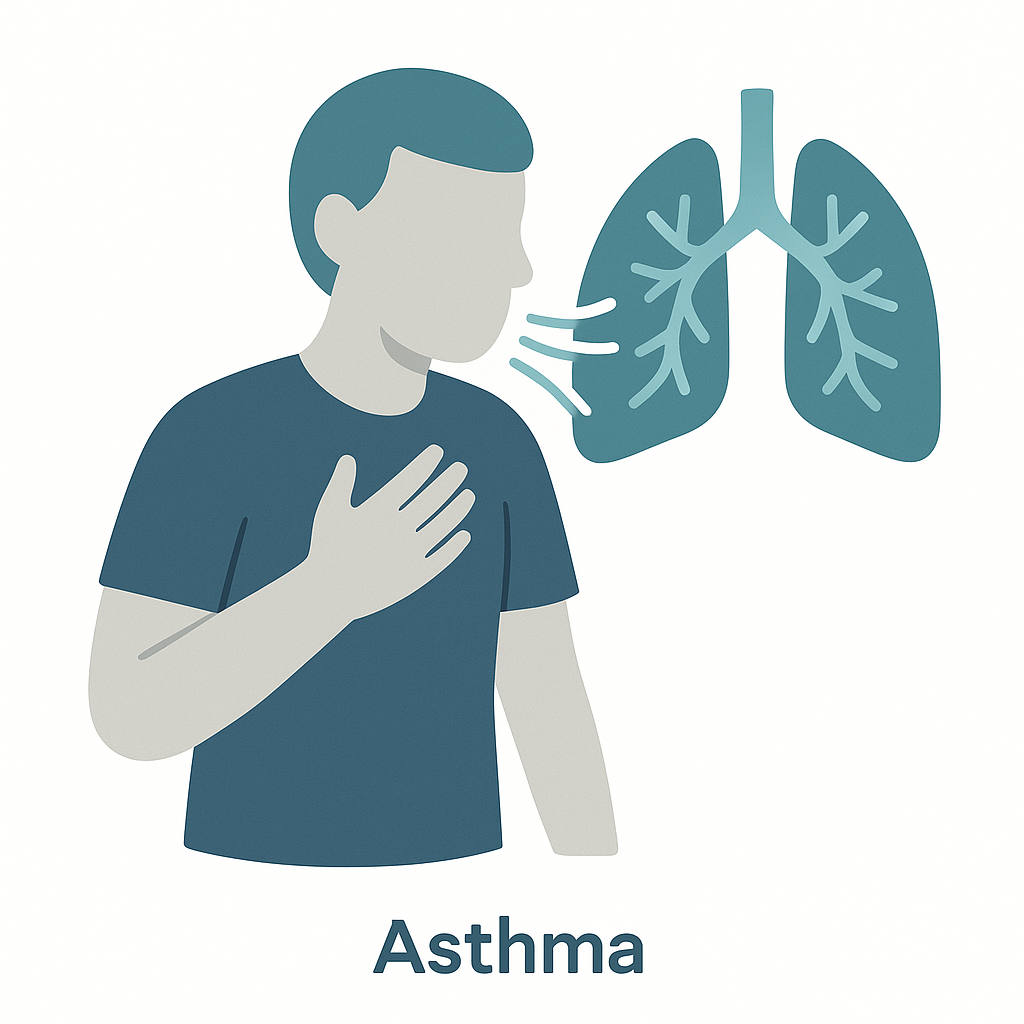
Asthma is a common health condition that affects the lungs and makes it hard to breathe. It happens when the airways in the lungs become narrow, swollen, or filled with mucus. These airways are like small tubes that carry air in and out of the lungs. When these tubes get tight or blocked, it is harder for air to move, and the person may cough, wheeze, or feel short of breath.
Asthma is important to understand in first aid because people with asthma can have an asthma attack. An asthma attack is when breathing suddenly becomes much more difficult. It can be scary for the person who has it and for those around them. Knowing what to look for and how to help can make a big difference in keeping the person safe and calm until professional medical help arrives.
What Happens in Asthma
In asthma, the small tubes in the lungs, called airways, get sensitive and react to different things. These triggers might be dust, smoke, cold air, exercise, or even allergies. When a person with asthma meets one of these triggers, the muscles around the airways tighten up. This makes the tubes smaller. At the same time, the inside walls of the airways swell up, and extra sticky mucus can fill the tubes. Together, these changes make it hard for air to pass through.
Because of this, the person may feel breathless or notice a whistling sound when they breathe out, which is called wheezing. They might also cough a lot or feel tightness in their chest. Sometimes, these signs come on slowly, and other times they happen quickly.
Signs of an Asthma Attack
If someone is having an asthma attack, you might see some or all of these signs:
They may be coughing a lot, especially at night or after exercise.
You could hear wheezing, a high-pitched sound when they breathe out.
Their chest might look tight or feel uncomfortable.
They may be breathing faster than usual or having trouble catching their breath.
Their skin or lips might look pale or blue, which is very serious.
They might feel very anxious or unable to speak in full sentences because they are out of breath.
These signs mean the person needs help right away. Sometimes, an asthma attack can get worse and stop air from reaching the lungs, which is very dangerous.
What to Do if Someone Has Asthma
If the person has asthma and is feeling breathless or wheezing, it is important to help them stay calm. Panic can make breathing even harder. Make sure they sit down in a comfortable position. Usually, sitting upright helps them breathe better.
If they have a medicine called a reliever inhaler, such as one with blue or grey colour, help them use it. The reliever inhaler opens the airways quickly and helps the person breathe easier. It is best to follow the person’s own asthma action plan if they have one. This plan will say how many puffs of the inhaler they need to take and how often.
If the person does not have a reliever inhaler, or their symptoms do not get better after using it, call emergency services right away. In Australia, dial 000 for urgent help. The ambulance officers will have oxygen and other tools to help the person.
When to Call Emergency Services
Call 000 immediately if:
The person’s breathing gets worse or does not improve after using their inhaler.
They are unable to speak in full sentences because of breathlessness.
Their lips or face look blue or pale.
They become very drowsy or lose consciousness.
They show signs of confusion or extreme fear.
It is better to call for help early than to wait and hope the attack gets better on its own.
General Safety Tips for Asthma
People with asthma often know their triggers. Avoiding these can help prevent attacks. For example, try to stay away from smoke or strong smells, and keep rooms clean from dust. If someone has an asthma action plan, it is helpful to keep it nearby and make sure medications are easy to reach.
In an emergency, always check on the person and offer reassurance. Stay with them until help arrives or they feel better. Never give a person with asthma any medicine or treatment that is not known to be safe for them. If in doubt, call emergency services.
Why Asthma Matters in First Aid
Asthma is one of the most common causes of breathing problems in first aid situations. Many people have asthma, and attacks can happen suddenly. Knowing how to spot an asthma attack and what to do can save a life. It also helps the person feel less scared and more in control.
First aid for asthma focuses on helping the person breathe easier and supporting their own treatment. It is simple but very important to act quickly and safely.
Summary
Asthma is a condition that makes breathing harder because the airways in the lungs tighten, swell, and fill with mucus. This can cause coughing, wheezing, shortness of breath, and chest tightness. An asthma attack is when these symptoms become severe and urgent help may be needed.
In first aid, it is important to stay calm, help the person use their reliever inhaler if available, and seek emergency help if the attack does not improve or if serious signs develop. Call 000 immediately if the person has trouble breathing, blue lips, or loss of consciousness.
Understanding asthma and how to respond helps keep people safe and healthy in emergencies. Always remember to be calm, stay with the person, and get help when needed.