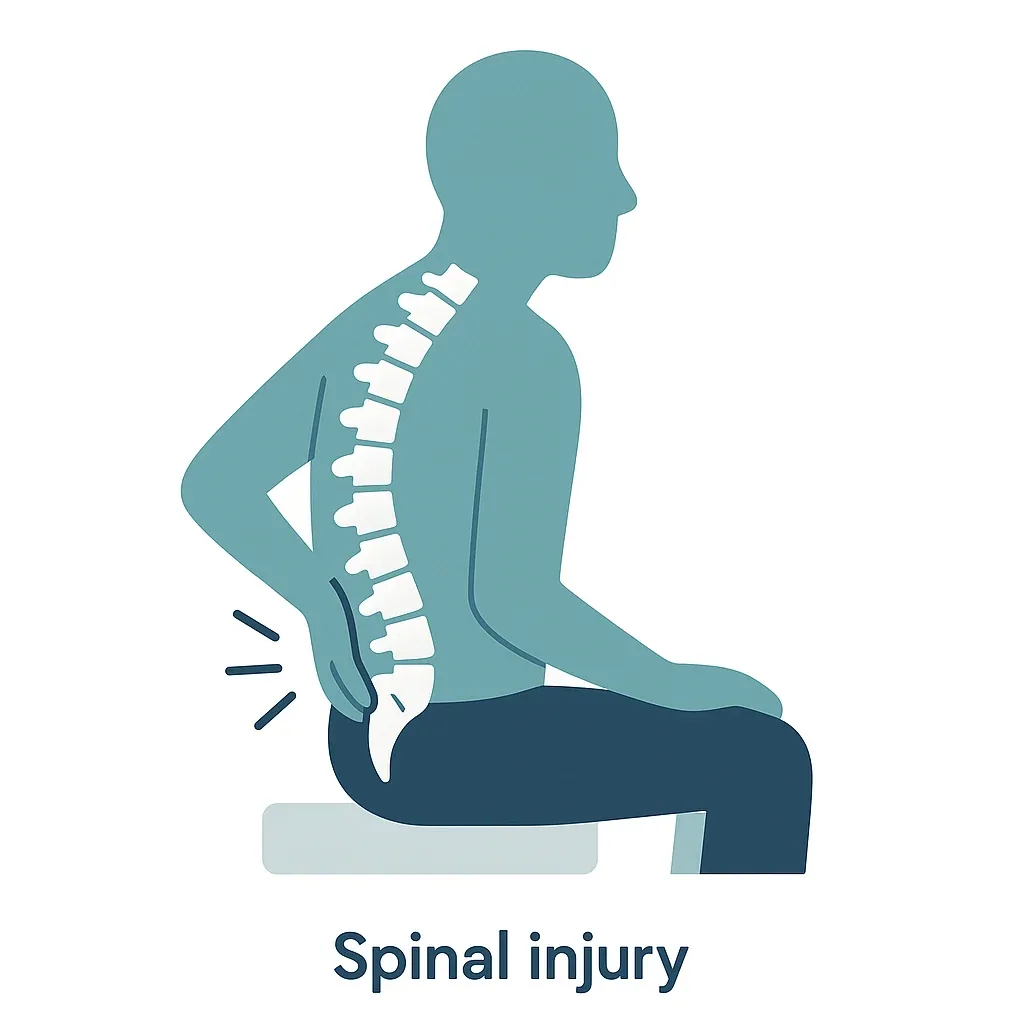

A spinal injury is harm to the spine, which is the strong column of bones running down the middle of your back. The spine holds up your body and protects the spinal cord. The spinal cord is like a thick cable of nerves that carries messages between your brain and the rest of your body. When the spine is hurt, it can cause serious problems because it might damage these nerves.
In first aid, spinal injuries are very important to recognize and handle carefully. If a person has a spinal injury, moving them the wrong way could make the injury worse and cause permanent harm. This is why first aid for spinal injuries focuses on keeping the person still and safe until help arrives.
What Is a Spinal Injury?
A spinal injury happens when one or more bones in the spine, called vertebrae, or the spinal cord inside the spine gets damaged. This can happen from things like falls, car accidents, sports injuries, or heavy impacts. The injury can pinch, bruise, or break the bones, or sometimes the spinal cord itself can be hurt.
The spinal cord carries important nerve signals that help you move your body and feel things. If the spinal cord is damaged, parts of the body below the injury might stop working properly. This could cause numbness, weakness, or paralysis (not being able to move) in parts of the body.
Why Is the Spine Important?
The spine does three key jobs. First, it holds your body upright. Second, it lets you bend, twist, and move. Third, it is the shield for your spinal cord, which connects your brain to every part of your body with nerves.
The spinal cord carries messages from your brain to your hands, feet, and all body parts. It also sends information back to the brain, like feelings of touch or pain. If the spinal cord is hurt, these messages may be blocked.
Signs of a Spinal Injury
If someone has a spinal injury, there are some signs to look out for. The person might be hurt after a strong accident or fall. They could have neck or back pain that does not go away. They may feel numbness, tingling, or weakness in their arms or legs. Some people cannot move parts of their body.
It might be hard for the person to breathe or keep control over their bladder or bowels. Sometimes, you can see that the neck or back looks twisted or not normal.
First aiders should be very careful if the person has these signs after a crash, fall, or serious hit. Even if they do not have pain, it is important to treat the situation as if a spinal injury is there.
Keeping the Person Safe
The main goal in first aid with spinal injuries is to keep the person’s head, neck, and back still. Moving them too much could cause more damage to the spinal cord.
If the person is awake and breathing, help them stay calm and still. Tell them not to move their head or neck. If possible, try to keep the head and neck in the same position as it was found.
Do not try to lift or move them unless there is immediate danger, such as fire, smoke, or risk of explosions. If you must move them, do it very gently and only as much as needed to keep them safe.
Looking After the Breathing and Pulse
It is important to make sure the person is breathing and their heart is beating. If the person is not breathing or has no pulse, call emergency services straight away by dialing 000. Do not move the person unless you must to help with their breathing or perform CPR.
If the person is breathing but unconscious, carefully open their airway while keeping their head and neck as still as possible. This is very tricky, so do it gently or leave it to emergency workers if you are unsure.
When to Call Emergency Services
Spinal injuries are very serious. Always call 000 in Australia if you suspect a spinal injury after an accident or fall. Call emergency help if the person:
- Cannot move or feels weak in any part of their body
- Has numbness or loss of feeling anywhere
- Feels neck or back pain after an accident
- Has trouble breathing or controlling their bladder or bowels
- Has a head or neck that looks twisted or out of place
- Calling emergency services quickly means the person will get the medical care they need to protect their spine and nerves.
What Not to Do
Never try to move a person with a suspected spinal injury unless their life is in danger. Avoid twisting, bending, or lifting their neck or back. Do not let them sit or stand up.
Do not remove any helmets or safety gear unless absolutely necessary for breathing. Removing helmets can sometimes cause more damage.
Keep the person warm with a blanket or clothing but avoid moving them too much. Keep talking to the person to try and keep them calm.
Why First Aid Matters for Spinal Injuries
If you help correctly at the scene, you might prevent a bad spinal injury from becoming worse. Moving a person the wrong way can cause the spinal cord to get damaged, which may lead to losing feeling or movement forever.
First aid aims to protect the spine until trained people arrive. Emergency workers have special training and equipment to move someone safely.
Remember, in emergencies, calmly checking the person, keeping them still, and calling 000 can save lives and reduce harm.
Summary
A spinal injury is damage to the bones or nerves in the spine. It can happen after accidents or falls. The spine protects the spinal cord, which controls movement and feeling. Signs of spinal injury include pain, weakness, numbness, and trouble breathing.
In first aid, the main job is to keep the person still, calm, and call emergency services by dialing 000. Do not move the person unless there is immediate danger. Watch for breathing and pulse and give help if needed.
Always treat suspected spinal injuries seriously. Quick and careful first aid helps keep people safe before medical workers arrive.
Sources reviewed
- Healthdirect: spinal cord injuries
- ANZCOR: management of suspected spinal injury
- Triple Zero: official emergency calling guidance
Reviewed against Australian first aid and emergency guidance by the First Aid Glossary Editorial Team. This article is general information and does not replace emergency-operator directions, professional medical advice or hands-on first aid training.