
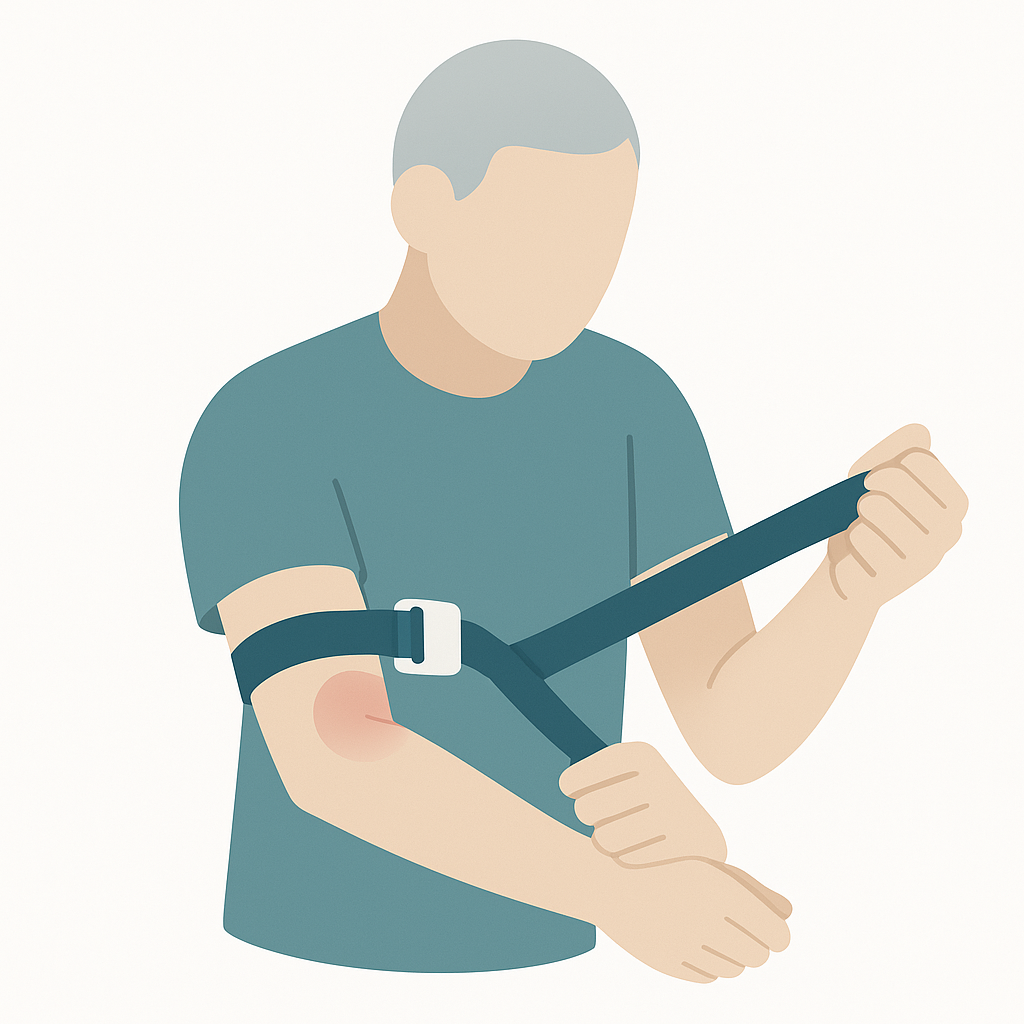
Tourniquet
A tourniquet is a special tool or band that you can use in an emergency to help stop very bad bleeding. When someone has a deep cut or a serious wound that is bleeding a lot, a tourniquet can be put around the limb to slow or stop the flow of blood. This helps keep the person from losing too much blood, which can be very dangerous or even life threatening.
In first aid, a tourniquet is important because some injuries cause bleeding that is too heavy for normal bandages or pressure to stop quickly. Bleeding like this needs fast action to protect the person’s life. A tourniquet can save their life by cutting off the blood flow to the injured area until medical help arrives.
What a Tourniquet Does
A tourniquet works by squeezing the arm or leg above a wound very tightly. This pressure stops the blood vessels from carrying blood past the band. Blood cannot get to the part of the limb below the tourniquet, so the bleeding slows or stops. This prevents the person from losing too much blood and going into shock, which can make them very weak and unconscious.
Because the blood flow to the limb is stopped, a tourniquet must be used carefully. When blood does not reach the limb for a long time, it can cause injury to the muscles and tissues. So, a tourniquet is only used in serious situations where heavy bleeding cannot be safely stopped by other methods.
When You Might Need a Tourniquet
You might need to use a tourniquet if someone has a deep cut or a severe injury to their arm or leg that is bleeding a lot and will not stop after pushing on it with a clean cloth or bandage. This can happen in accidents like cuts from sharp objects, broken glass, machinery injuries, or crashes.
If the bleeding splashes or flows quickly, or if blood is soaking through dressings very fast, these signs show that a tourniquet might be needed. You might also notice the person is weak, dizzy, or very pale because they are losing too much blood.
How to Stay Safe and Help Someone
If you see someone who is bleeding badly, your first job is to keep yourself safe. Wear gloves if you have them to protect yourself from blood. Ask the person to lie down to prevent fainting. Try to stop the bleeding first by pressing firmly on the wound with a clean cloth or bandage.
If this does not work and the bleeding is very bad, a tourniquet may be needed for an arm or leg. Make sure the tourniquet is placed above the wound but not too close to a joint like the elbow or knee. Tighten the tourniquet enough to stop the bleeding, but do not loosen it after it is on.
Remember to make a note of the time when you put the tourniquet on. This helps emergency workers know how long the tourniquet has been in place.
When to Call Emergency Services
Any time someone has very bad bleeding and you think a tourniquet might be needed, call emergency services straight away. In Australia, call triple zero (000) and ask for an ambulance. Severe bleeding is an emergency that needs fast professional help.
Even if you are using a tourniquet and the bleeding stops, emergency care is still important. The person will need a doctor to treat their injury and to make sure no damage is done by the tourniquet.
What Not to Do With a Tourniquet
Do not use a tourniquet on the neck, abdomen, or chest. Tourniquets are only for arms or legs. Also, never take the tourniquet off once it has been put on unless a doctor or ambulance staff advises you to do so.
Avoid putting the tourniquet too close to the wound or over a joint because it might not work well or it could cause more damage. Always try to stop bleeding with pressure first before using a tourniquet.
Summary
A tourniquet is a helpful first aid tool used to stop very heavy bleeding from an arm or leg. It works by tightening around the limb to block blood flow below the wound. Using a tourniquet can save a life when other methods do not stop serious bleeding.
It is important to stay calm, protect yourself, and call emergency services by dialing 000 if you ever have to use a tourniquet. The tourniquet is for emergencies only and should be used carefully to avoid hurting the limb.
Knowing what a tourniquet is and when it might be needed can prepare you to help someone in a very serious bleeding emergency. Always remember that quick action and calling for help are the best ways to keep someone safe.