
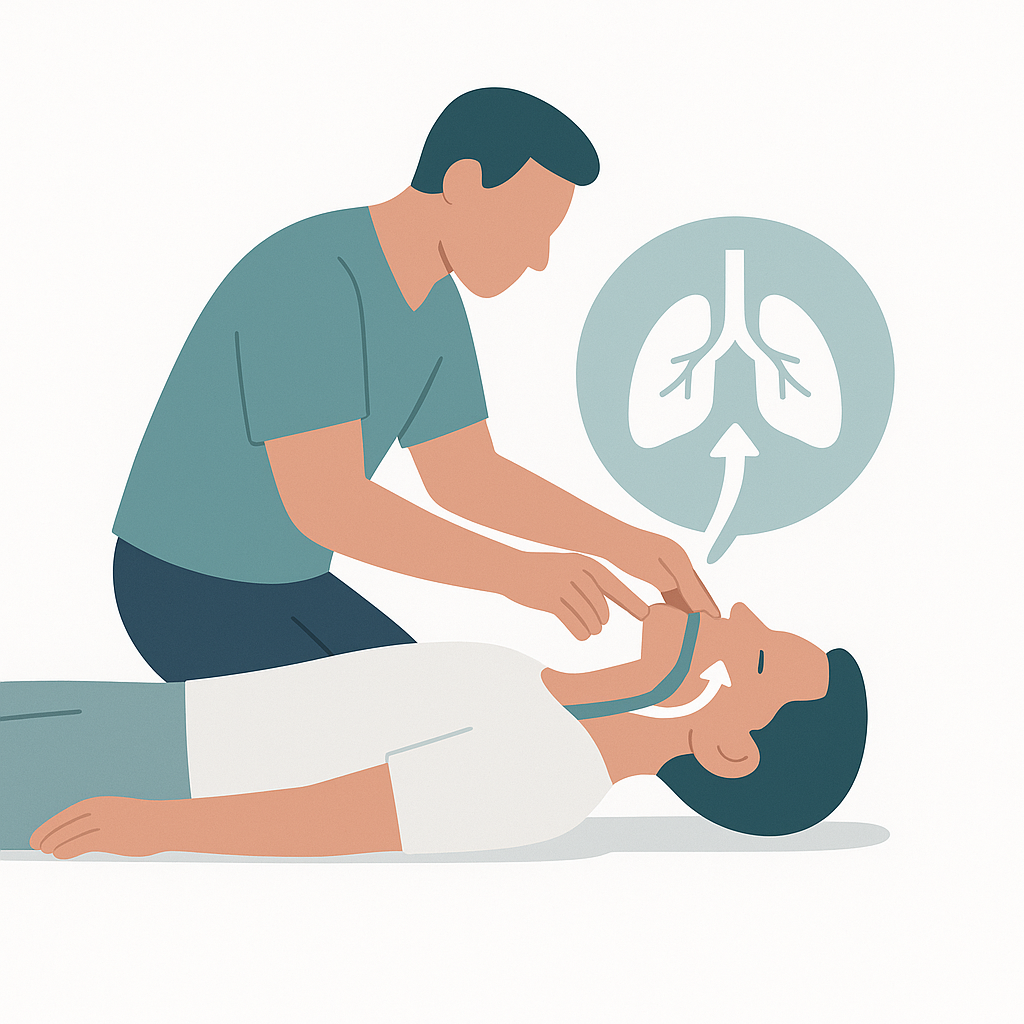
Airway management is about making sure a person can breathe properly by keeping their airway open. The airway is the path that air takes from the mouth or nose down into the lungs. When a person’s airway is blocked or not working well, they cannot get enough air into their lungs. This can be very dangerous and needs quick attention. In first aid, airway management means checking that the airway is clear and doing simple actions to help someone breathe.
The airway includes the nose, mouth, throat, and windpipe. These parts work together to let air in and out of the lungs. If something blocks this path, like food, vomit, swelling, or the tongue falling back, the person cannot breathe properly. When someone stops breathing or has trouble breathing, first aid focuses on fixing this problem first before doing anything else.
It is important to understand airway management because breathing is one of the most basic ways our bodies get oxygen. Oxygen is needed by every part of the body to work properly. Without enough oxygen, a person can quickly become unconscious or their organs can stop working. That is why first aid always starts by checking if the airway is clear.
If someone looks like they cannot breathe or are choking, the airway may be blocked. Signs to watch for include noisy breathing, not breathing at all, coughing, clutching the throat, or blue lips and fingers. The person may also be struggling to speak or make sounds. Sometimes they might be unconscious and not breathing. These signs show that the airway needs to be opened or cleared quickly.
In first aid, the first step is to carefully open the airway. For a conscious person who is choking, you can encourage them to cough strongly to clear the blockage. If they cannot cough and are struggling, not breathing, or unconscious, airway management becomes more urgent. For an unconscious person, the best way to open the airway is by gently tilting the head back and lifting the chin up. This moves the tongue out of the way, which often blocks the throat after someone becomes unconscious.
If there is something visible in the mouth, a first aider can try to remove it carefully with a finger sweep, but only if it is easy to get out. Trying to remove something that is stuck deeper can push it further down and make things worse. That is why gentle and cautious action is important.
Another important part of airway management is positioning the person to help with breathing and prevent choking. If the person is unconscious but breathing, putting them on their side (called the recovery position) helps stop vomit or fluids from blocking the airway. This is an easy way to keep the airway open until help arrives.
Safety is always important. When helping someone, make sure you are not putting yourself in danger. If the person is in a dangerous place, like on a road or near fire, try to move them only if it is safe for both of you. Do not risk your own safety while helping.
If a person’s airway is blocked and they cannot breathe, or if they stop breathing completely, call emergency services immediately by dialing 000 in Australia. While waiting for help, continue to support the airway and, if trained, you can give CPR (cardiopulmonary resuscitation), which helps push air into the lungs and keeps the blood flowing.
Young children and babies have smaller airways that can block more easily. They need extra care during first aid. Also, people with allergies may have breathing problems if their throat swells. This is another reason why airway management is so important.
In summary, airway management means making sure someone can breathe by keeping their airway clear and open. It is the first and most important step in first aid because breathing brings life-giving oxygen to the body. Recognising signs of airway problems and acting quickly can save lives. Always call 000 in serious situations and keep helping the person’s airway until emergency help arrives.