
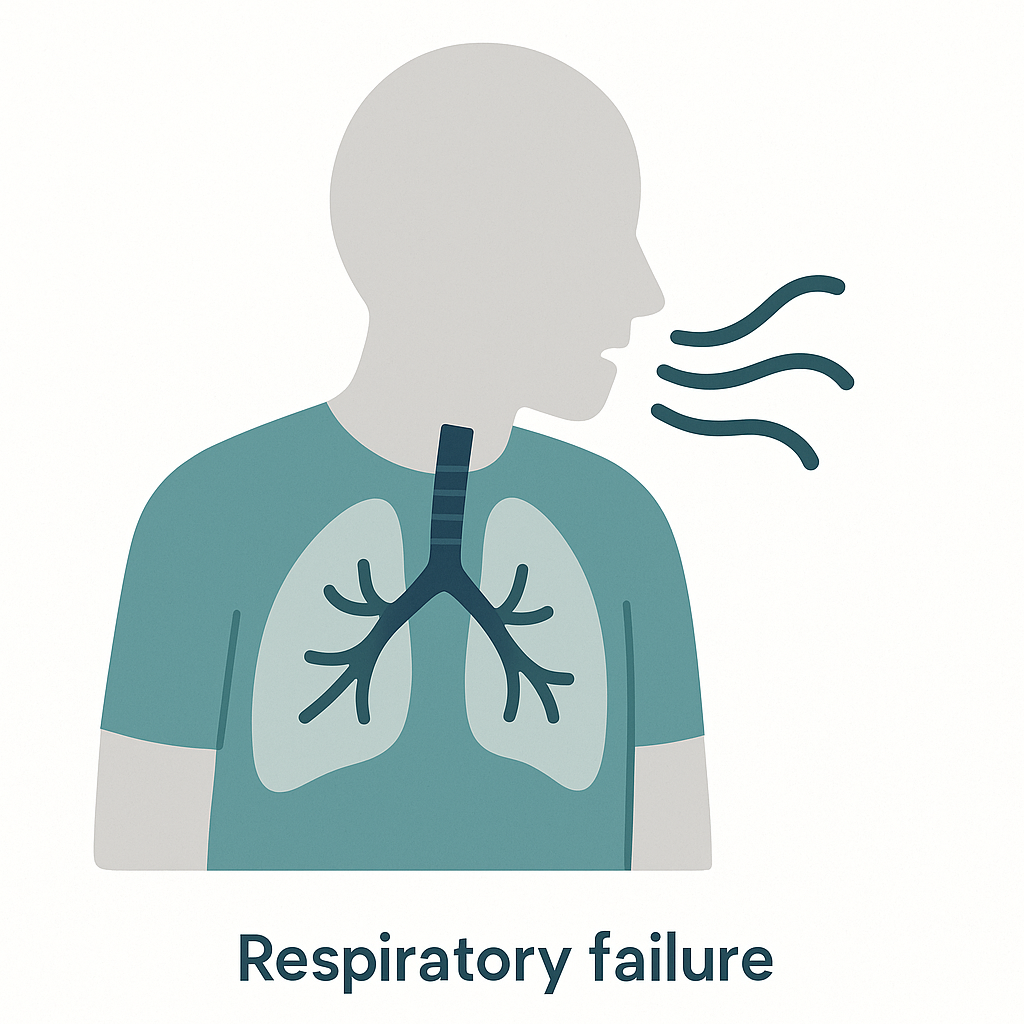
Respiratory failure is when the lungs cannot get enough oxygen into the blood or cannot remove enough carbon dioxide from the blood. It means the body is not getting the air it needs to work properly. This is a serious condition that can happen suddenly or slowly over time. It often needs quick action to keep the person safe.
Respiratory failure relates to first aid because it shows up in emergencies where a person is having trouble breathing. Breathing problems can be scary and dangerous. Knowing what respiratory failure means helps people understand why it is important to get help quickly.
The lungs are very important for breathing. When we breathe in, the lungs take in oxygen from the air. This oxygen goes into the blood so the body can use it. When we breathe out, the lungs get rid of carbon dioxide, which is a waste gas made by the body. Respiratory failure happens when this process fails or is not good enough. This can cause oxygen levels to drop and carbon dioxide to build up in the blood.
There are two main types of respiratory failure. One is low oxygen in the blood, called hypoxia. This can happen when the lungs cannot pass enough oxygen to the blood. The other type is high carbon dioxide in the blood, called hypercapnia. This happens when the lungs cannot remove carbon dioxide well enough. Sometimes both problems can be present.
People with respiratory failure may show signs that something is wrong with their breathing. They might breathe very fast or very slow, they may look confused, tired, or sleepy, or their lips and face might turn blue or grey, which shows low oxygen. They may also have difficulty talking or be very weak. These signs mean they need urgent help.
In a first aid situation, if you think someone has respiratory failure or serious breathing problems, the most important step is to get emergency help. In Australia, call 000 for an ambulance right away. While waiting for help, try to keep the person calm and in a comfortable position. Sitting up slightly often helps make breathing easier.
Make sure the person’s airway is open. This means making sure their mouth and throat are clear. If they have something blocking their airway, it will make breathing worse. Be careful not to put anything into their mouth.
It is important to watch the person closely and be ready to give CPR if they stop breathing or lose their pulse. CPR helps keep oxygen moving in the body while waiting for professional help. However, do not try to give any medicines or treatments unless you are trained to do so.
Try to keep the person safe and warm because feeling cold or scared can make breathing problems worse. Do not give them food or drink, since they might choke if they cannot swallow properly.
Respiratory failure can happen due to different causes. It might be caused by choking, asthma, lung infections, injuries to the chest, allergic reactions, or diseases like pneumonia or chronic lung problems. Sometimes chemicals or smoke can damage the lungs and cause respiratory failure. Knowing the possible cause helps the ambulance team when they arrive.
Preventing respiratory failure involves looking after your lungs and health. Avoid smoking, stay away from harmful fumes, and get help for lung infections quickly. If you or someone you know has ongoing breathing problems, follow their doctor’s advice carefully.
In summary, respiratory failure means the lungs are not working well enough to keep your blood healthy with oxygen and to clear out carbon dioxide. It is a serious problem that often needs urgent emergency help by calling 000. Helping someone with respiratory failure includes keeping them calm and safe, making sure their airway is clear, and watching them carefully until ambulance staff arrive.
Understanding respiratory failure helps ordinary people stay calm and take the right actions during a breathing emergency. Always remember that quick help from emergency services is the best way to keep the person safe.