Assisted Ventilation
Assisted ventilation is a first aid term that means helping someone breathe when they can’t breathe well on their own. Breathing is how we bring air and oxygen into our lungs and get rid of carbon dioxide from our body. Every person needs to breathe to live and stay healthy. Sometimes, a person stops breathing or breathes too slowly or weakly. When this happens, they might need help from someone nearby to get air into their lungs. This help is called assisted ventilation.
What Happens When Someone Needs Assisted Ventilation?
When a person can’t breathe properly, their body does not get enough oxygen. Oxygen is very important because it helps all the body parts work properly. Without breathing well, the brain and other organs can get damaged quickly. This is why it is very important to act fast.
You might notice someone having trouble breathing if they look very tired or confused, if their skin or lips turn blue or pale, or if they are gasping for air. Sometimes they might be unconscious and not breathing at all. These signs mean they need help fast. Assisted ventilation is a way to give them air and keep oxygen moving to their body.
Why Is Assisted Ventilation Important in First Aid?
Assisted ventilation is an important step in first aid because it can save a person’s life. When someone stops breathing or can’t breathe well, just waiting may cause serious harm or death. Giving breaths to a person helps keep oxygen flowing until professional medical help arrives or the person starts to breathe well on their own again.
Assisted ventilation also helps calm the situation because the first aider is actively helping the person survive. It is a way to keep the person alive while dealing with other injuries or problems.
How Does Assisted Ventilation Work?
To understand assisted ventilation, it helps to know a little about how breathing works. Normally, when we breathe in (inhale), air goes into our lungs. Our lungs take the oxygen from the air and pass it into our blood. Then we breathe out (exhale) to get rid of carbon dioxide, a waste gas.
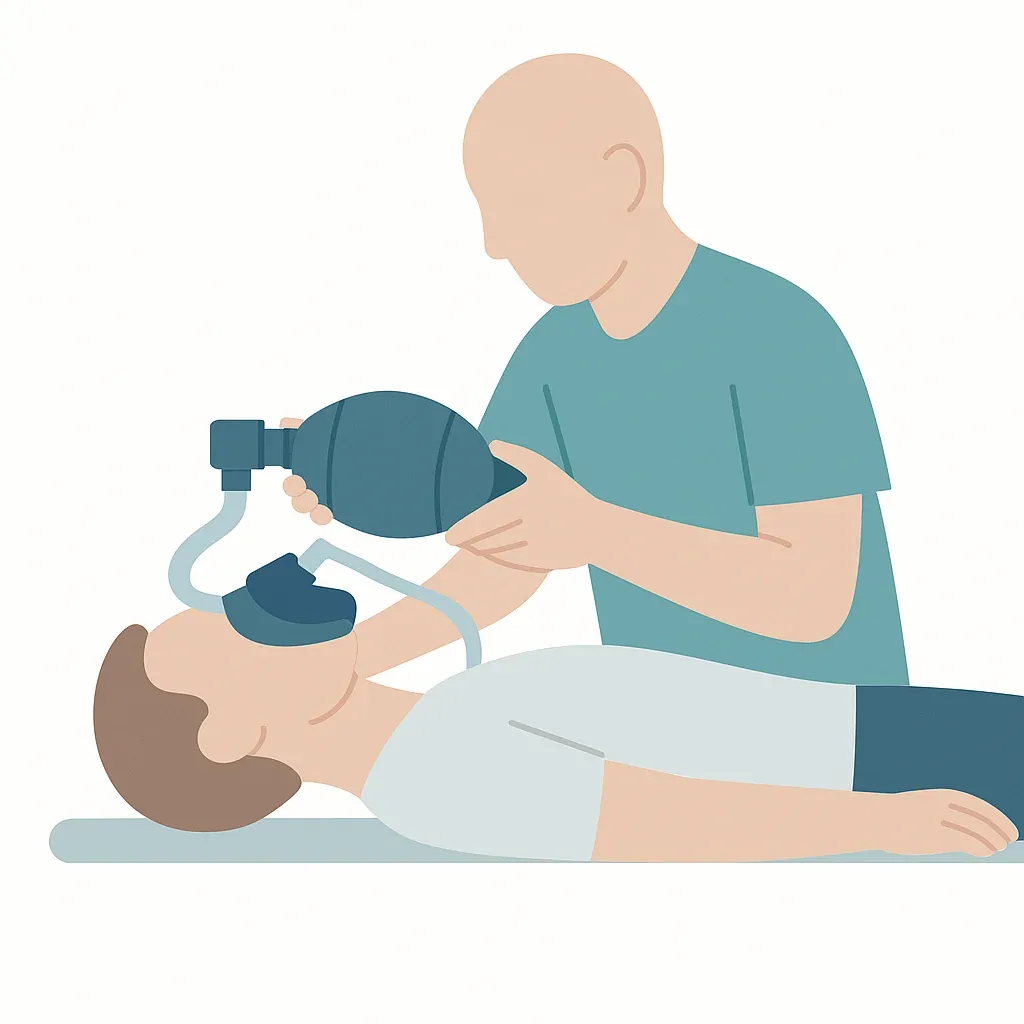
In assisted ventilation, someone helps move air into the person’s lungs. This can be done by gently blowing air into their mouth or nose. The most common way in first aid is to breathe air into the mouth while keeping the person’s airway open. This helps air go straight down to the lungs.
The idea is not to push very hard but to blow gently so the chest rises. Seeing the chest go up means the air is going into the lungs. Then, the air is allowed to come out naturally. This does not replace the person’s own breathing but helps when their breathing is too weak or missing altogether.
When Should Someone Use Assisted Ventilation?
You should consider assisted ventilation if a person:
– Has stopped breathing (no breath sounds, no chest movement)
– Has very weak or slow breathing (less than 10 breaths per minute for adults)
– Is unconscious and may have a blocked airway
In these situations, assisted ventilation can keep oxygen flowing until ambulance or emergency services arrive.
What Are The General Safety Tips for Assisted Ventilation?
Before starting assisted ventilation, it is important to keep everyone safe. Here are some tips:
– Check the scene first to make sure it is safe to help
– Always call emergency services by dialling 000 if the person is not breathing or has serious trouble breathing
– Try to open the person’s airway gently before helping them breathe (this means tilting the head back slightly to open the throat)
– If you are unsure, give the person some time to try to breathe on their own, but be ready to help if needed
– Use a barrier device (like a face shield) if you have one to protect yourself and the person
– If you feel unsafe or very uncomfortable, call for help and wait for trained emergency responders
What Should You Do After Giving Assisted Ventilation?
After giving assisted ventilation, keep watching the person’s breathing and level of consciousness. If their breathing improves, continue to monitor them and get help right away. If the person is unconscious and not breathing, be prepared to give CPR, which includes chest compressions along with assisted breaths.
Always stay with the person and provide reassurance if they regain consciousness. Help them stay calm and comfortable while waiting for medical professionals to arrive.
When to Call Emergency Services in Australia
Calling emergency services fast can save a life. If you see someone not breathing or struggling badly to breathe, dial 000 immediately. Tell the operator what is happening, where you are, and what help you have given so far.
Do not delay calling for help, even if you start assisted ventilation. Ambulance officers and paramedics are trained to provide advanced care quickly. Having them on the way is very important.
Why Some People May Feel Worried About Assisted Ventilation
It is normal to feel worried or scared about helping someone breathe. You might be afraid you will do something wrong or make things worse. However, giving assisted ventilation when needed is usually safe and helps someone in serious danger.
If you are unsure, the most important thing is to call emergency services and follow their instructions while waiting for help. Even simple actions can make a big difference for the person who needs help.
What If You Don’t Know How to Give Assisted Ventilation?
Sometimes you might not have the skills or equipment to give assisted ventilation. In this case, your main job is to keep the person safe, watch their breathing, and call 000 immediately.
If the person stops breathing completely, the emergency operator may guide you through simple instructions until help arrives. It’s always better to try to help than to do nothing.
Assisted Ventilation and Other First Aid Actions
Assisted ventilation usually goes along with other first aid steps. These can include:
– Checking the person’s responsiveness and breathing
– Clearing the airway if something is blocking it
– Doing CPR if the person’s heart has stopped or they are not breathing
Assisted ventilation keeps oxygen moving in the lungs while these other steps help support the heart and overall circulation.
Remember, assisted ventilation is just one part of helping someone who is very sick or injured. It is a way to help keep them alive until expert care can take over.
Summary
Assisted ventilation means helping someone breathe when they cannot do it well themselves. It is very important in first aid because breathing brings oxygen to the body. Without enough oxygen, the person can become very sick or die.
If someone is not breathing or breathing very poorly, you might need to help them by giving breaths. This helps keep air moving into their lungs. Always check safety first and call 000 for emergency help. Keep watching the person and continue to help them until ambulance or other medical help arrives.
Even if you don’t know a lot about first aid, calling for help and trying simple steps can make a big difference. Assisted ventilation is a kind and important action that can save lives in an emergency.