
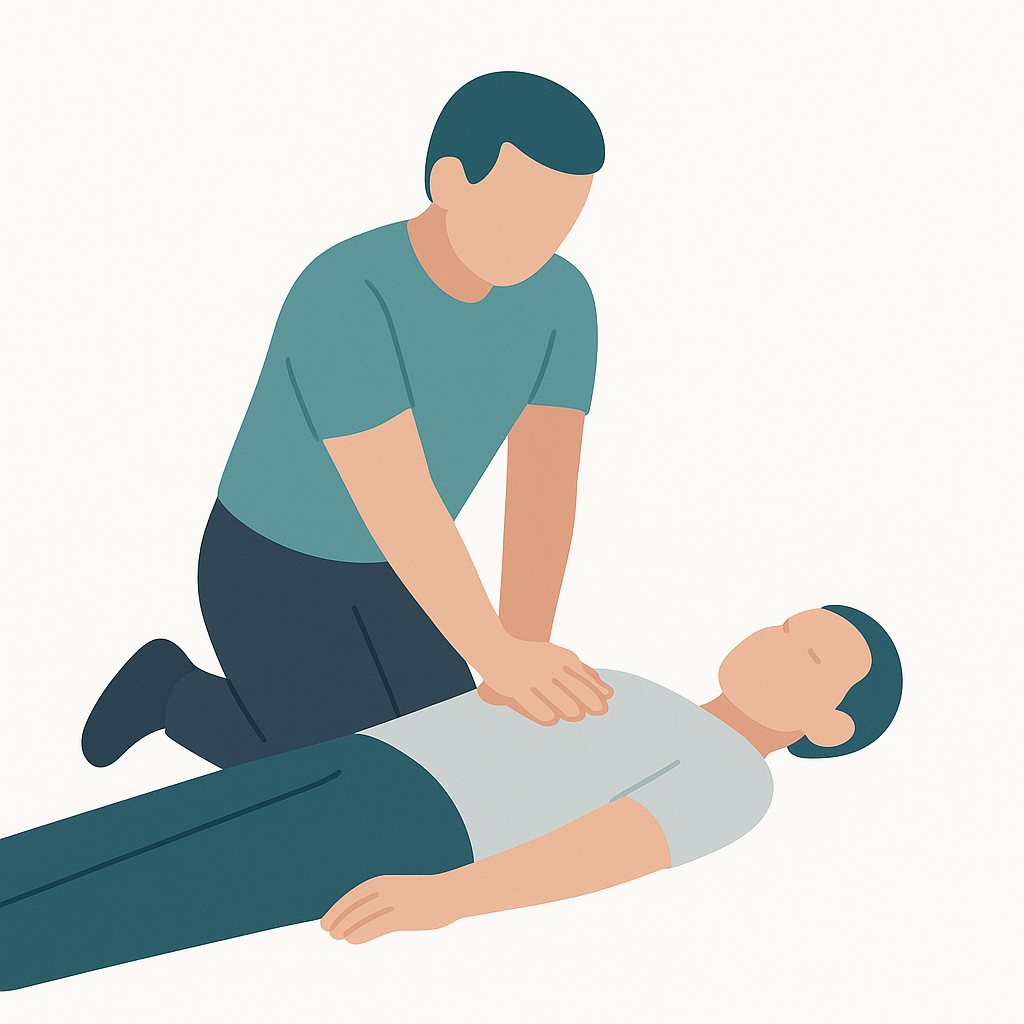
DRSABCD
DRSABCD is a simple and important way to remember the first things you should do in an emergency. It stands for Danger, Response, Send for help, Airway, Breathing, CPR, and Defibrillator. These steps help you stay safe and give the right first aid to someone who is very sick or hurt.
What is DRSABCD?
DRSABCD is a checklist you can follow when you find someone who needs help. It helps you focus on what to do first to keep both you and the person safe, and to give the best chance of helping them until professional help arrives. The steps remind you to check for dangers, see if the person is awake, call for help, and help with their breathing and heart if needed.
Why is DRSABCD Important?
When someone is in trouble, every second counts. Following the DRSABCD steps keeps things simple and clear. It helps you avoid rushing into danger or missing key actions that could save a life. It also helps you stay calm because you have a clear plan to follow.
The Steps of DRSABCD
—
Danger (D)
The first thing to do is look around for any danger. This means checking if you, the injured person, or others nearby could get hurt. Danger could be traffic, fire, electricity, sharp objects, or anything that might cause harm.
Make sure the area is safe before you go close to help. If there is danger, do not put yourself at risk. Call for help and wait for someone trained to come if it is unsafe.
—
Response (R)
After checking danger, try to see if the person is awake and can respond. You can gently ask them, “Are you okay?” or tap them lightly on the shoulder.
If they show any sign of waking up, moving, or speaking, this means they are responsive. If they do not respond, it means they might be unconscious and need urgent help.
—
Send for Help (S)
If the person is not responding or is seriously hurt, call for emergency help straight away. In Australia, dial 000 and ask for an ambulance. If you cannot do this yourself, ask a bystander to call for you while you stay with the person.
Getting professional help quickly is very important. Ambulance staff have equipment and skills to save lives.
—
Airway (A)
If the person is unconscious or not responding, their airway might be blocked. The airway is the path that air takes to get into the lungs. Sometimes, the tongue or vomit can block this path.
You need to gently tilt the head back and lift the chin to open the airway. This helps air enter and leaves the lungs free to take in oxygen. Without air, the brain and body do not get enough oxygen, and the person’s condition can get worse.
—
Breathing (B)
Next, check if the person is breathing. Look at their chest to see if it moves up and down. Listen for sounds of breathing and feel for breath on your cheek.
If the person is breathing normally, keep their airway open and place them in the recovery position if they stay unconscious. Stay with them and watch closely until help arrives.
If the person is not breathing or breathing is abnormal (like gasping), you will need to give CPR.
—
CPR (C)
CPR means cardiopulmonary resuscitation. It helps pump blood and air through the body when the heart or breathing stops. CPR involves chest compressions and rescue breaths.
Chest compressions push blood to the brain and organs. Rescue breaths add oxygen to the lungs if you feel confident to do them. This can keep the body alive until an ambulance arrives or the person starts breathing again.
Even if you do only chest compressions, it can still help save a life.
—
Defibrillator (D)
A defibrillator is a special machine that can help restart the heart during a cardiac arrest. These machines are often called AEDs (automated external defibrillators).
If an AED is nearby, someone should get it and follow the voice instructions. The machine will tell you if a shock is needed.
Using a defibrillator quickly improves the chance of survival for someone whose heart has stopped.
—
When to Use DRSABCD
You should use the DRSABCD steps whenever you find someone who might be seriously ill or injured. This could be if they have collapsed, stopped breathing, are not waking up, or are badly hurt.
If you see someone unconscious or with stopped breathing, start DRSABCD right away. Even if you feel unsure, following these steps calmly helps you give the best possible first aid.
—
Safety Tips for Using DRSABCD
– Always check for danger first to protect yourself and others.
– If the area is not safe, stay away and call for help.
– Only try to help if you feel safe to do so.
– If you are unsure about what to do, call 000 immediately.
– Do not move the person unless they are in danger (like from a fire or traffic).
– Stay calm and speak quietly to the injured person if they respond.
—
When to Call Emergency Services (000)
You must call 000 for an ambulance if:
– The person is unconscious or unresponsive.
– They are not breathing or have trouble breathing.
– They have a serious injury, like heavy bleeding, a broken bone, or severe burns.
– You suspect a heart attack or stroke.
– The situation feels urgent or life-threatening.
If you are ever in doubt, call 000. Paramedics can guide you over the phone until they arrive.
—
In Summary
DRSABCD gives you a clear and easy way to respond to emergencies. It helps you check safety, see if the person is okay, get help, and support their breathing and heart.
Following these steps can save lives. Remember to stay calm, check for danger first, look for signs of life, call for help, and provide the right care until professional help arrives.
If you ever find yourself in an emergency, using DRSABCD will help you know what to do and feel more confident. It is a simple plan that can make a big difference.
—
By keeping these steps in mind and using DRSABCD when needed, you can help someone in trouble and be a calm and helpful first aider.