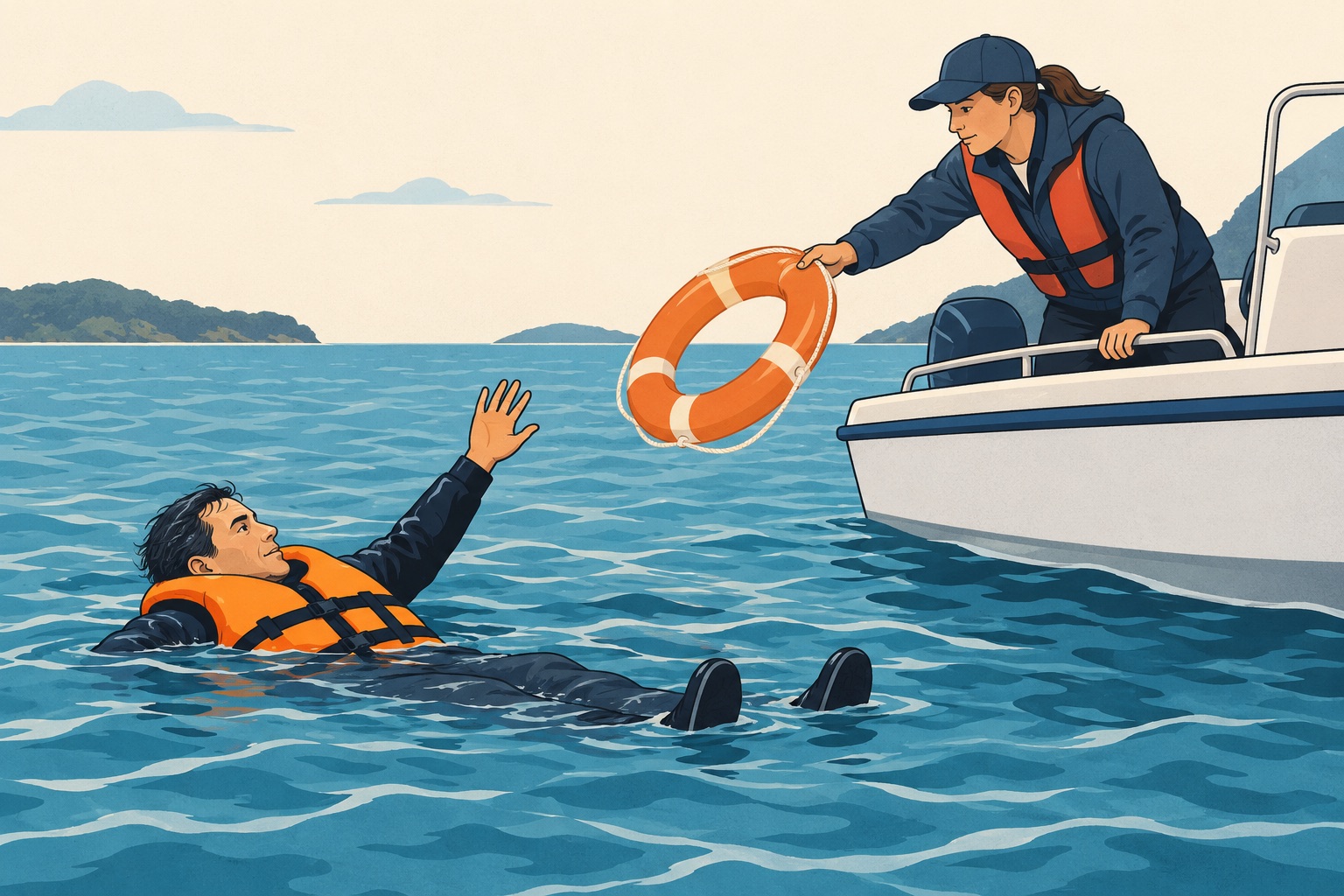


Stingray injuries can cause severe pain, a puncture wound, and heavy bleeding. In first aid, the key priorities are getting the person out of the water, calling 000 if the injury is serious, controlling bleeding, and using hot water for pain relief when appropriate.
What is a stingray injury?
A stingray injury usually happens when the stingray’s tail spine punctures the skin.
Most injuries affect the foot or lower leg after someone steps on a stingray in shallow water. The spine can cause both a wound and a venom-related injury.
What symptoms can happen?
Symptoms can include:
- severe pain
- bleeding
- a puncture wound
- swelling
- a barb or part of a spine in the wound
Serious injuries can happen if the wound is deep or in a dangerous part of the body.
What should you do in first aid?
If someone has a stingray injury:
- Help them out of the water if it is safe to do so.
- Call
000if the wound is deep, heavily bleeding, in the chest or abdomen, or the person looks very unwell. - Control bleeding with direct pressure if it is safe to do so.
- Do not remove a deeply embedded barb.
- If the injury is to a limb and bleeding is controlled, use hot water that is no hotter than can be easily tolerated for pain relief.
- Arrange urgent medical care because the wound may need cleaning, imaging, or further treatment.
If the person is not breathing normally, start CPR.
What should you avoid?
Do not remove a deeply embedded barb from the chest, abdomen, neck, or other sensitive areas.
Do not assume a stingray injury should be managed with Pressure Immobilisation. Stingray injuries follow a different first-aid pathway.
When is it an emergency?
Treat a stingray injury as an emergency if the person:
- has severe bleeding
- has a deep wound
- has a sting to the chest, abdomen, or neck
- collapses
- becomes Unresponsive
How is this page different from the other marine pages?
This page focuses on stingray injuries specifically.
- Sea Creature Bites and Stings is the broader marine overview page
- Stonefish Sting covers a dangerous fish-sting emergency with a different emphasis
- Blue-Ringed Octopus Bite covers a dangerous marine-bite emergency with a pressure-immobilisation pathway
Summary
A stingray injury can cause severe pain, bleeding, and a puncture wound. Get the person out of the water, control bleeding, leave a deeply embedded barb in place, use hot water for pain relief when appropriate, and seek urgent medical care.
Sources reviewed
Reviewed against Australian first aid and emergency guidance by the First Aid Glossary Editorial Team. This article is general information and does not replace emergency-operator directions, professional medical advice or hands-on first aid training.