
Cold water shock is the body’s immediate reaction to sudden immersion in cold water. A person may gasp involuntarily, breathe very quickly and struggle to control those breaths. If their face goes under during the first gasp, they can inhale water. This can become a drowning emergency long before their body temperature falls enough to cause hypothermia.
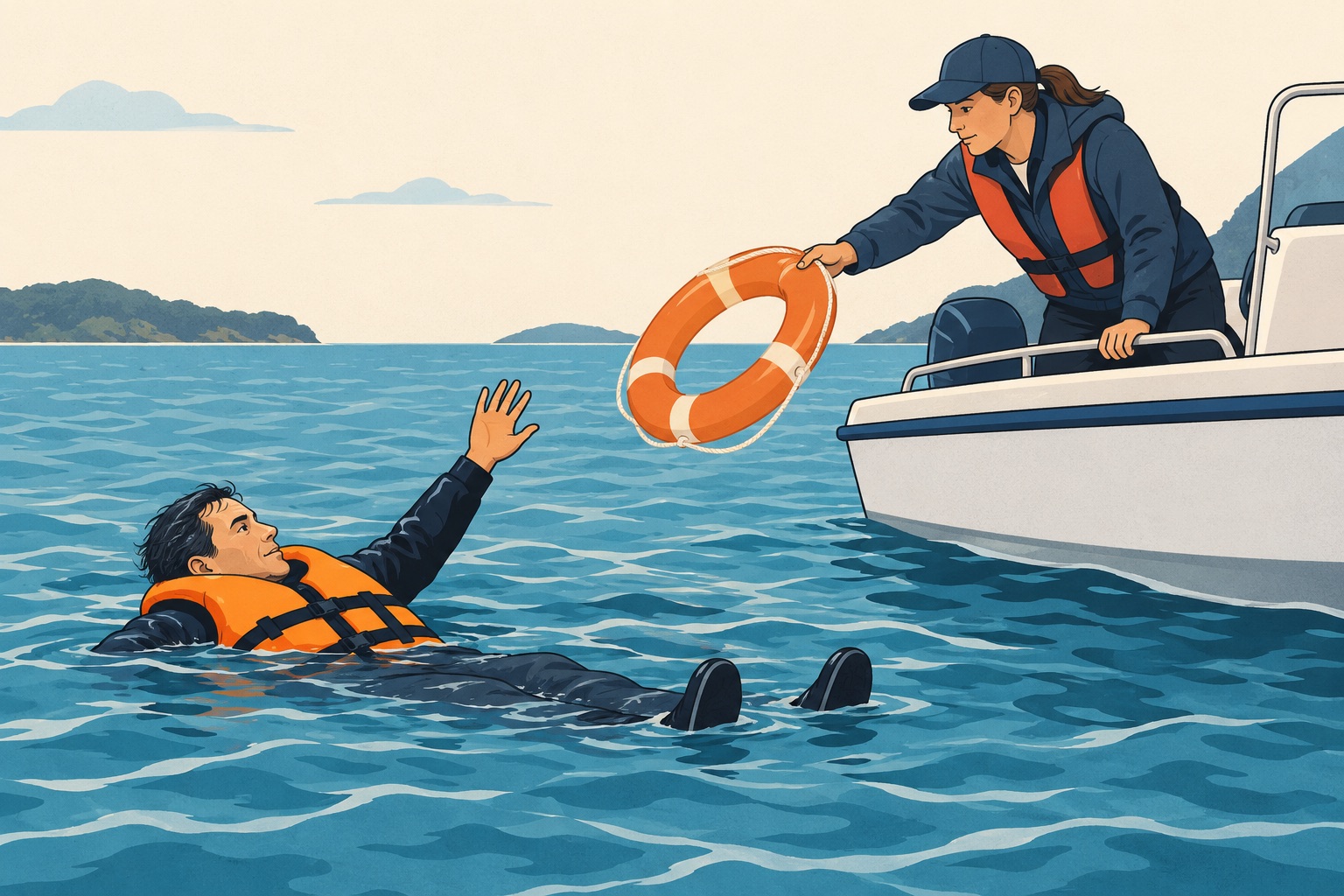
Think of someone slipping from a small boat into a cold lake. They may be an able swimmer, but for the first moments their breathing and coordination are working against them. A lifejacket, a flotation aid and a calm rescue from the boat matter more than swimming ability at that point.
What happens first?
Cold water against a large area of skin can trigger an abrupt gasp and rapid breathing, along with a rise in heart rate. Panic can make it harder to regain a breathing rhythm. The Bureau of Meteorology warns that water below about 15°C is a particular concern, but there is no temperature that guarantees safety for every person. Wind, clothing, health, fatigue and the shock of an unexpected fall all change the situation.
Cold water shock is not the same as hypothermia. Shock response starts on entry. Muscles and coordination may then become less reliable as cooling continues. Hypothermia means the body’s core temperature has fallen dangerously low. These problems can overlap, but waiting for obvious shivering or confusion misses the early breathing hazard.
If you are the person in the water
- Keep your mouth and nose clear. Hold onto a lifejacket, flotation aid or the boat if you can. Try to float on your back and concentrate on calming your breathing before making a difficult swim.
- Signal for help. Call out or raise an arm if you can do so without losing your support. Royal Life Saving Australia advises keeping movement to a minimum while waiting for a safe rescue.
- Get out of the water when it is safe. If you can climb back onto a vessel or another stable surface, get as much of your body clear of the water as possible. Do not assume a distant shore is an easy swim in cold water.
- Conserve warmth while waiting. Keep clothing on unless a heavy item is pulling you down. If you have a lifejacket and cannot get out, Royal Life Saving describes bringing the knees toward the chest and arms close to the body to reduce heat loss.
These steps are ways to buy time, not a guarantee. Conditions can change rapidly and an exhausted person may need rescue even when they appear calm.
If you see someone in trouble
Call Triple Zero (000), alert a lifeguard or boat crew if present, and give the exact location. Do not jump in impulsively. ANZCOR says a rescue from land or a craft is safest. From a stable place, throw a rope, life ring or another buoyant object, or reach with suitable equipment. Only enter water as part of a safe, trained rescue with flotation; otherwise wait for rescue services while keeping the person in sight.
Once the person is out, check responsiveness and normal breathing. If they are unresponsive and not breathing normally, start CPR, including rescue breaths if you can, and use an AED when available without delaying CPR. ANZCOR emphasises rescue breaths in a drowning emergency because lack of oxygen is the central problem. If vomit or debris is clearly blocking the airway, follow current first aid guidance to clear it, then reassess and continue care.
If the person inhaled water, needed first aid or had a drowning incident, arrange health professional assessment even if they soon say they feel well. ANZCOR advises an ambulance for people involved in a drowning incident because breathing problems can appear or worsen afterwards. While waiting, watch their breathing, shelter them from wind, remove wet clothes when practical and replace them with dry coverings. Do not allow a chilled person to drive themselves away.
How to lower the risk
Check the water and weather before boating or swimming, wear a correctly fitted and maintained lifejacket where appropriate, and make a plan for an accidental fall. Tell someone where you are going and when you expect to return. Avoid alcohol around water. A well-rehearsed way to throw flotation and call for help gives bystanders a safer option than entering the water themselves. Before setting out, identify where the rescue equipment is kept and make sure someone can reach it quickly in an emergency.
Related terms: Drowning, Cold Exposure and Hypothermia.
Sources reviewed
- Bureau of Meteorology: Cold water shock and boating
- Royal Life Saving Australia: How to stay safe in cold water
- ANZCOR Guideline 9.3.2: Resuscitation in Drowning
- ANZCOR Guideline 9.3.3: Hypothermia and Cold-Related Injuries
This glossary entry is general education, not individual medical advice or a replacement for accredited first aid training. In an Australian emergency, call Triple Zero (000).