
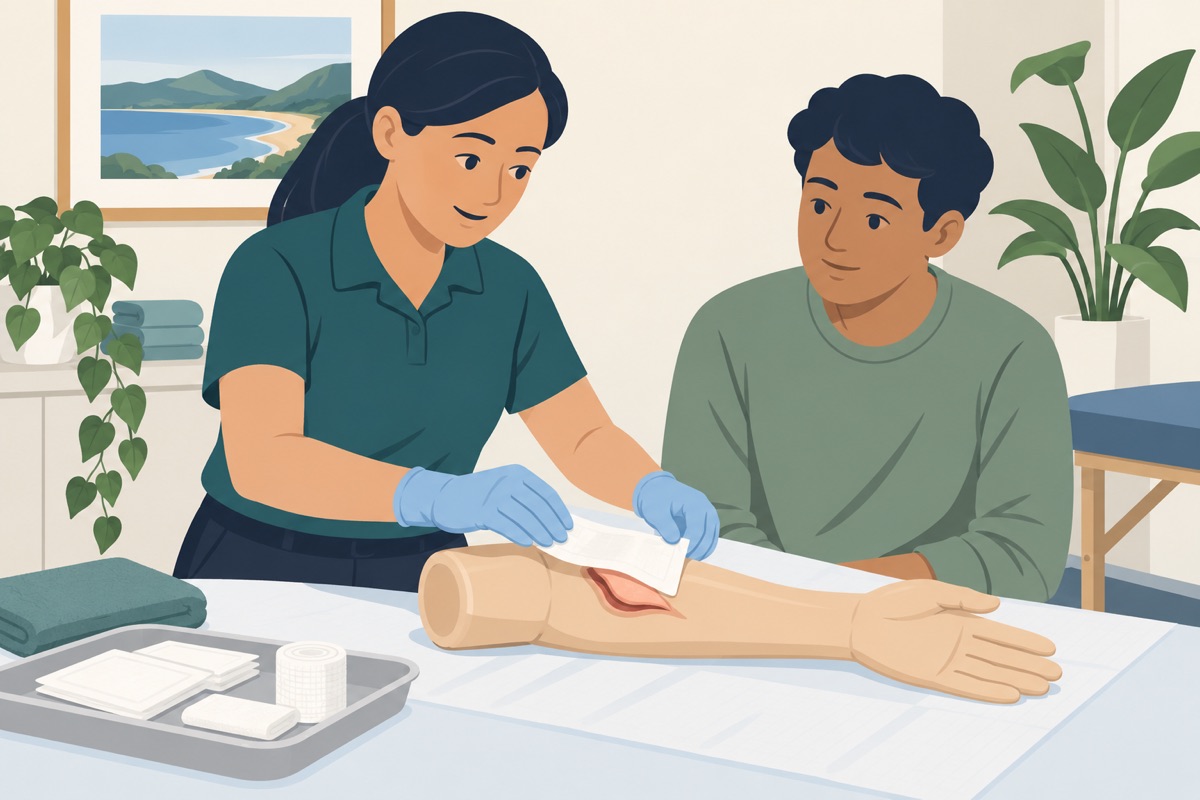

Avulsion means tissue has been torn away from where it normally belongs. A skin flap may remain attached along one edge, or a piece of tissue may be completely detached. The word describes the way an injury looks and happened; it does not tell you its depth or how much blood supply remains. A small surface mark after a forceful pull can hide deeper damage, so first aid begins with bleeding control and an honest account of the mechanism.
How is an avulsion different from a cut?
A neat cut tends to have clean edges made by a sharp object. An avulsion involves tearing or pulling, so the edge may be irregular and nearby tissue may be bruised. A severe “degloving” injury is a form of avulsion in which skin and underlying tissue are stripped away. A tooth avulsion means a tooth has been knocked completely out; its immediate care is different from a skin wound. The shared word can be confusing, so say exactly what body part is injured when you ask for help.
Picture a finger caught on a fence edge. The skin may lift as a flap, with dirt on the surface. The size of the flap is visible. Injury to vessels, nerves, tendons or deeper tissue is not. A clinician needs the story of how it happened, not only a close-up photo.
Does every skin tear count as an avulsion?
Not necessarily. A skin tear may have a flap, especially in fragile skin, but the terms describe different aspects of the wound. “Skin tear” names the skin injury; “avulsion” emphasises tissue being torn from its attachment. In a handover, plain description is often more useful than choosing a precise label: say where the wound is, how large it appears, whether tissue is still attached and how the injury occurred.
What should you notice first?
Check the scene for danger, put on gloves if readily available, and look for severe bleeding. Notice whether the person is pale, clammy, confused, faint or having difficulty breathing. Look for an embedded object, exposed deeper tissue, a wound over a joint, or an injury caused by a bite, crush or machinery. Do not spend time exploring inside the wound to work out its depth.
ANZCOR’s bleeding guideline says pressure on or around the bleeding point is the first step. For severe, life-threatening bleeding, lie the person down, apply pressure and call Triple Zero (000). If something is embedded, do not pull it out; press around it and support it with padding. Follow the ambulance operator’s instructions.
How do you protect an attached skin flap?
Do not cut off, pull at or try to glue a flap of skin. If it moves easily, keep it near its natural position without forcing it, and cover the area with a clean, non-stick dressing. A large, deep or dirty avulsion needs prompt medical assessment even when the bleeding appears to slow. The tissue’s blood supply and the need for repair cannot be judged reliably at home.
For a clearly small and superficial wound with minor bleeding, healthdirect’s wound guidance supports pressure, rinsing with clean water or saline and a suitable dressing. Avoid scrubbing or probing. Seek medical advice if the wound is deep, gaping, dirty, over a joint, near the eye, or from a bite. Ask about tetanus protection if you cannot remember your vaccination history or the wound was dirty.
When is this an emergency?
Call 000 for bleeding you cannot control, blood spurting from the wound, faintness or confusion, breathing difficulty, an eye injury, or a major traumatic injury. Do not delay the call to collect a perfect first aid kit or take pictures. For less dramatic but deep or complex injuries, healthdirect advises prompt professional assessment; some wounds need closure or careful cleaning within hours.
If tissue is completely detached, focus on the person and the bleeding first. Tell the ambulance operator what has detached and ask how to protect it for the receiving team. Do not place tissue directly on ice or let an attempt to preserve it delay urgent care. If a limb or part of a limb is involved, make that clear in the call.
What should you tell the clinician?
Give the time of injury, the pulling or crushing mechanism, any dirt or water exposure, whether a part is missing, whether a finger or limb feels numb, and what you did to control bleeding. Mention blood-thinning medicines if known. Later, increasing redness, swelling, warmth, pus, fever or worsening pain needs medical review. A dressing that looks tidy does not prove an avulsion has healed underneath.
Related entries: laceration, wound infection and tooth avulsion.
Sources checked
Sources checked 10 October 2026. General education, not a diagnosis or a substitute for practical first aid training. In an Australian medical emergency, call 000.
