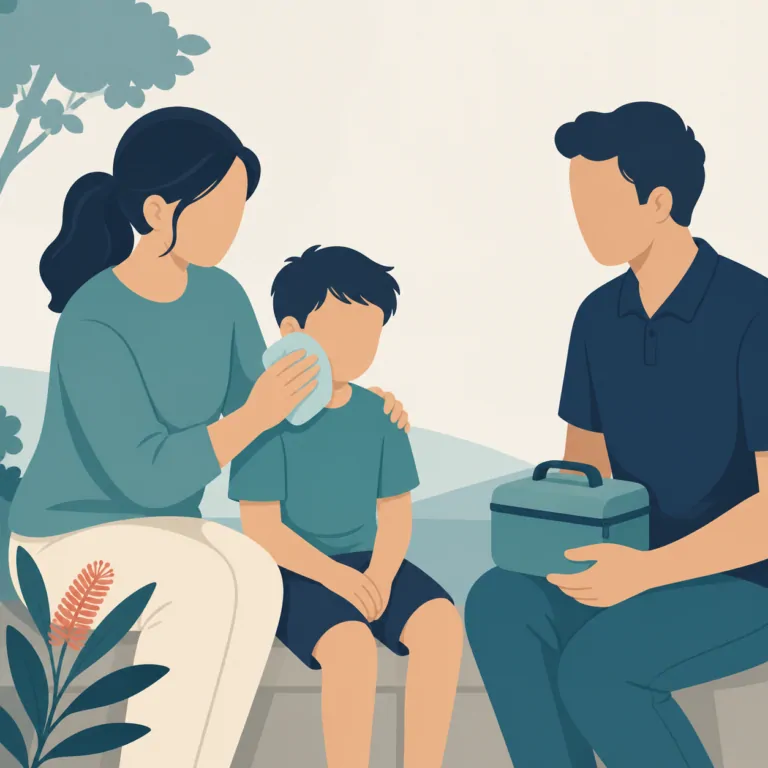


- Eye injury definition
- Start with safety and a simple check
- Minor dust or loose surface debris
- Impact, bruising and a black eye
- Suspected penetrating or embedded object
- Chemical, heat and light injuries
- Aftercare and warning signs
- Prevention at home, sport and work
- Related glossary terms
- Sources reviewed
Eye injury definition
An eye injury is damage or irritation to the eye, eyelid or surrounding area caused by impact, a foreign object, chemical exposure, light, heat or a sharp object. First aid focuses on protecting vision: do not rub, press or probe the eye; prevent further damage; and arrange urgent assessment when there is pain, vision change, a chemical, a penetrating object or a high-speed mechanism.
Eyes are delicate. A person can look relatively well while still having a scratch on the cornea, a hidden foreign body or damage beneath the surface. This is why a cautious first-aid approach is sensible. The goal is not to diagnose an eye condition at home, but to distinguish a minor irritation that settles after gentle flushing from injuries that need a clinician, optometrist or emergency department.
Start with safety and a simple check
Stop the activity and move away from the source of injury. At a worksite, switch off machinery only if it is safe to do so and make sure no one else is exposed to dust, sparks or chemicals. Ask the person not to rub their eye. Rubbing can embed a small particle, worsen a scratch or move a chemical over more of the surface.
Ask what happened: was it dust in the wind, an impact from a ball, a high-speed fragment from grinding, a splash, a burn or something that pierced the eye? Ask whether vision is blurred, doubled, reduced or changed. Look for severe pain, bleeding, swelling, unequal pupils, a visible object, a misshapen eye or inability to open the eyelids. Do not force the eyelids apart to inspect a painful injury.
Call Triple Zero (000) for an ambulance when there is a serious injury, a penetrating object, severe trauma, loss of vision, collapse or a rapidly worsening condition. Otherwise, arrange prompt urgent assessment for concerning symptoms instead of driving on or returning to work.
Minor dust or loose surface debris
For a small speck of dust or grit where there is no high-speed mechanism, no chemical and no vision change, wash hands and encourage gentle blinking. The eye’s natural tears may move the particle. You may gently flush the eye with clean water or sterile saline, keeping the affected eye lower so liquid flows away from the other eye.
Do not use fingers, tweezers, cotton buds, tissues or the corner of a towel to sweep across the eyeball. Do not share eye drops or use leftover medicated drops. If the object will not flush out, pain remains, the eye is very red, light hurts, or vision is not normal, cover the eye loosely if needed and get medical help.
Contact lenses can complicate an injury. Do not keep wearing them after an eye injury. If a lens comes out easily during flushing and the eye is not badly damaged, remove it; do not force out a lens from a seriously injured eye. Use glasses until a clinician says contact lenses are safe again.
Impact, bruising and a black eye
An impact can injure the eye itself, not only the skin around it. Apply a cold pack wrapped in a clean cloth to the surrounding bony area, not pressure on the eyeball, for short periods to help swelling. Keep the person upright and calm. Never place an ice pack directly on skin or on an open wound.
Seek urgent assessment for blurred or double vision, severe pain, blood in the eye, a cut near the eyelid, an irregular pupil, nausea with eye pain, inability to move the eye normally, a suspected broken bone or symptoms following a significant head injury. A child who becomes drowsy, vomits repeatedly, is confused or has lost consciousness after an impact needs emergency assessment.
Do not assume a “black eye” is minor because the person can still see. The force, symptoms and vision matter more than the colour of bruising.
Suspected penetrating or embedded object
If an object is stuck in the eye, or something has pierced or may have pierced the surface, do not remove it. Do not press on the eye, apply drops or try to wash it out. Keep the person still, tell them not to touch the eye and seek emergency care immediately.
You may protect the area with a loose shield that does not touch the object. A clean paper cup can sometimes be placed over the eye and lightly secured around the bony face if it can be done without pressure. Do not use a pressure pad. The uninjured eye should not be tightly patched, as eye movement can make the injured eye move too.
High-speed work is an important warning sign. A fragment from drilling, cutting, grinding or mowing may enter the eye even if the person does not see it happen. Treat this as urgent and obtain medical assessment, even if discomfort seems modest at first.
Chemical, heat and light injuries
Chemical exposure needs immediate flushing and urgent medical care; see our separate Chemical Splash in the Eye guide. Do not wait to identify the product before rinsing. For a facial burn, cool the affected skin with water but do not apply creams or dressings over the eye. Seek urgent care.
For a flash or intense-light exposure, protect the eyes from further light and arrange medical advice when there is pain, persistent glare sensitivity, blurred vision or a work-related exposure. Do not use numbing drops or another person’s medicine. They can mask symptoms or cause harm when used without appropriate assessment.
Aftercare and warning signs
An eye that feels mildly scratchy after dust exposure may improve after gentle flushing. Avoid rubbing, make-up and contact lenses while it settles. Wear sunglasses outdoors if bright light is uncomfortable. If it is not clearly better within a day or two, or if symptoms worsen at any point, see an optometrist or doctor.
Seek prompt care for increasing pain, sensitivity to light, blurred vision, black spots, coloured discharge, blood, swelling that prevents opening the eye, fever or a white or yellow spot on the eye surface. These symptoms may signal infection, a corneal injury or another condition that needs treatment.
Do not drive yourself if vision is affected. Ask another person to take you, use safe transport or call an ambulance if the injury is serious.
Prevention at home, sport and work
Wear safety glasses or goggles designed for the task when cutting, drilling, grinding, gardening, using chemicals or working where debris can fly. Ordinary prescription glasses may not provide adequate impact or side protection. At work, choose eye protection that fits, remains clean and is appropriate for the hazard; a face shield may be needed in addition to goggles for some chemical tasks.
At sport, use suitable protective eyewear where recommended and remove damaged equipment from use. At home, keep children away from projectiles, chemicals and tools, and store household chemicals in their original containers. Do not let anyone use power tools without relevant eye protection simply because the task will be brief.
Related glossary terms
- Chemical Splash in the Eye
- Foreign Object in the Eye
- Personal Protective Equipment
- First Aid for Cuts
- Calling Triple Zero (000)
Sources reviewed
- Healthdirect: objects or chemicals in the eye
- Healthdirect: black eye
- Better Health Channel: eye safety at work
- Healthdirect: first aid basics
Reviewed against Australian first aid and emergency guidance by the First Aid Glossary Editorial Team. This article is general information and does not replace emergency services, professional medical advice or hands-on first aid training.