
Back blows are sharp blows to the middle of the back between the shoulder blades, used when a person is choking and cannot clear the blockage with an effective cough. In Australian first aid they are part of a rapid response with a Triple Zero (000) call and, if needed, chest thrusts. The aim is to dislodge the object with each blow. You do not have to deliver five if the airway clears sooner.
First ask: is the cough working?
Someone who can still cough forcefully and move air has a better chance of clearing the object by coughing. Encourage them, stay close and watch for a change. Do not interrupt an effective cough with blows to the back. A weak or silent cough, an inability to speak, little or no air movement, or a person becoming distressed or blue points to a severe blockage. Send for an ambulance and begin the choking sequence. A quiet person is not necessarily improving; they may be running out of air.
Imagine a person at a family lunch who suddenly cannot answer when asked if they are choking. Another guest calls 000. One helper supports the person and gives a back blow, then checks whether they can breathe or cough. The group does not pause to debate which food caused it. The next action depends on whether air is moving now.
What does a back blow involve for an adult or older child?
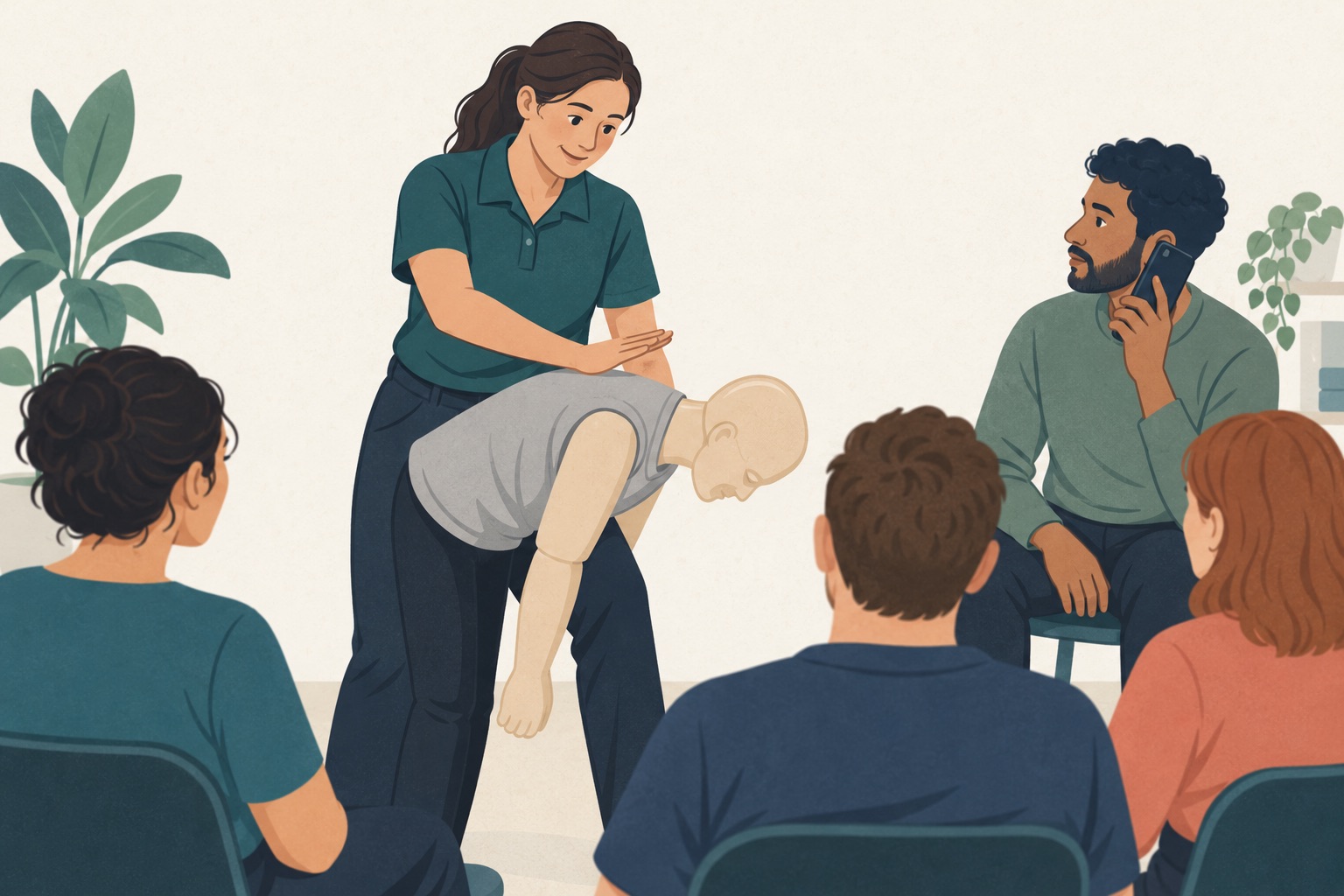
Help the responsive person lean forward. Stand to the side and slightly behind them, supporting their chest. Use the heel of one hand to deliver one sharp blow between the shoulder blades. Look and listen for the obstruction clearing. Repeat only as needed, for up to five blows. A forward position helps an object move out of the mouth rather than farther into the airway. Do not hit the person’s back while they are upright.
If those blows do not clear the blockage, give up to five chest thrusts, checking after each one. Continue alternating the two techniques while the person remains responsive and the obstruction remains. ANZCOR does not recommend abdominal thrusts, often called the Heimlich manoeuvre, because serious complications have been reported. Follow the ambulance call-taker’s instructions and your current first-aid training.
How is it different for a baby?
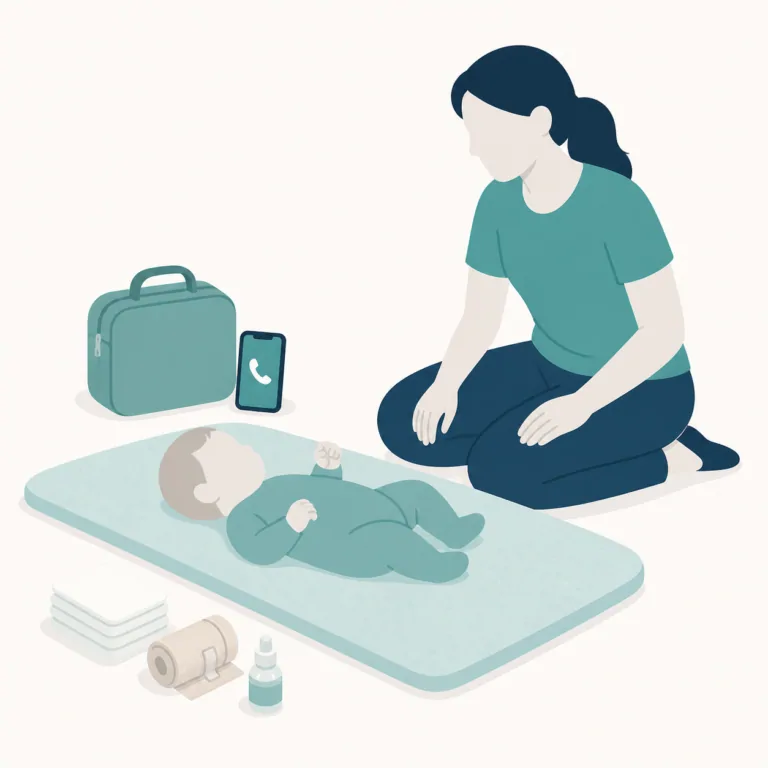
An infant under one year needs their head and shoulders supported, with the head lower than the body. Healthdirect describes placing the baby face down on your forearm and giving up to five sharp blows between the shoulder blades, checking after each. If the object has not cleared, turn the baby onto their back and give up to five chest thrusts at the lower half of the breastbone, again checking each time. The responder alternates back blows and chest thrusts while waiting for help.
Call 000 immediately for a choking baby. Never hold a child upside down by the legs or shake them. A baby’s small airway and body make a training session especially valuable: practise the supported position on a manikin, not on a real child during a calm moment. The illustration above shows a class using an adult manikin; it is not an infant positioning guide.
What if the person becomes unresponsive?
Lower them carefully to the ground and start CPR if they are unresponsive and not breathing normally. Ask someone to bring an AED and follow its prompts when available. Do not keep giving back blows to an unresponsive person. ANZCOR advises against blind finger sweeps, which can push an object farther in or injure the mouth. Remove an object only if you can see it and can take it out safely. Keep the 000 call connected so the operator can guide you.
If the blockage clears, check that breathing and speech have returned and keep observing. Healthdirect advises a medical review if a cough or wheeze persists, blood is coughed up, fever develops or breathing remains difficult. An object can sometimes remain farther down the airway even after the immediate choking episode appears over. Tell a clinician what happened and what first aid was given.
How does this term fit with related first aid?
Choking describes the airway problem; back blows are one response when an effective cough has failed. Chest thrusts are the companion technique when back blows do not clear it. The practical decision is repeated after every action: can the person now breathe, speak or cough effectively? That observation matters more than finishing a count.
For the handover, tell the ambulance crew when the choking began, whether the person could cough, how many back blows and chest thrusts were needed, whether an object came out, and whether breathing changed afterwards. If you are unsure of a detail, say so instead of guessing.
Sources checked
- ANZCOR Guideline 4: Airway and choking
- Healthdirect Australia: Choking
- ANZCOR Guideline 8: Cardiopulmonary resuscitation
Sources checked 10 October 2026. General education; hands-on first-aid training and the ambulance operator’s advice are essential in an emergency. In Australia, call 000.