
Arterial bleeding means when blood comes out of an artery. Arteries are large blood vessels that carry fresh, oxygen-rich blood from the heart to the rest of the body. Because arteries carry blood under high pressure, bleeding from an artery is often fast, bright red, and can be very serious. This type of bleeding needs quick attention because it can cause a person to lose a lot of blood quickly.
In first aid, arterial bleeding is important to understand because it is a life-threatening emergency. If someone has arterial bleeding, they need help right away to stop the bleeding and keep them safe. Knowing what arterial bleeding looks like and how to respond calmly can save lives.
Arteries are part of the body’s blood system. They take fresh blood from the heart and send it to the body’s organs, muscles, and skin. The blood in arteries is bright red because it has oxygen that the body needs. When an artery is cut or hurt during an accident or injury, the blood sprays out with force. This is different from other types of bleeding where the blood may flow slowly or in a steady trickle.
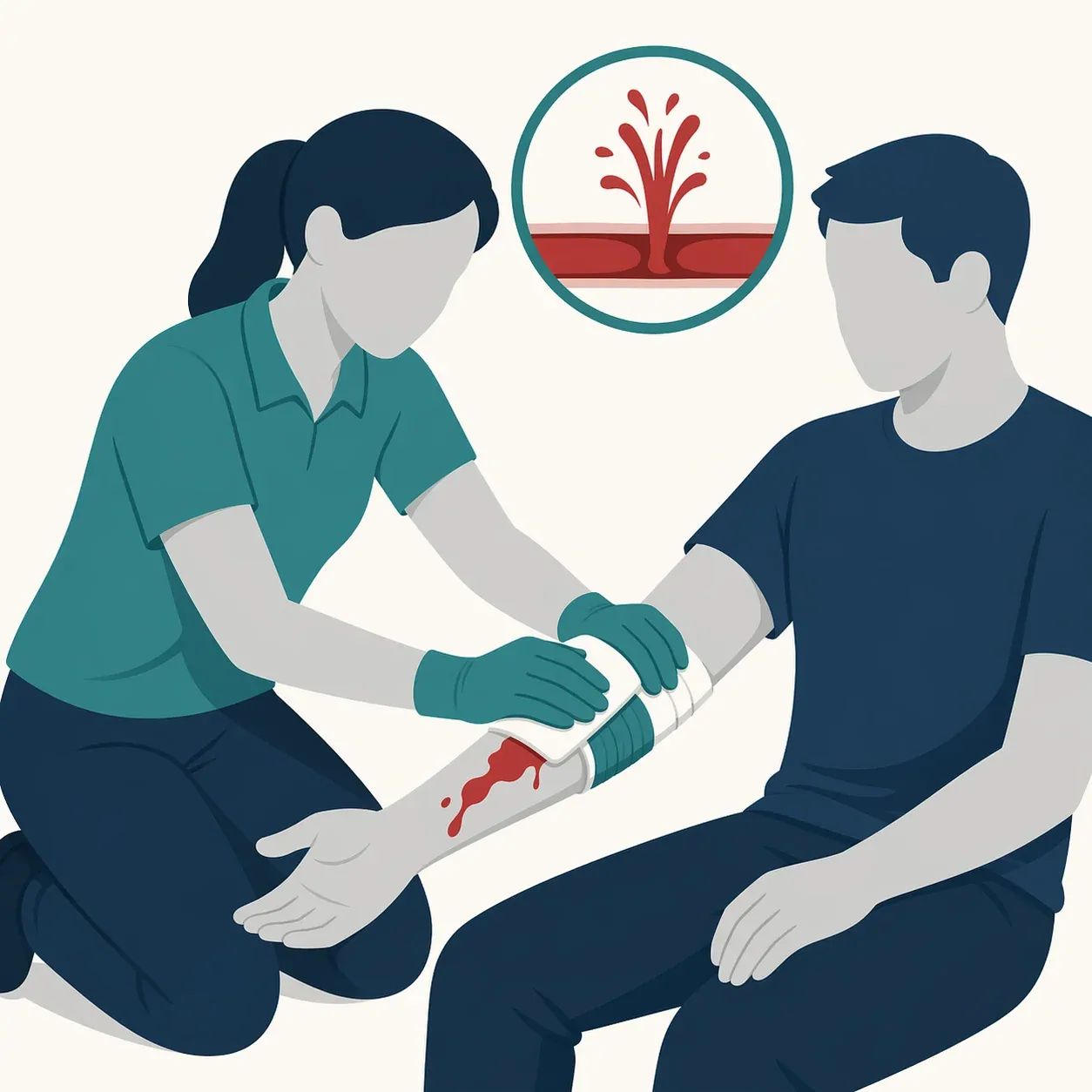
You might notice the blood coming out in strong spurts or jets. This happens because each heartbeat pushes blood through the arteries under pressure. The bright red colour and pulsing flow are signs that an artery is bleeding. The injured person might feel dizzy, weak, or even faint because they are losing blood quickly. The area around the wound may also become pale or cold if enough blood has been lost.
Why it matters in first aid
Doing first aid for arterial bleeding is about stopping or slowing the bleeding until medical help arrives. The main goal is to keep the person alive. Controlling the bleeding helps prevent shock. Shock happens when the body does not have enough blood to work properly. It can be very dangerous if it is not treated quickly.
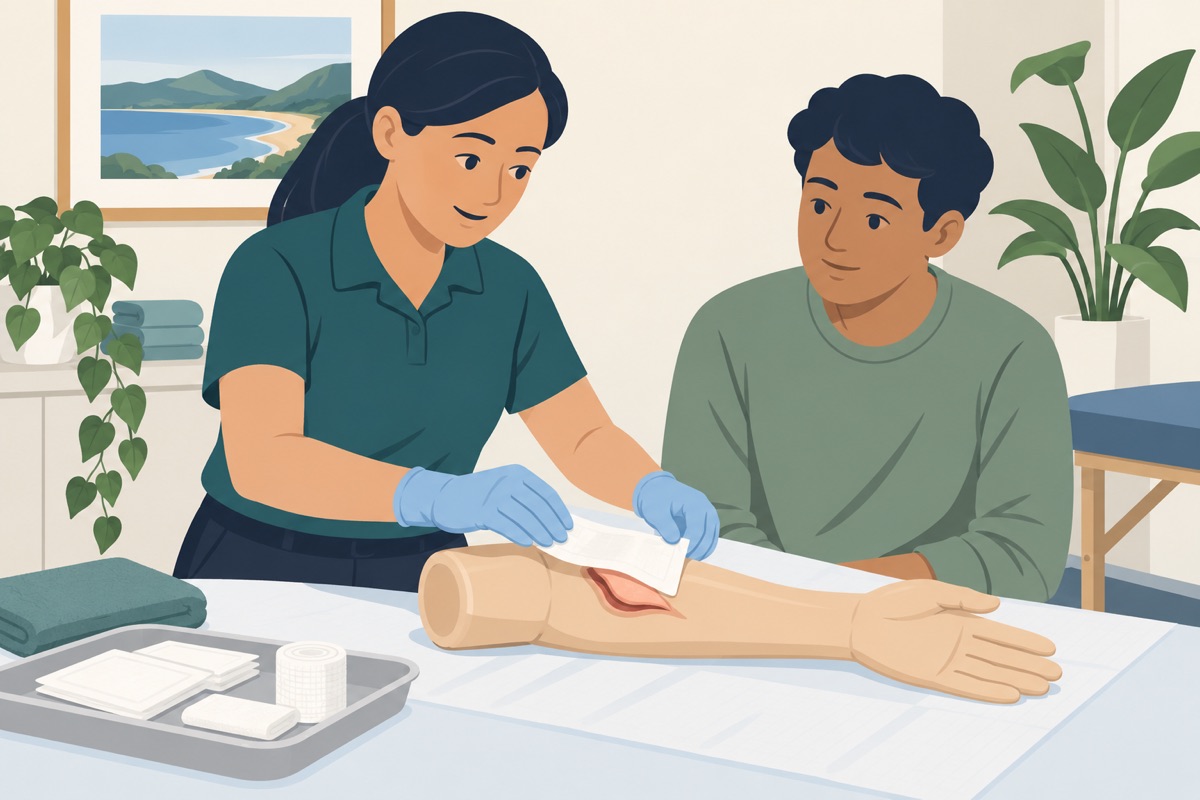
If you see someone with arterial bleeding, you should act fast but stay calm. First, always protect yourself by wearing gloves if available or using a clean cloth. This helps stop germs from passing between you and the injured person. Then, try to stop the blood flow by applying firm pressure directly on the wound. You can use a clean cloth, a towel, or your hands to press firmly.
In some cases, if the bleeding is very heavy and the wound is on an arm or leg, you might need to apply a pressure bandage or use a technique called a tourniquet. A tourniquet is a tight band that goes above the wound to squeeze the blood vessels and stop blood from flowing. However, using a tourniquet is usually only for serious bleeding when other methods do not work. The safest thing for most people is to press hard on the wound and call for help.
When to call 000
Calling emergency services is very important when there is arterial bleeding. In Australia, you should call 000 right away if the person is bleeding a lot, if you cannot stop the bleeding, or if the wound is deep or large. Emergency responders can get to the scene quickly and provide medical care that can save the person’s life.
Safety and prevention
While waiting for help to arrive, keep the injured person lying down if possible. Raising their legs a little can help blood flow to the heart and brain. Try to keep them calm and warm to prevent shock. If they feel cold, cover them with a blanket or something similar.
It is also important not to do things that could make the bleeding worse. Do not remove any objects stuck in the wound because this could make the bleeding heavier. Do not apply too many bandages on top of each other without clear pressure, as this will not stop the bleeding. And do not give the person anything to eat or drink, in case they need to have surgery later.
Arterial bleeding can happen from accidents like cuts with sharp objects, vehicle crashes, or injuries from falls. It can also happen if someone hurts their arm, leg, neck, or other parts of the body where arteries run close to the skin. Sometimes this bleeding happens around the neck or upper body, which can be especially dangerous.
Knowing about arterial bleeding helps you stay prepared for emergencies. If you understand how serious arterial bleeding is and how to give first aid safely, you can help keep someone alive until medical experts take over. Remember, the key steps are to apply firm pressure, call emergency services, keep the person calm, and watch for signs of shock.
Summary
In summary, arterial bleeding is a strong, fast flow of bright red blood from an artery. It shows that the blood is coming from a big blood vessel with a lot of pressure. This type of bleeding needs quick and firm action to control it. First aid focuses on pressing on the wound and calling 000 in Australia for emergency help. Keeping the injured person calm and safe until professional help arrives is very important.
Being calm and ready can make all the difference in an emergency with arterial bleeding. If you ever find yourself in this situation, remember to focus on stopping the blood, keeping the injured person safe, and getting emergency help quickly. Taking these simple steps can save a life.
Sources reviewed
- ANZCOR Guideline 9.1.1: first aid for management of bleeding
- Triple Zero: official emergency calling guidance
Reviewed against Australian first aid and emergency guidance by the First Aid Glossary Editorial Team. This article is general information and does not replace emergency-operator directions, professional medical advice or hands-on first aid training.