
A chemical burn happens when a substance damages skin or an eye. A splash from a cleaning product, a leaking battery or a dry industrial powder can all start this kind of injury. The patch you can see may look modest while the substance is still working beneath the surface. The useful first question is therefore not “How bad does it look?” but “Can we stop the contact safely and start rinsing?”
Make the place safe before you help
Keep your own skin and eyes away from the substance. Put on suitable gloves and eye protection if they are at hand, and move the person away from the source only when it is safe. Do not walk into fumes, smoke or an unknown gas to attempt a rescue. Leave the area and call Triple Zero (000); tell the call-taker what you can see and whether anyone may have inhaled the substance. A second exposed person makes the situation harder, not better.
Ask someone else to bring the product container or safety data sheet if this can be done without contact. You do not need to identify the exact chemical before beginning first aid. For specialist chemical advice in Australia, the Poisons Information Centre is available on 13 11 26.
If the chemical is on the skin
- Stop the exposure. If it is a dry powder, gently brush the loose material off first, taking care not to send it onto another person or area of skin. Remove contaminated clothing, shoes and jewellery where possible. Do not pull away anything stuck to the burn.
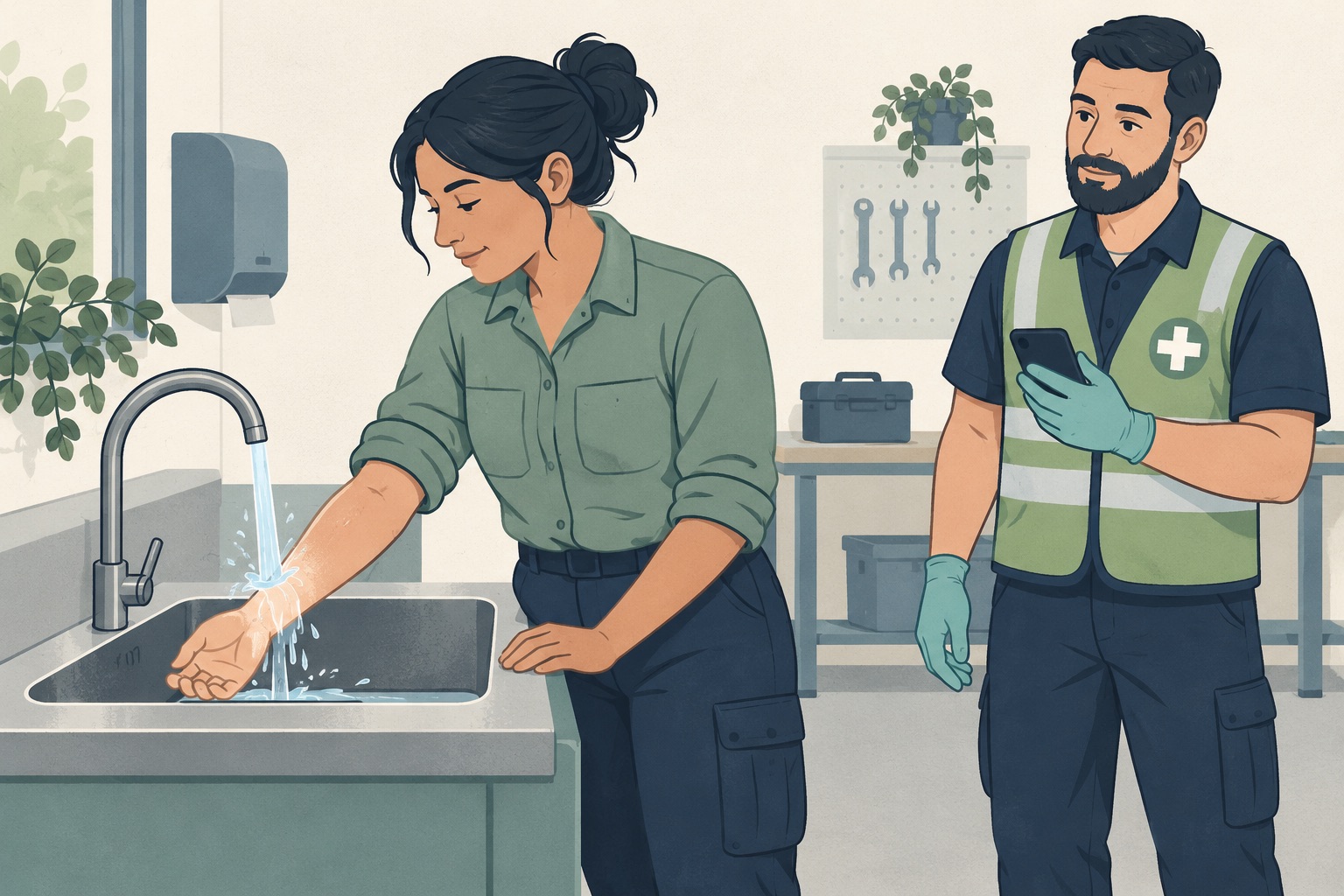
- Start water straight away. Place the affected skin directly under cool running water. Keep rinsing for at least 20 minutes; some chemical exposures need up to an hour. Arrange help while water is running rather than postponing the rinse for a phone call or a trip.
- Control the run-off. Position the person so contaminated water flows away from clean skin, clothing and the helper. Check that chemicals caught under a watch, sleeve or shoe have not been left in contact with the body.
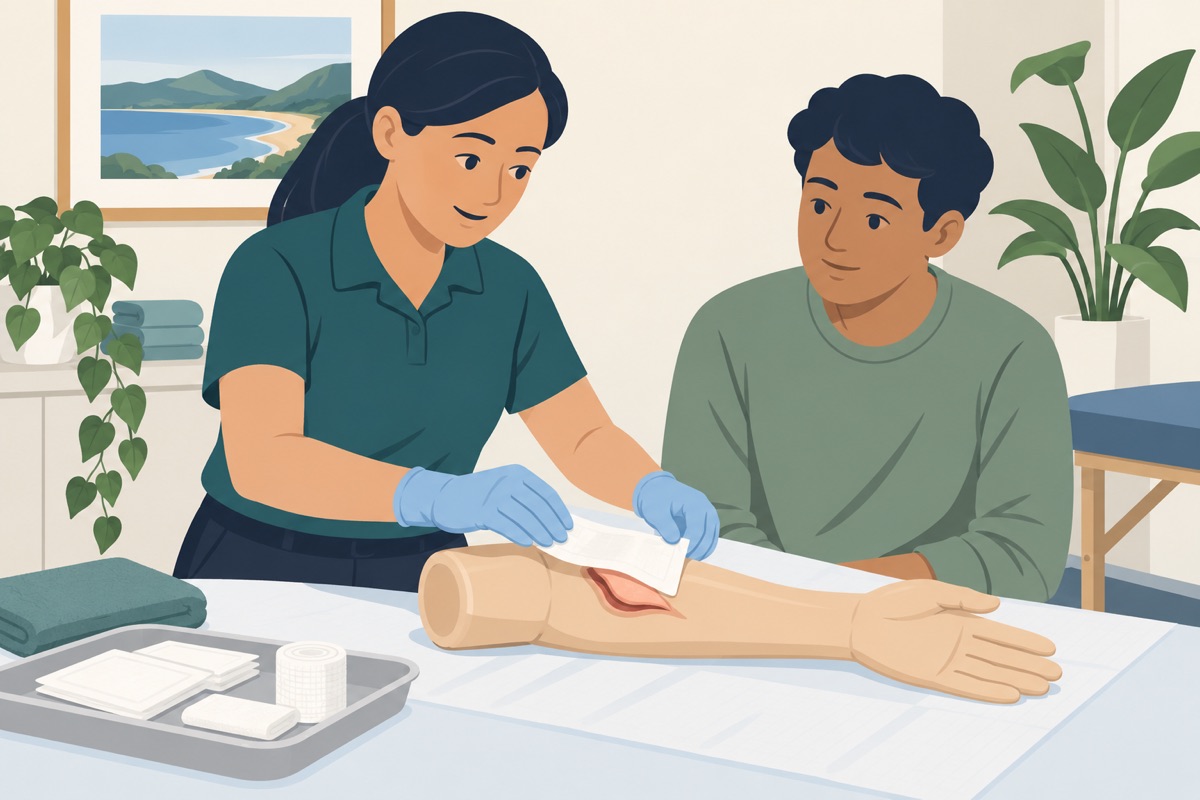
- Protect the area afterwards. Once thoroughly rinsed, loosely cover the injury with a clean, non-stick dressing if one is available. Keep the person comfortable while waiting for clinical assessment.
Do not try to cancel an acid with an alkali, or the reverse. Mixing chemicals can generate heat and cause further harm. Ointment, butter, ice and household remedies can interfere with care. ANZCOR advises against cling film or hydrogel dressings for chemical burns. Water and prompt medical help are the priorities.
If a chemical enters an eye
Begin flushing the eye immediately with clean, gently running water. Help the person hold their eyelids open if they can tolerate it. When one eye is affected, tilt the head with that eye lower so the flow is less likely to carry the chemical into the other eye. Remove contact lenses if they come away readily; do not delay irrigation to search for them or force them out. Continue flushing while urgent help is arranged. An eye may feel better after a short rinse but still need prompt examination.
Eye exposure has its own handling details. See our Chemical Splash in the Eye entry for a focused guide. Do not put neutralising drops into the eye.
When to call for help
ANZCOR treats chemical burns as significant burns and recommends an ambulance. Call Triple Zero (000) for a suspected chemical burn, especially an eye exposure, a large or painful area, breathing symptoms, or an unknown substance. Tell the operator if the person is drowsy, collapses, has a seizure, or has been exposed to fumes. Follow the call-taker’s instructions while you keep flushing.
After immediate rinsing is underway, Poisons Information can advise on the particular product and any further precautions. Give clinicians the substance name, how it touched the person, the time of exposure, when rinsing began and how long it continued. Bring a label or a photo of it if doing so is safe. Those details can matter more than an early guess about how deep the burn is.
Why this is different from a heat burn
With a scald, the source of heat may be gone even though the skin remains injured. A chemical can keep damaging tissue while it remains on the body or in clothing. That is why removing contamination and sustained irrigation are central here. Do not judge severity by a quick look or wait for blisters before acting. A delayed change in pain or appearance is possible, and medical assessment is important even after a thorough rinse.
Related entries: Burn, Toxic Exposure and Eye Injury.
Sources reviewed
- ANZCOR Guideline 9.1.3: First Aid for Burns
- Healthdirect Australia: Chemical burns
- Healthdirect Australia: Poisoning
This glossary entry is general education, not individual medical advice or a substitute for first aid training. In an Australian emergency, call Triple Zero (000).