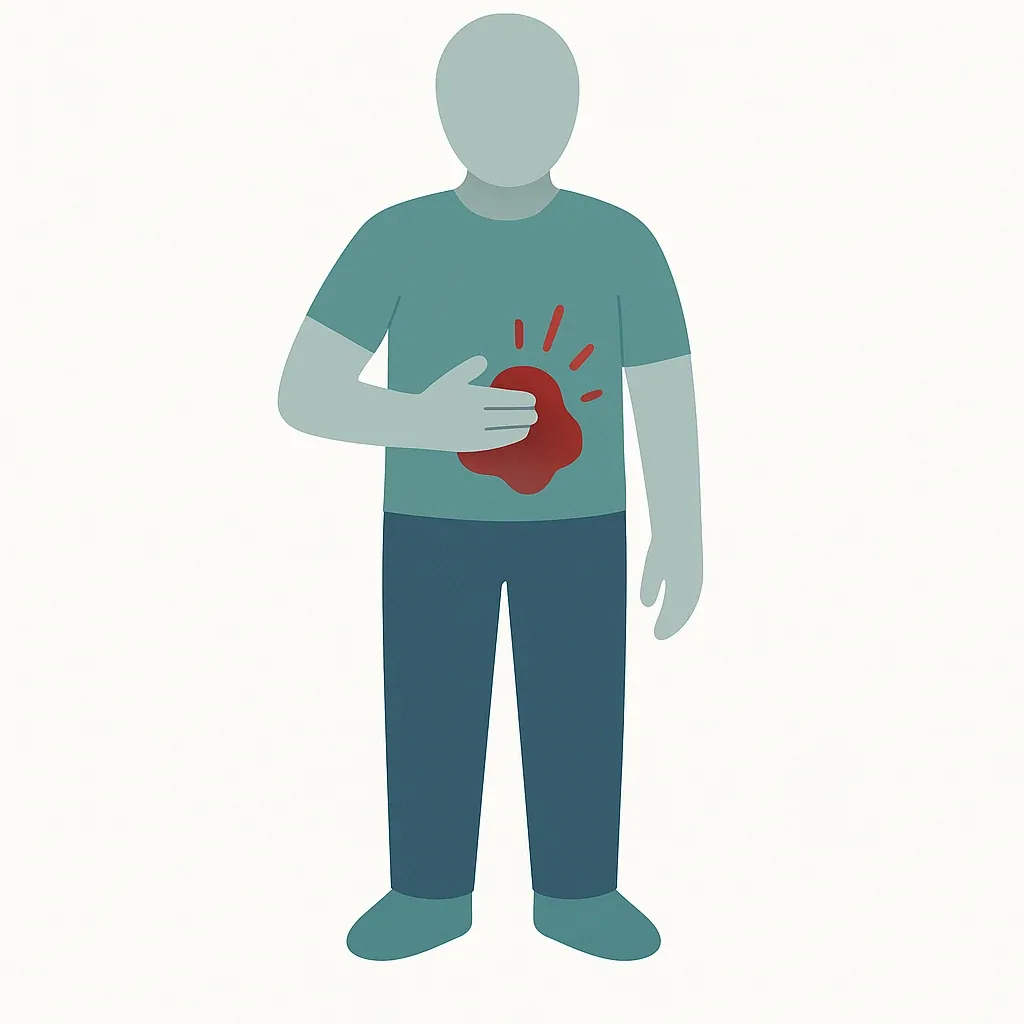

Internal bleeding is when blood leaks out from inside the body but stays inside the body tissues or spaces instead of coming out through a cut or wound. This can happen when a blood vessel, like an artery or vein, gets damaged inside the body. It is different from bleeding that you can see on the skin because the blood is hidden under the skin, inside muscles, organs, or body cavities.
Internal bleeding is an emergency that needs quick attention. This is because the blood that leaks inside the body can collect and cause pain, swelling, or damage to important parts like the brain, lungs, or belly. If the blood loss is large, it can make a person very weak and can be life-threatening. First aid can help while waiting for medical professionals to arrive.
What Causes Internal Bleeding?
Internal bleeding can happen for different reasons. It often occurs after a serious injury, such as a fall, car accident, or a heavy hit during sports. Sometimes, it can happen from medical problems like ulcers in the stomach, a burst blood vessel, or certain diseases that affect blood vessels.
Injuries inside the body may tear or bruise organs, which causes blood vessels to bleed. Sometimes the bleeding is slow and hard to notice, and sometimes it is fast and very serious.
Signs and Symptoms to Watch For
Internal bleeding can be tricky to spot because you cannot always see blood on the outside. But there are signs that may mean someone is bleeding inside:
- They might feel weak, dizzy, or faint.
- Their skin could look pale or feel cold and sweaty.
- They might have pain, swelling, or a bruise in one area like the stomach, chest, or limbs.
- They could cough or vomit blood if blood is in their lungs or belly.
- They may have a fast heartbeat or breathing.
- If the bleeding is inside the head, the person might have a headache, confusion, weakness, or changes in how they act.
- The warning signs depend on how bad and where the bleeding is.
Why Is Internal Bleeding Important in First Aid?
Internal bleeding can be very serious. If a lot of blood leaks out of vessels inside the body, the person can go into shock. Shock is when the heart cannot pump enough blood to body parts, and the body starts to fail. This needs to be treated quickly to save life.
Knowing how to recognise signs of internal bleeding helps you give the right care and get emergency help fast. It also helps you keep the person safe and comfortable while waiting for medical staff.
What to Do If You Suspect Internal Bleeding
If you think someone might have internal bleeding, it is important to stay calm and check for danger first. Make sure the area is safe for you and the injured person.
Call 000 immediately if the person:
- Has been injured badly in an accident
- Is unconscious or not responding
- Has trouble breathing or coughing up blood
- Is very pale, sweaty, or weak
- Has severe pain or swelling that gets worse
- Looks confused or has a seizure
- While waiting for emergency help:
- Keep the person still and as comfortable as possible.
- Lay the person down on their back, unless this hurts or makes it harder to breathe.
- Cover them with a blanket or clothing to keep warm but do not overheat.
- Try to find out what happened and when symptoms began.
- Do not give the person food or drink in case they need surgery.
- Do not try to find or stop the bleeding inside the body yourself.
- Avoid moving the person too much if you think they have injured their neck, back, or head.
General Safety Tips
Always take care to protect yourself when helping someone. Wear gloves if you have them to avoid contact with blood or body fluids.
If there is an accident, do not put yourself in danger. Call for professional help rather than trying to move someone who may have serious injuries.
Remember that internal bleeding is not always easy to see. Trust your gut feelings if something seems wrong.
When to Call Emergency Services
Call 000 right away if you see or suspect internal bleeding after a serious injury or accident. Don’t wait to see if symptoms get worse.
If the person has signs like fainting, unconsciousness, fast breathing, or confusion, call immediately.
Even if the symptoms seem mild but you are worried, it is better to get professional help early.
What Happens After Calling Emergency Services
Ambulance paramedics will come to check the person. They have the right tools and training to assess internal bleeding.
Doctors may do scans or tests in hospital to find where the bleeding is and how bad it is.
Treatment may include giving fluids, blood transfusions, or surgery to fix damaged blood vessels.
Your first aid helps the person survive until experts take over.
Summary
Internal bleeding is blood leaking inside the body, hidden from view. It can happen from injuries or medical problems and can be very serious.
Look for signs like pain, swelling, weakness, pale skin, or changes in behaviour.
If you think internal bleeding is possible, call 000 for emergency help quickly.
Keep the person still, warm, and comfortable, and wait for paramedics.
Remember that knowing about internal bleeding helps you act with confidence in an emergency. Your quick care can save a life.
Sources reviewed
Reviewed against Australian first aid and emergency guidance by the First Aid Glossary Editorial Team. This article is general information and does not replace emergency-operator directions, professional medical advice or hands-on first aid training.