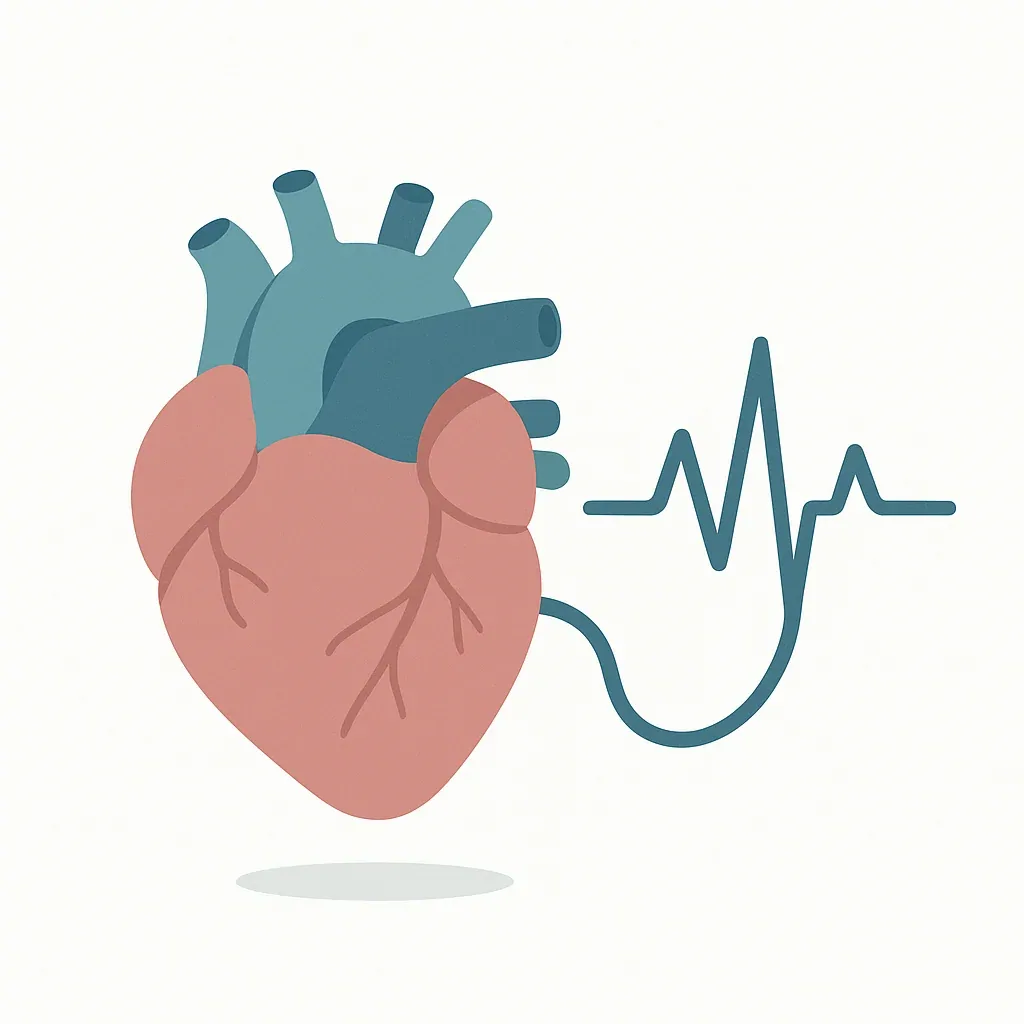

Heart rate means how many times the heart beats in one minute. In first aid, heart rate can help you understand whether a person may be stressed, unwell, deteriorating, or in immediate danger.
What is heart rate?
Heart rate is the number of heart beats per minute. A resting adult heart rate often falls between about 60 and 100 beats per minute, although what is normal can vary between people.
Heart rate is not the same thing as a diagnosis. A faster or slower rate can happen for many reasons, including exercise, pain, fear, fever, dehydration, bleeding, illness, or heart problems.
Why heart rate matters in first aid
Heart rate is one of the body clues that can help a first aider judge how well someone is coping. A very fast, very slow, weak, or irregular rate can suggest that the person needs closer assessment and possibly urgent medical help.
Heart rate becomes more important when it is combined with the bigger picture:
- Is the person awake and responding?
- Are they breathing normally?
- Do they have chest pain, dizziness, weakness, or signs of shock?
- Are they getting worse quickly?
That is why heart rate belongs alongside the wider first aid check in Primary Survey rather than being treated as a standalone answer.
How heart rate is checked
In everyday first aid, heart rate is usually checked by feeling the Pulse. The pulse is the beat you can feel where an artery is close to the skin, such as at the wrist or side of the neck.
To check a resting heart rate:
- Help the person sit still and stay calm.
- Feel the pulse at the wrist or neck with two fingers, not your thumb.
- Count the beats for 30 seconds and double the number, or count for a full minute if the rate seems uneven.
What changes in heart rate can mean
A higher heart rate may happen when the body is under stress. This can occur with pain, panic, dehydration, blood loss, fever, or worsening illness.
A slower-than-usual heart rate can be seen in some medical conditions, with some medicines, or when the person is seriously unwell.
An irregular heart rate can also matter, especially if it comes with:
- chest pain
- shortness of breath
- dizziness or fainting
- weakness
- confusion
Heart rate should always be interpreted with the rest of the person’s condition, not on its own.
Heart rate in serious emergencies
Heart rate may change in major emergencies such as Heart Attack, Heart Failure, severe bleeding, Shock, or worsening breathing problems.
If a person becomes Unresponsive and is not breathing normally, do not delay care by repeatedly checking heart rate. Follow DRSABCD or Primary Survey, then start CPR if needed.
In Cardiac Arrest, the priority is immediate action, not a long search for a pulse.
When to call 000
Call 000 if heart-rate concerns come with:
- chest pain
- collapse
- severe shortness of breath
- fainting
- confusion
- blue or grey lips
- signs of severe bleeding or shock
- a person becoming unresponsive
Also call urgently if the person looks very unwell and the heart rate seems extremely fast, very slow, or clearly irregular.
Heart rate compared with pulse
Heart rate is the number of beats per minute. Pulse is the physical beat you feel in an artery. In most situations, you use the pulse to estimate heart rate.
That makes heart-rate the broader concept page and pulse the practical checking page.
Quick answer
Heart rate means how many times the heart beats in one minute. In first aid, it can help show whether someone may be stable or deteriorating, but it should always be judged alongside breathing, responsiveness, and the rest of the person’s condition. If the person is unresponsive and not breathing normally, start CPR instead of delaying care with prolonged pulse checks.
Sources reviewed
Reviewed against current Australian first aid, emergency and public-health guidance by the First Aid Glossary Editorial Team. This article is general information and does not replace emergency-operator directions, professional medical advice or hands-on first aid training.