

A primary survey is the first rapid check you do in an emergency to look for life-threatening problems. In plain English, it means checking the biggest dangers first so you can act in the right order.
What is a primary survey?
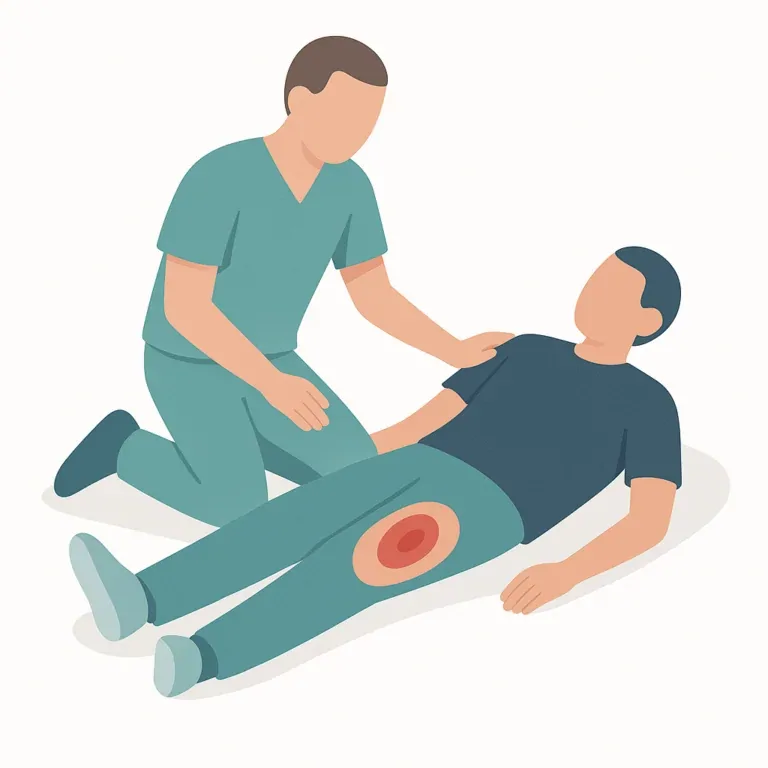
A primary survey is a quick first aid assessment used when someone may be seriously ill or injured.
It focuses on the problems that can kill a person quickly, such as an unsafe scene, a blocked airway, abnormal breathing, or a need for urgent resuscitation.
The goal is not to find every injury straight away. The goal is to find the most urgent threat first and respond to it.
Why is a primary survey important?
In an emergency, trying to notice everything at once can waste time.
A primary survey helps you:
- check whether the scene is safe
- assess how responsive the person is
- look for airway and breathing problems early
- decide when CPR may be needed
- recognise when the person should go into the Recovery Position
- call
000early when the situation is serious
What does a primary survey usually include?
In everyday first aid, the primary survey often follows the same order as DRSABCD:
- Danger: make sure the area is safe for you, the person, and others nearby.
- Response: check whether the person is awake, responds to voice, responds to pain, or is Unresponsive. A quick way to think about this is AVPU.
- Send for help: call
000in Australia if the person is not responding, badly injured, or seriously unwell. - Airway: check that the airway is open and not blocked. The broader page for this step is Airway Management.
- Breathing: check whether the person is breathing normally.
- CPR: start CPR if the person is not breathing normally.
- Defibrillation: use an AED if one is available and follow the prompts.
What if the person is unresponsive?
If the person is unresponsive, the next step depends on their breathing:
- if they are not breathing normally, start CPR
- if they are breathing normally, place them in the Recovery Position and keep monitoring them
That breathing split is one of the most important parts of the primary survey.
Is a primary survey the same as DRSABCD or basic life support?
They are closely related, but they are not exactly the same thing.
- Primary Survey is the broad rapid first check for life-threatening problems
- DRSABCD is the practical Australian memory aid many first aiders use to follow that check in order
- Basic Life Support is the broader emergency-care approach around those early lifesaving actions
What happens after the primary survey?
Once the immediate life threats are managed, you can move on to a Secondary Survey.
That means looking more closely for other injuries, symptoms, background information, or changes in the person’s condition.
Quick answer
A primary survey is the first rapid check for life-threatening problems in an emergency. On this site it sits closely with DRSABCD, Airway Management, CPR, and Recovery Position, depending on what you find.
Australian guidance and review
This page was reviewed against current Australian first aid guidance in August 2026. The primary survey is the first check of scene safety, responsiveness, help, airway and breathing. ANZCOR describes this as the DRSABCD sequence and advises CPR when a person is unresponsive and not breathing normally.
This information is for general first aid education and does not replace emergency advice. In Australia, call Triple Zero (000) in an emergency.