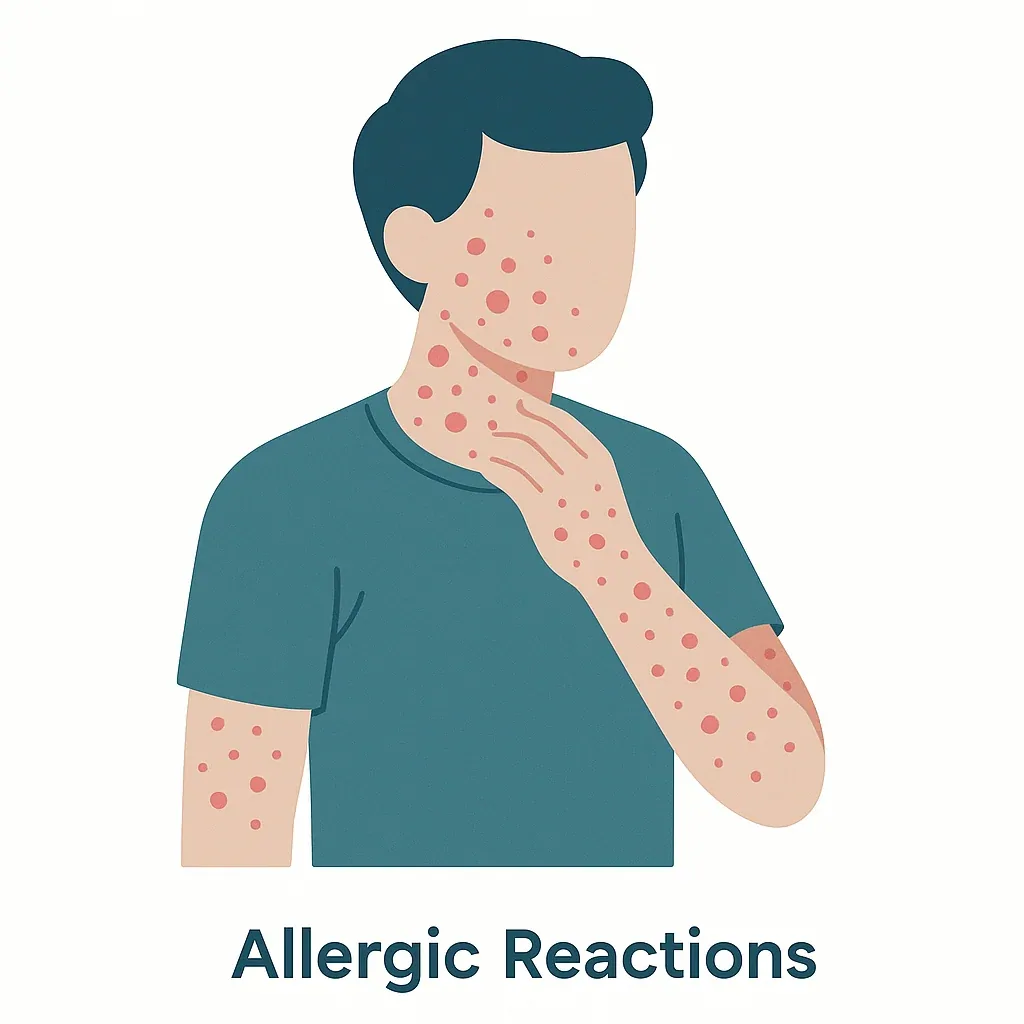

An allergic reaction is an immune response to a substance that a person is allergic to, called an allergen. Reactions can range from mild symptoms to severe, life-threatening anaphylaxis. This page explains the signs you may notice, including itching, hives, swelling, breathing trouble or collapse, and when urgent help is needed.
What signs can allergic reactions cause?
An allergic reaction can affect the skin, breathing, stomach, or how alert the person feels. Some reactions stay mild. Others become serious very quickly.
Common signs include:
- itchy skin
- rash
- hives
- swelling of the lips, eyes, or face
- sneezing or runny nose
- tummy pain
- nausea or vomiting
- wheezing
- noisy or difficult breathing
- dizziness or weakness
Mild signs
Mild allergic reactions often affect the skin first. A person may have:
- redness
- itching
- a blotchy rash
- hives
- mild swelling
These signs still matter, because a reaction can change over time.
Signs that suggest a serious reaction
A reaction is much more serious if the person develops:
- swelling of the tongue or throat
- trouble breathing
- wheezing that is getting worse
- dizziness, faintness, or collapse
- confusion
- blue or grey lips
These signs may point to Anaphylaxis, which is a medical emergency.
When should you call 000?
Call 000 in Australia if the person:
- has breathing trouble
- has swelling in the mouth, tongue, or throat
- becomes pale, floppy, or hard to wake
- becomes Unresponsive
- gets worse quickly after contact with an allergen
If a prescribed Adrenaline Auto-Injector is available, help the person use it straight away when severe symptoms suggest anaphylaxis.
If you know the brand, follow the correct steps for EpiPen or Anapen. The medicine inside is Epinephrine, also called adrenaline.
What should you do while waiting for help?
If the reaction looks serious:
- Keep the person calm.
- Remove the allergen if it is safe to do so.
- Watch their breathing and alertness closely.
- Do not give food or drink if they have trouble swallowing or breathing.
- Stay with them until help arrives.
If the person becomes unresponsive:
- use the Recovery Position if they are breathing normally
- start CPR if they are not breathing normally
How is this page different from the main overview?
This page focuses on the signs you might notice in someone having an allergic reaction.
If you want the broader plain-English definition of the term itself, read Allergic Reaction.
If you want the device overview page, read Adrenaline Auto-Injector.
If the reaction is severe or life-threatening, read Anaphylaxis.
Summary
Allergic reactions can cause skin changes, swelling, stomach symptoms, breathing problems, or collapse. Mild signs still matter, but breathing trouble, throat swelling, faintness, or loss of responsiveness need urgent action. In first aid, recognising the signs early, using a prescribed adrenaline auto-injector when severe symptoms suggest anaphylaxis, and calling 000 quickly can make a major difference.
Sources reviewed
- ASCIA: What is Allergy?
- ASCIA: First Aid Plan for Anaphylaxis
- ASCIA: anaphylaxis resources and action plans
- Triple Zero: official emergency calling guidance
Reviewed against current Australian allergy and emergency guidance by the First Aid Glossary Editorial Team. This article is general information and does not replace a person’s prescribed ASCIA Action Plan, emergency-operator directions, medical advice or hands-on first aid training.