
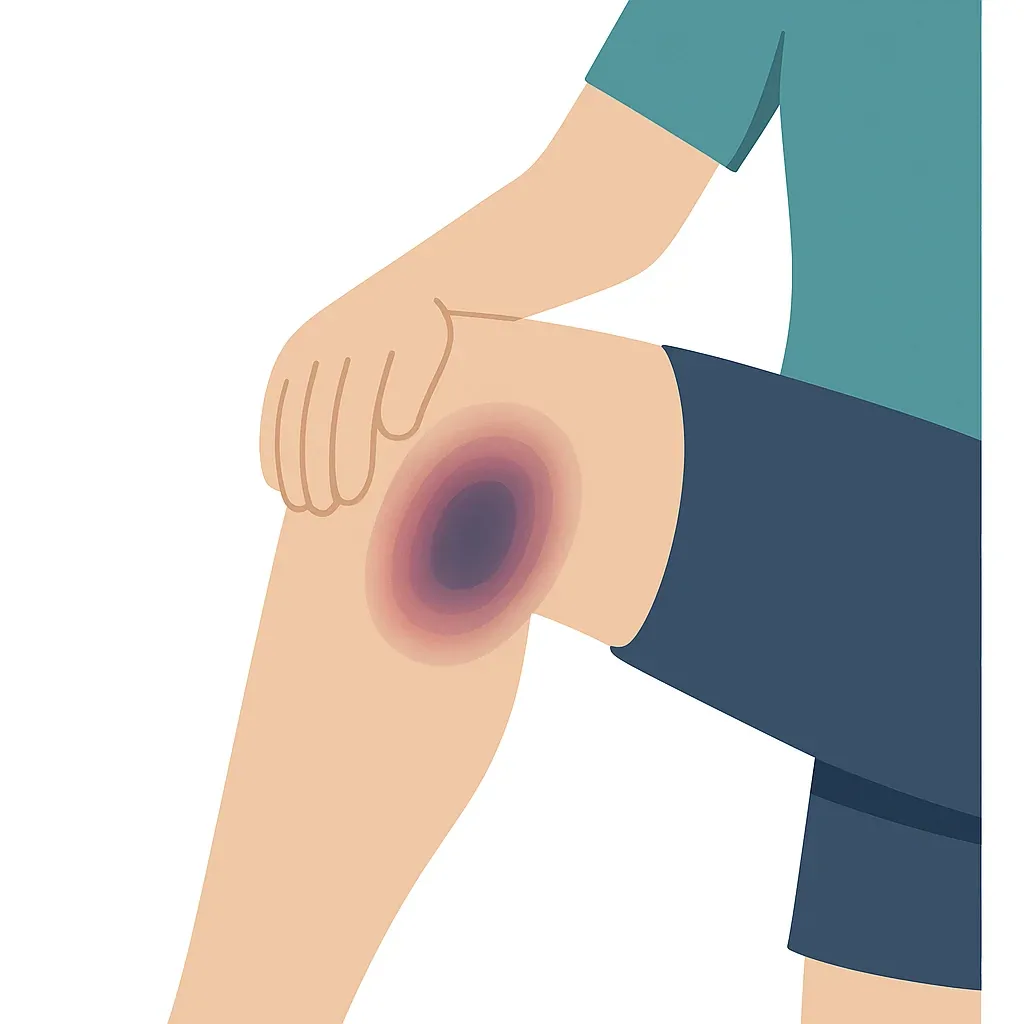

A contusion is the medical word for a bruise. It happens when small blood vessels near the skin’s surface break after a bump, fall, or hit. Blood from these vessels leaks into the soft tissues under the skin. This causes a dark or colourful patch to appear. The patch is often purple, blue, or black, and it may change colour as it heals.
In first aid, knowing about contusions is important because bruises are very common injuries. Most contusions are not serious but can be painful. Sometimes a bruise might show that a person has been hurt badly enough to need more help.
What is a Contusion?
A contusion is injury to the soft parts of the body without a cut or break in the skin. When you bump into something or get hit, the force can damage tiny blood vessels under the skin. The blood leaks out and collects, making the area look swollen and coloured.
The skin stays whole and is not broken open. The swelling and colour can happen soon after the injury or show up a few hours later. The pain comes from the swelling and injury to the tissues under the skin.
Contusions can happen almost anywhere on the body, like arms, legs, face, or chest. They are common after falls, sports accidents, or other bumps and knocks.
Why are Contusions Important in First Aid?
Bruises are one of the most common injuries that first aiders see. Most contusions heal on their own without serious problems. Still, they can hurt and make it hard to use part of the body.
Sometimes, a big bruise or a bruise that gets worse can be a sign of a deeper injury. This might be a broken bone or damage to muscles or organs inside. A large swelling under the skin can also cause extra pain or problems.
When you are helping someone with a contusion, it is important to watch for any signs that the injury is more serious. This includes very bad pain, swelling that is growing, numbness, or any problem moving the injured part.
What You Might See or Feel with a Contusion
After someone gets a bump or a knock, they might notice some of these signs:
- A patch of skin that looks dark blue, purple, black, or green.
- Swelling near or under the skin where the bruise is.
- Pain or tenderness when you touch the bruise or move the area.
- Sometimes warmth or heat around the bruise because the body is sending more blood to heal the injury.
- The skin around the bruised area usually stays normal colour but may feel a little stiff.
- The size of the bruise may grow in the first day as more blood collects under the skin.
How to Give First Aid for Contusions
If you see or feel a bruise after a bump, the main first aid goal is to reduce pain and swelling. This helps the person feel better and supports the healing process.
First, make sure the person is safe and away from any further danger.
Try to keep the injured part raised above the level of the heart if possible. This helps reduce swelling by making it harder for blood to collect in the area.
Use a cold pack or some ice wrapped in a cloth on the bruised area for about 10 to 20 minutes. Cooling the bruise helps slow down bleeding and swelling.
Avoid pressing too hard on the bruise because this can cause more damage.
If some pain relief is needed, the person can take simple medicines like paracetamol, following the instructions on the package. Avoid giving aspirin or anti-inflammatory medicines right away as they may make bleeding worse.
Keep the injured part rested and avoid using it too much until the pain goes down.
Watch the bruise over the next few days. It should slowly get better and change colour from dark to green, then yellow before fading.
When to Get Emergency Help for Contusions
Most bruises are not emergencies. However, you should call emergency services by dialing 000 if:
- The bruise is very large and sudden, especially if it appears without any injury.
- There is a lot of swelling that feels tight or hard.
- The bruise is very painful, and the person cannot move the part of their body near the bruise.
- The bruise is on the head, especially if the person feels dizzy, confused, sleepy, or has vomiting.
- The person has trouble breathing or chest pain after a blow to the chest.
- There is bleeding that will not stop, or the skin around the bruise is broken.
- The person has a health condition that affects blood clotting or is taking blood thinning medicine.
- The bruise is growing quickly or new bruises appear without any known cause.
- If you are unsure, it is always safer to call 000 and ask for help.
Some Safety Tips Around Contusions
Try to prevent injuries by being careful during activities like sports or when moving around at home.
Use protective gear like helmets, pads, or guards when doing rough or risky activities.
Keep floors and walkways clear of things that might cause falls.
Teach children about being careful and looking where they walk or play.
If you see a bruise on a child and you do not know how it happened, watch closely for any worrying signs or repeated injuries.
Take care not to squeeze or press hard on bruises when helping someone.
What Happens to a Contusion Over Time?
Bruises usually heal by themselves in about 1 to 2 weeks. The body breaks down the blood that leaked under the skin, and new tissue grows.
At first, the bruise looks dark blue or purple. After a few days, it changes to green or yellow as the blood changes.
Eventually, the skin returns to its normal colour.
Sometimes a bruise can leave a tender or sore spot for longer.
If a bruise does not get better or looks worse after a week, it is a good idea to see a doctor.
Contusions and the Body
When you get a contusion, the skin itself is not cut or broken. The damage is under the skin in the soft parts like muscles, fat, or tissue that holds the body together.
Blood leaks out of the tiny vessels that carry blood to the skin and muscles. The blood pools in the area, causing swelling and changing the colour of the skin.
This process can cause pain and tenderness because sensitive nerve endings in the area get squeezed or pushed.
The body starts to heal by cleaning up the leaked blood and repairing injured tissues.
Conclusion
A contusion means a bruise on the skin caused by blood leaking under the skin after a bump or hit. It is a common injury that usually is not serious, but it can hurt and look alarming.
Knowing what a contusion is helps you give the right first aid care, such as resting, icing, and watching for signs that need more help.
If you see very large bruises, bruises that get worse, or if the person has other serious symptoms after an injury, call emergency services on 000 right away.
With careful care, most contusions heal well and do not cause lasting problems. Remember to stay calm, keep the person comfortable, and get help when needed.
Related glossary terms: Soft Tissue Injury and Sprain.
Sources reviewed
- Healthdirect: wounds, cuts and grazes
- ANZCOR Guideline 9.1.1: First aid for management of bleeding
- Triple Zero: official emergency calling guidance
Reviewed against Australian first aid and emergency guidance by the First Aid Glossary Editorial Team. This article is general information and does not replace emergency-operator directions, professional medical advice or hands-on first aid training.
