
A BPC wound dressing is a sterile pad attached to a bandage, packed together so a first aider can cover a wound and hold pressure over it. You may see it listed as a No. 14 (medium) or No. 15 (large) dressing in an Australian workplace first-aid kit. It is a practical piece of equipment, not a special medicine. BPC is a traditional dressing label, not a special treatment or a claim about bacteria passing through the material.
What does the packet contain?
Most products sold under this name have an absorbent pad joined to a long bandage. The pad is the part that sits against the wound; the bandage holds it in place. Both are sealed in one wrapper. Look at the actual packet before an emergency because sizes and wrapping methods differ between suppliers. The No. 14 and No. 15 labels help distinguish medium and large options; they are not a severity score for the injured person.
Safe Work Australia’s model workplace first-aid kit list includes both sizes. That is a useful stock-check cue, not a rule that every cut needs one. A small scrape may need a different dressing. The first question is what is happening with the wound and bleeding, not which packet has the most impressive name.
When would a first aider reach for one?
A combined pad and bandage is useful when a wound is bleeding and needs a pad held firmly in place. Imagine someone cuts a forearm on a sharp edge at work. One helper gets the kit and gloves while another asks the person to apply firm pressure with a clean pad. A BPC dressing can then provide a suitable pad and a way to secure it. The pressure is what matters most: ANZCOR says firm pressure on or around a wound is the most effective way to stop most external bleeding.
If blood loss is heavy, bleeding is not controlled by pressure, or the person becomes pale, sweaty or less responsive, call Triple Zero (000). Keep applying pressure while help is arranged. Do not spend valuable time hunting for this particular packet if a clean pad or your protected hand is already available to press on the wound.
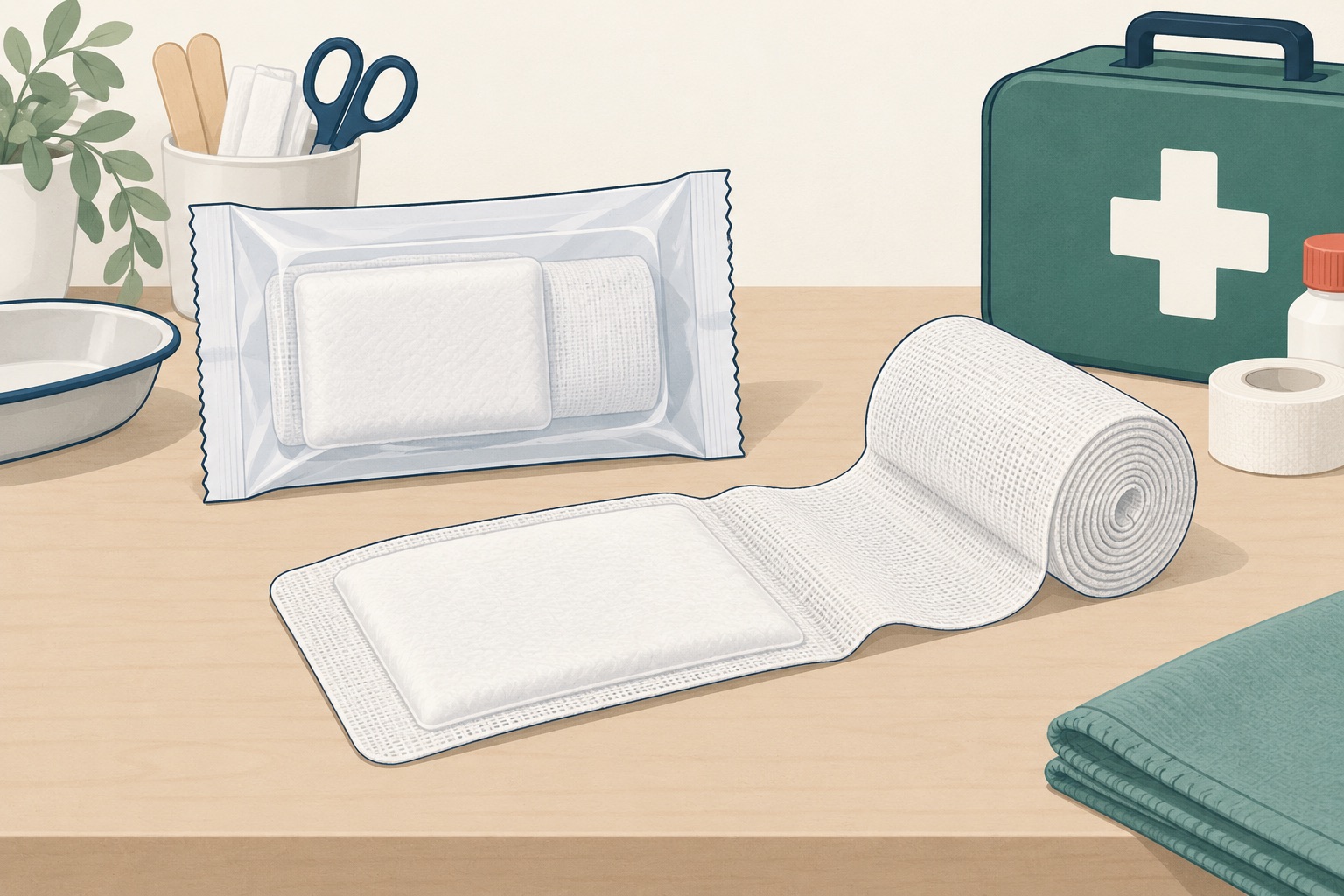 wound dressing and an unwrapped absorbent pad attached to a bandage" loading="lazy">
How is it used for bleeding?
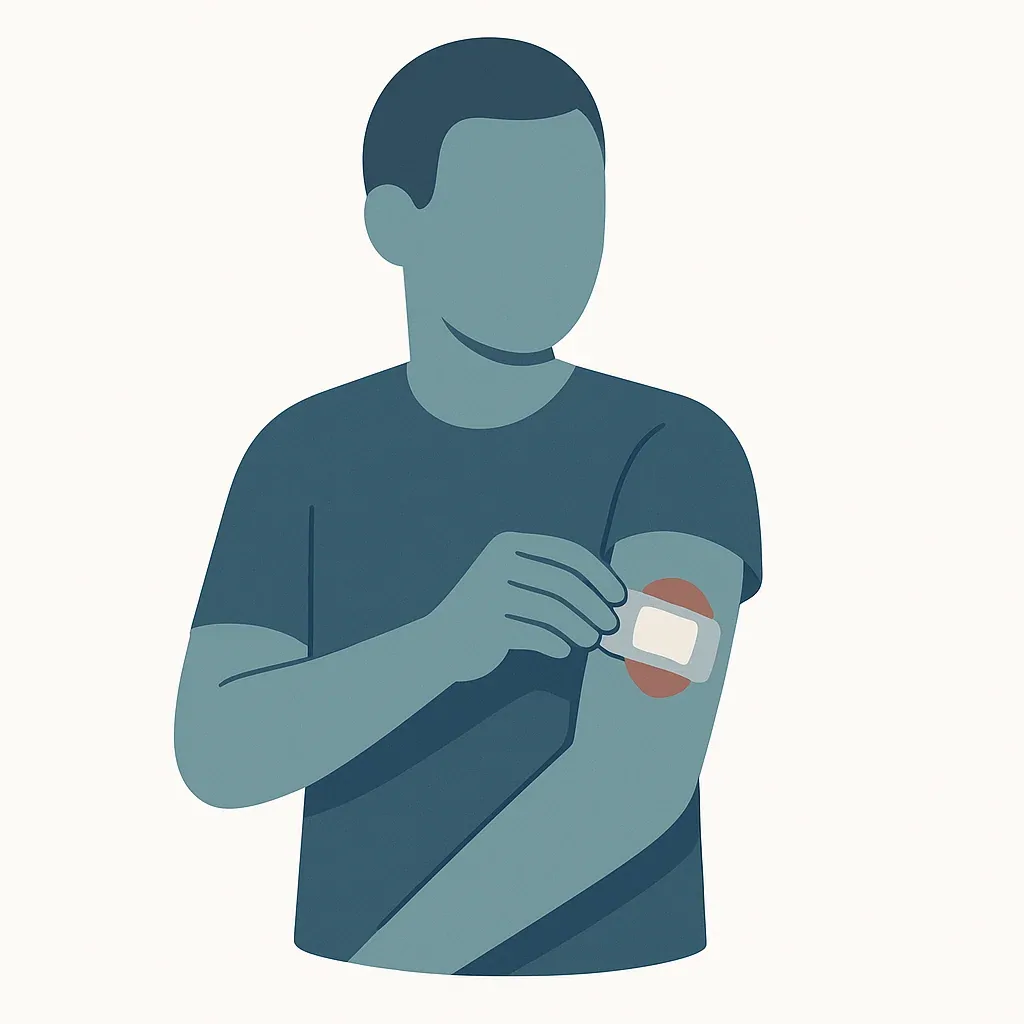
Check that the scene is safe and use gloves or other protection if readily available. Open the wrapper without touching the surface of the pad that will contact the wound. Place the pad over the bleeding point and apply firm, direct pressure. Wrap the attached bandage to keep the pad in position and maintain pressure, without relying on a loose wrap to do the work for you. If the injured person can help, ask them to keep steady pressure while you organise the bandage or phone.
If blood continues to come through, ANZCOR advises adding a second pad and a tighter bandage. If that still fails, check whether the pressure is actually over the bleeding point; piling on many pads can spread the force and make it less effective. For a wound with an object embedded in it, do not pull the object out. Apply pressure around it and use padding on either side, following emergency advice. A standard BPC dressing is not the same thing as a haemostatic dressing containing an agent to help clotting, and it is not a tourniquet.
What should you check when restocking?
Look for a sealed, dry and undamaged wrapper, a readable size and any marked expiry date. Replace a packet that has been opened, damaged or contaminated. Check the pad and bandage size against the kit’s intended use: a medium dressing and a large dressing are distinct stock items on the Safe Work Australia example list. Store them where the team can reach them quickly, and note replacements in the kit record.
Do not assume a packet is sterile simply because it is still in the kit. A torn wrapper or water damage changes that. In a workplace, the person responsible for the kit should inspect its contents at the agreed interval and after every use. If supplies run out, raise the gap rather than silently leaving an empty slot for the next shift.
What is the main point?
The BPC dressing gives you a ready-to-use pad and bandage. It helps you put and keep pressure where it is needed, but it does not replace an emergency call, repeated observation or trained care. Remember the sequence in plain words: protect yourself, press on the bleeding point, call 000 for severe or uncontrolled bleeding, and tell responders what you saw and did.
Sources checked
- ANZCOR Guideline 9.1.1: First aid for management of bleeding
- Safe Work Australia: First aid in the workplace model Code of Practice
- St John WA: sterile BPC wound dressing with bandage
Sources checked 10 October 2026. This entry is general first-aid education, not a substitute for training or advice for an individual injury. In an Australian medical emergency, call 000.