

- Antiseptic definition
- Start with safety and bleeding control
- How antiseptic may be used for a minor wound
- What antiseptic does not do
- Avoid harsh or improvised products
- Special wounds that need assessment
- Antiseptic and children
- Stocking antiseptic in a first-aid kit
- A simple minor-wound sequence
- Related glossary terms
- Sources reviewed
Antiseptic definition
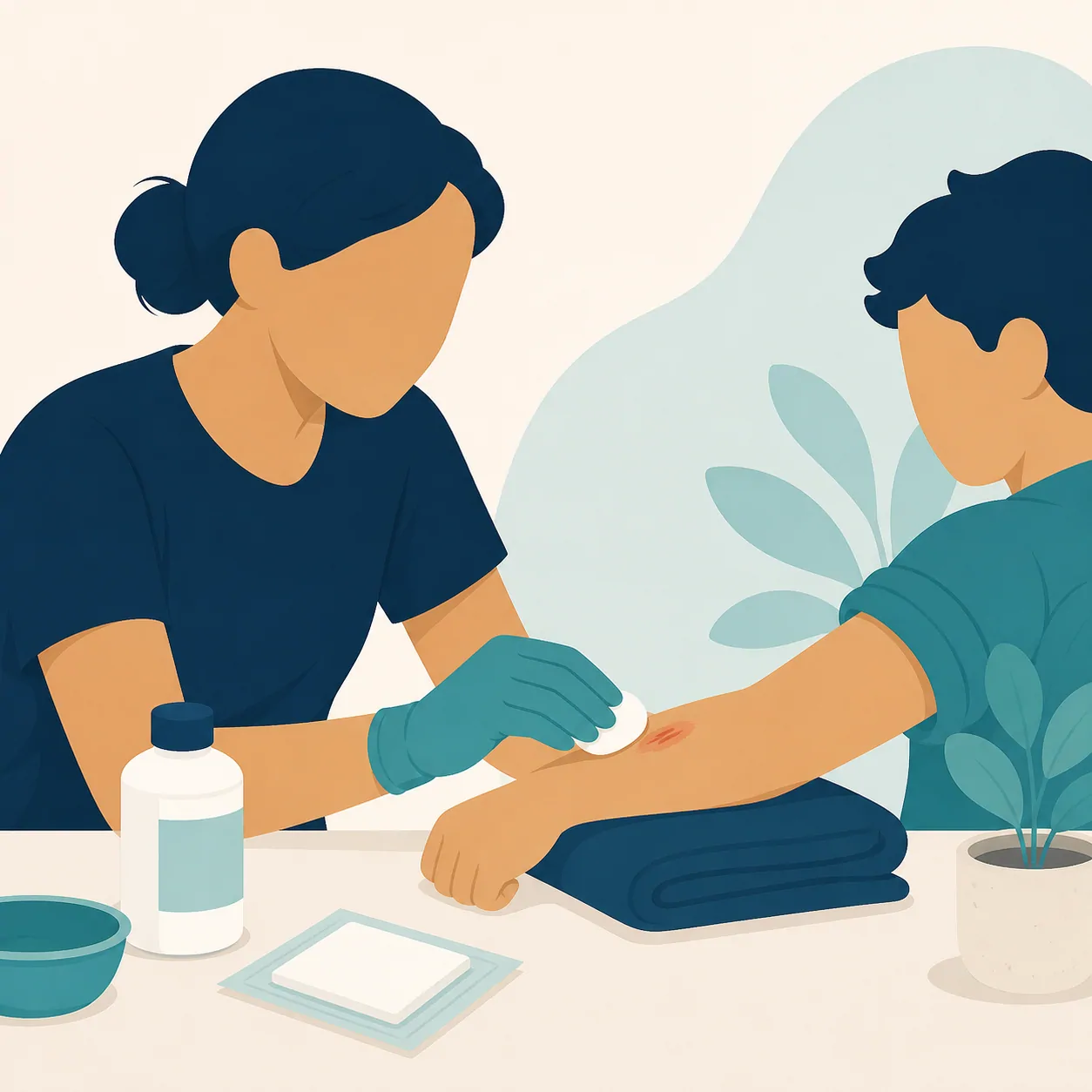
An antiseptic is a product used on living tissue to reduce germs on the skin or around a minor wound. In first aid, it may be used as part of cleaning a small cut, graze or skin break when appropriate. It is not a substitute for controlling bleeding, rinsing away dirt, covering a wound, checking for serious injury or seeking medical care.
The most reliable starting point for a minor wound is usually clean running water or sterile saline. Water physically removes visible dirt and debris without adding a harsh chemical to damaged tissue. Antiseptic products differ in ingredients, strengths, age restrictions and intended uses, so follow the label and pharmacist or clinician advice rather than assuming every product suits every wound.
Start with safety and bleeding control
Before cleaning a wound, make the area safe and wash your hands. Put on disposable gloves when there is likely contact with blood. If bleeding is significant, apply firm direct pressure with a clean dressing or cloth first. Do not delay bleeding control to search for antiseptic.
For severe bleeding, blood that is spurting, bleeding that will not stop with pressure, a deep wound, an embedded object, faintness, confusion or a serious mechanism of injury, call Triple Zero (000) or seek urgent medical care. Antiseptic is not appropriate first-line treatment for a life-threatening wound.
Once a minor wound has stopped bleeding, rinse it gently with clean running water or sterile saline. Remove loose surface dirt only if it comes away easily. Do not dig into the wound, scrub raw tissue or try to remove embedded glass, wood, metal or gravel. Those situations need professional assessment.
How antiseptic may be used for a minor wound
If an antiseptic is suitable for the particular product and injury, apply it exactly as directed. Some products are intended for surrounding skin, some for minor cuts and grazes, and some should not be used in eyes, deep wounds, punctures, burns or on young children. Keep the nozzle or applicator from touching the wound to avoid contaminating the container.
Use a small amount; more is not better. Let the product dry if the instructions say to do so, then cover the wound with a clean non-stick dressing or adhesive strip. Check the dressing regularly and replace it if wet, dirty or loose.
Stop using a product if it stings severely, causes rash, swelling, breathing symptoms, increased redness or other concern. Wash the area with water and seek medical advice if symptoms persist or are significant. People with sensitive skin, allergies, eczema or previous reactions should ask a pharmacist which products are suitable.
What antiseptic does not do
Antiseptic does not close a gaping wound, remove a foreign body, treat a deep infection, repair a tendon or nerve, prevent all infections or replace tetanus protection. It cannot make a bite, puncture, contaminated wound or deep cut safe to manage at home.
It also does not mean a wound should be ignored after cleaning. Watch for worsening pain, spreading redness, warmth, swelling, pus, fever, red streaks, reduced movement, numbness or a wound that is not healing. Seek medical advice for these signs.
Avoid treating a visible problem with increasingly strong products. If a wound is worsening, the answer is assessment—not more antiseptic, leftover antibiotics or a home remedy.
Avoid harsh or improvised products
Do not pour bleach, undiluted alcohol, strong peroxide, household cleaner, essential oils, toothpaste, butter or other home remedies into a wound. These can irritate or damage tissue and make healing harder. Do not use a product designed for surfaces or equipment on skin.
Alcohol hand rub is for hands, not for cleaning an open wound. It may be useful before and after care when hands are not visibly dirty and handwashing facilities are unavailable, but it should not replace soap and water when hands are soiled with blood or dirt.
If a chemical has contacted the skin or eye, treat it as a chemical exposure: flush with clean running water and seek urgent advice. Do not try to neutralise it with another product.
Special wounds that need assessment
See a doctor or nurse for a deep, gaping, dirty, puncture or bite wound; a wound caused by a needle, animal or human bite; a wound near the eye; a cut over a joint; or any injury with an embedded object. Seek advice if the wound happened in dirty water, soil, sewage or a high-risk environment.
Ask about tetanus protection if the wound is dirty, deep or you are unsure whether vaccinations are current. Children, older people, people with diabetes, poor circulation, reduced sensation or weakened immunity may need a lower threshold for assessment.
For a burn, cool it with cool running water for at least 20 minutes as soon as possible. Do not use antiseptic, ice, butter or creams on a fresh serious burn. Seek urgent care for chemical, electrical, large, deep or blistering burns, or burns to sensitive areas.
Antiseptic and children
Keep products out of children’s reach and in their original packaging. A child may mistake a bright bottle for a drink or become distressed by a stinging product. Use only products that are appropriate for their age and follow directions carefully.
For a small graze, calm cleaning with water, a clean dressing and reassurance is usually more useful than several products. If a child has a deep cut, bite, puncture, persistent bleeding, head injury, eye injury or is unusually sleepy or unwell, seek medical advice early.
Never make a child use a painful product as a lesson. Explain what you are doing, ask for cooperation and stop if a reaction occurs.
Stocking antiseptic in a first-aid kit
Choose reputable, in-date products and keep them in their original packaging with labels readable. Record expiry dates during kit checks. Store away from heat and direct sun, and replace products if containers leak, become damaged or labels cannot be read.
Include sterile saline or ensure clean running water is available; these are often the most practical wound-rinsing options. Pair antiseptic with gloves, clean dressings, gauze, tape and clear first-aid instructions. A product without dressings and hygiene supplies is not a complete wound-care plan.
For workplaces, confirm that stock matches the risk assessment and local procedures. Staff should know what is available and when to call for help rather than experimenting with unfamiliar products.
A simple minor-wound sequence
Make the area safe. Wash hands and use gloves where appropriate. Apply direct pressure until minor bleeding stops. Rinse with clean water or saline. Use a suitable antiseptic only as directed, if appropriate. Cover with a clean dressing. Check the wound and seek care if it worsens or has risk features.
This sequence keeps the focus on practical basics. Antiseptic is one optional tool, not the centre of first aid.
Related glossary terms
Sources reviewed
- Healthdirect: wounds, cuts and grazes
- Healthdirect: first aid basics
- Australian Immunisation Handbook: tetanus
- Healthdirect: chemical burns
Reviewed against Australian first aid and emergency guidance by the First Aid Glossary Editorial Team. This article is general information and does not replace emergency services, professional medical advice or hands-on first aid training.