

Disposable gloves definition
Disposable gloves are single-use gloves worn to reduce direct contact with blood, body fluids, contaminated materials and some minor first-aid hazards. In first aid, they are part of standard precautions: practical infection-control steps used for every person, regardless of what is known about their health.
Gloves help protect both the first aider and the injured person, but they are not a substitute for hand hygiene, cleaning a wound, safe sharps handling or seeking help for a serious injury. A damaged glove, the wrong type of glove or a contaminated glove touching clean surfaces can create a false sense of safety. Correct use matters as much as having gloves in the kit.
When should a first aider wear gloves?
Wear disposable gloves when there is a reasonable chance of contact with blood, body fluids, an open wound, mucous membranes, contaminated dressings or waste. Examples include applying pressure to a bleeding cut, changing a soiled dressing, helping after a nosebleed, cleaning a spill or providing care where the person’s skin is broken.
Gloves are not usually necessary for every conversation, check-in or routine task. Using them when no exposure is expected can waste supplies and make people feel unnecessarily isolated. The useful rule is to match protection to the risk: put gloves on just before a task involving blood or body substances, take them off when the task is over and clean hands afterwards.
If a wound is severe, do not delay life-saving pressure while trying to locate gloves. Use a clean dressing or cloth as a barrier if one is immediately available, call Triple Zero (000) for an ambulance and keep applying direct pressure. Scene safety and emergency care come before a perfect PPE setup.
Choosing a suitable glove
First-aid kits commonly contain nitrile, vinyl or latex-free gloves. Keep a variety of sizes where more than one person may use the kit. A glove that is too small can tear; one that is too loose reduces dexterity and may catch on equipment. Check the packaging is intact and the gloves have not become brittle through heat, age or poor storage.
Choose a glove that is suitable for the task. Thin examination gloves may be appropriate for minor wound care but are not puncture-proof, cut-proof or automatically chemical-resistant. For chemical exposure, use gloves recommended by the product Safety Data Sheet. For broken glass, metal or sharps, do not rely on a thin disposable glove to prevent a puncture; control the hazard and use the specified equipment and procedure.
Latex sensitivity matters. A person with known latex allergy should avoid latex gloves, and many kits now use nitrile alternatives to reduce this risk. If wearing gloves causes rash, itching, breathing symptoms or swelling, stop using them and seek appropriate medical advice. Do not continue because “they are only gloves.”
Putting gloves on safely
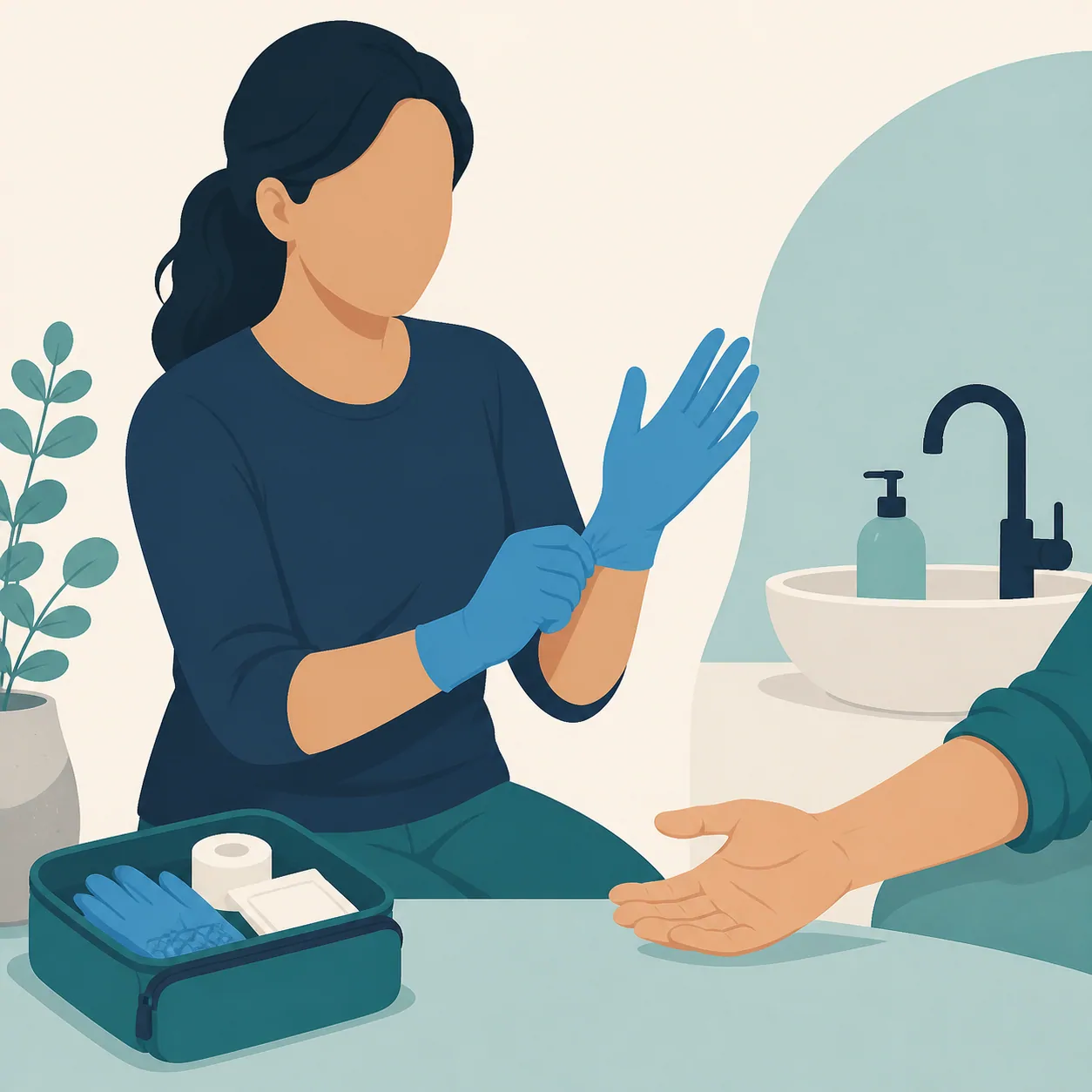
Wash or sanitise hands before putting gloves on if practical. Select an intact pair and avoid touching the outside surfaces more than necessary. Pull one glove over the hand, then the other, adjusting at the wrist without snapping the glove against skin or clothing.
Once gloves are on, treat the outside as potentially contaminated after contact with a wound or fluid. Avoid touching your face, hair, phone, pen, door handles, clean first-aid supplies or another person’s uninjured skin. If you need to document the event, remove gloves and clean hands before writing, or ask someone else to record details.
Change gloves between different people and between dirty and clean tasks on the same person. For example, remove a soiled pair after controlling a bleeding wound, clean hands and use a fresh pair before applying a clean dressing. Do not wash, sanitise or reuse disposable gloves.
How to remove disposable gloves
Removal is a common point of contamination. Pinch the outside of one glove near the wrist without touching bare skin. Peel it away from the hand, turning it inside out as it comes off. Hold the removed glove in the still-gloved hand.
Slide a bare finger under the cuff of the remaining glove—touch the clean inside only—and peel it off so it wraps around the first glove. Dispose of both in the appropriate waste bin. Then wash hands with soap and water or use alcohol-based hand rub if hands are not visibly dirty and washing facilities are not immediately available.
If a glove tears during care, stop the task when safe, remove it, clean hands and put on a new pair. If blood or body fluid has contacted broken skin, eyes, mouth or a needlestick wound, follow exposure procedures and seek prompt medical advice. Gloves reduce risk; they do not make an exposure impossible.
Gloves and wound care
For a minor wound, gloves support clean technique but do not replace it. Wash hands, put gloves on, control bleeding with a clean dressing, rinse the wound with clean running water if appropriate, protect it with a sterile non-stick dressing and dispose of used materials safely. Do not touch the clean side of a dressing with contaminated glove surfaces.
For severe bleeding, apply firm direct pressure immediately and call 000. Use additional dressings over the first if blood soaks through; do not repeatedly remove the first dressing to inspect the wound. A tourniquet is not a routine household item and should only be used in appropriate life-threatening limb bleeding circumstances by someone trained and equipped.
If you do not have gloves, use a clean barrier such as a dressing, cloth or plastic bag over the hand if it is safe and practical. Wash hands thoroughly after care. The absence of gloves should not prevent someone from calling for emergency help or providing basic life-saving assistance within their training.
What gloves cannot do
Disposable gloves do not stop a needle or sharp object reliably. Do not pick up discarded needles with gloved hands, recap needles or reach blindly into rubbish bags. Use approved sharps procedures and containers. If a sharp punctures the glove and skin, wash the area, report the incident and seek prompt medical assessment.
Gloves also do not protect eyes or mouth from a splash. Where there is a splash risk, use suitable eye/face protection and protective clothing as part of a wider PPE plan. They are not a replacement for safer work design, ventilation, a chemical substitute, a machine guard or an eyewash station.
Do not wear disposable gloves for extended periods through unrelated tasks. They can become contaminated, tear unnoticed, cause sweating or skin irritation and spread germs across the workplace. Take them off when the exposure task is complete.
Stocking a first-aid kit
Keep several pairs of non-latex disposable gloves in different sizes in a clearly marked, dry, accessible first-aid kit. Check the kit regularly: gloves should be sealed, flexible and in date. Replace opened packs, torn gloves, gloves stored in extreme heat and any stock used in an incident.
Add hand hygiene supplies, clean dressings, a resuscitation barrier and appropriate waste bags where relevant. For a workplace, calculate quantities from the risk assessment, number of workers, location of kits and likely types of incidents rather than assuming one small packet is enough.
Make sure people know where the kit is. A box of gloves locked in an office or stored in a vehicle far from the work area will not help during a bleeding incident.
Respectful first aid
Wear gloves as a normal, calm safety practice—without making assumptions about a person’s health. Explain briefly: “I’m putting gloves on before I help with the wound.” This reassures the injured person and models good infection-control practice.
After care, remove PPE discreetly, clean the area and maintain privacy. Share incident details only with those who need to know for care, safety or reporting. Respectful practice is as important as the equipment itself.
Related glossary terms
- Personal Protective Equipment
- Needlestick Injury
- First Aid for Cuts
- Sterile Dressing
- First Aid at Work
Sources reviewed
- Safe Work Australia: First aid in the workplace
- Safe Work Australia: PPE overview
- Healthdirect: needlestick injuries
- Healthdirect: wounds, cuts and grazes
Reviewed against Australian first aid and emergency guidance by the First Aid Glossary Editorial Team. This article is general information and does not replace emergency services, professional medical advice or hands-on first aid training.