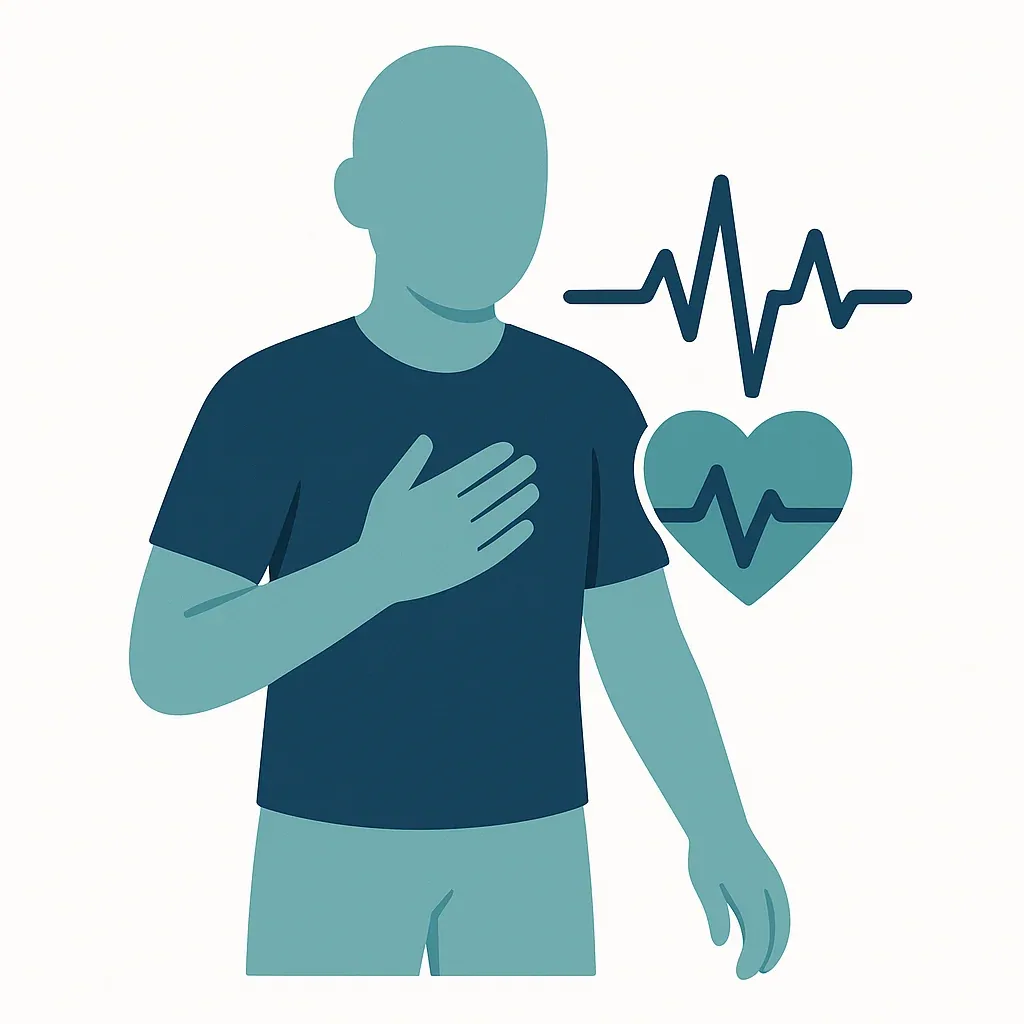

Heart arrhythmias are abnormal heart rhythms. The heart may beat too fast, too slow, or irregularly. In first aid, arrhythmias matter because some are harmless while others can cause chest pain, fainting, collapse, or even cardiac arrest.
What are heart arrhythmias?
An arrhythmia is a problem with the electrical signals that control the heartbeat. Instead of beating in a steady pattern, the heart may:
- race
- beat too slowly
- feel irregular
- skip or add beats
Some arrhythmias cause only mild symptoms. Others are serious and need urgent treatment.
Why heart arrhythmias matter in first aid
In first aid, you usually do not need to identify the exact rhythm problem. What matters is recognising that an abnormal heartbeat may be happening and deciding whether the person is stable or needs urgent medical help.
Arrhythmias may show up as:
- Palpitations
- Tachycardia
- dizziness
- fainting
- shortness of breath
- chest pain
- weakness
Common symptoms
Heart arrhythmias can cause:
- a racing or fluttering feeling in the chest
- an irregular Pulse
- chest pain
- shortness of breath
- dizziness or light-headedness
- fainting or near-fainting
- weakness
- confusion
Some people have very mild symptoms. Others become suddenly unwell.
What to do in first aid
If someone seems to have an abnormal heart rhythm:
- Help them stop activity and rest.
- Keep them calm.
- Ask whether they have chest pain, shortness of breath, dizziness, or have fainted.
- If appropriate, check Heart Rate or Pulse.
- Call
000if they have severe symptoms or look seriously unwell.
Do not delay urgent care by trying to work out the exact rhythm.
When it is an emergency
Call 000 urgently if an abnormal heartbeat happens with:
- chest pain
- severe shortness of breath
- fainting
- collapse
- confusion
- blue or grey lips
- severe weakness
If the person becomes Unresponsive and is not breathing normally, follow Primary Survey or DRSABCD and start CPR. Use an Automated External Defibrillator if one is available.
Some serious arrhythmias can lead to Cardiac Arrest, which is why rapid escalation matters.
Heart arrhythmias compared with tachycardia and palpitations
Heart arrhythmias are the broader group of rhythm problems.
- Tachycardia is one type of abnormal rhythm pattern where the heart rate is fast.
- Palpitations are the feeling that the heartbeat is racing, pounding, fluttering, or skipping.
- Atrial Fibrillation is one important specific type of heart arrhythmia.
Quick answer
Heart arrhythmias are abnormal heart rhythms where the heart beats too fast, too slow, or irregularly. In first aid, help the person rest, check for warning signs like chest pain or fainting, and call 000 if they look very unwell or are getting worse. If they become unresponsive and are not breathing normally, start CPR immediately.
Sources reviewed
Reviewed against current Australian cardiac, first aid and emergency guidance by the First Aid Glossary Editorial Team. This article is general information and does not replace emergency-operator directions, professional medical advice or hands-on first aid training.