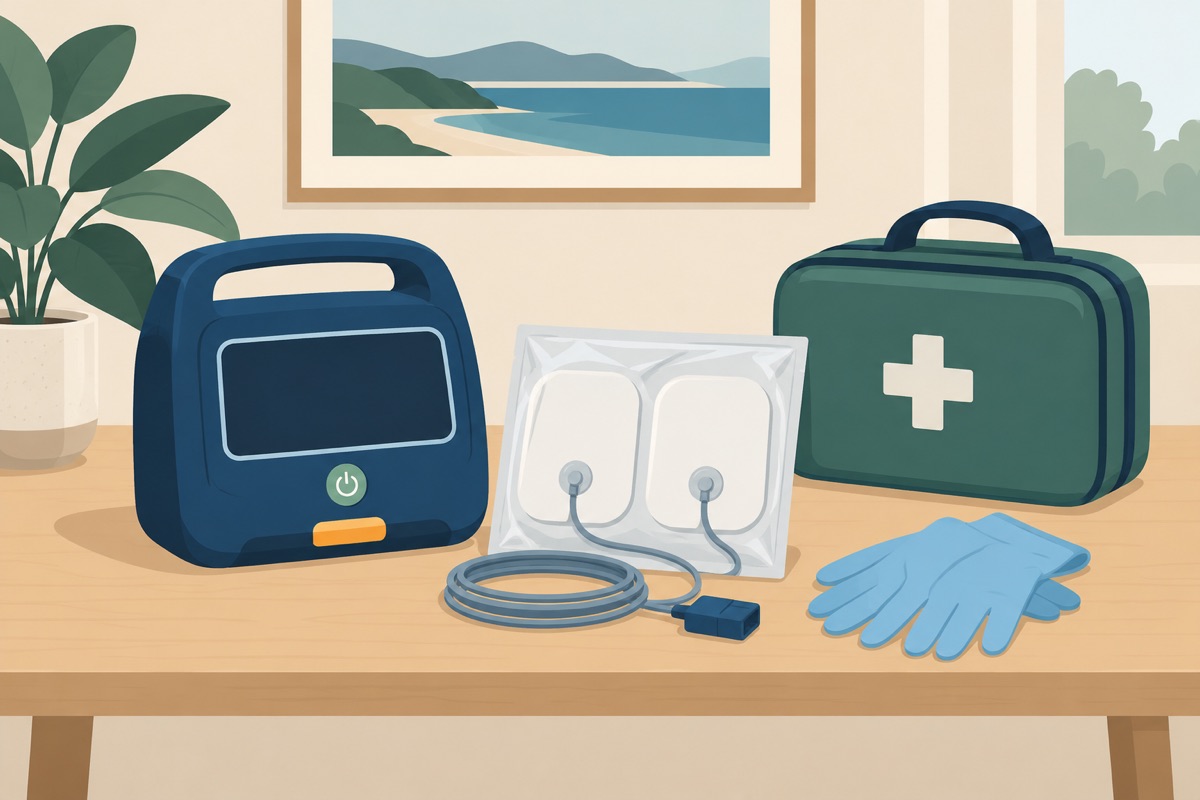
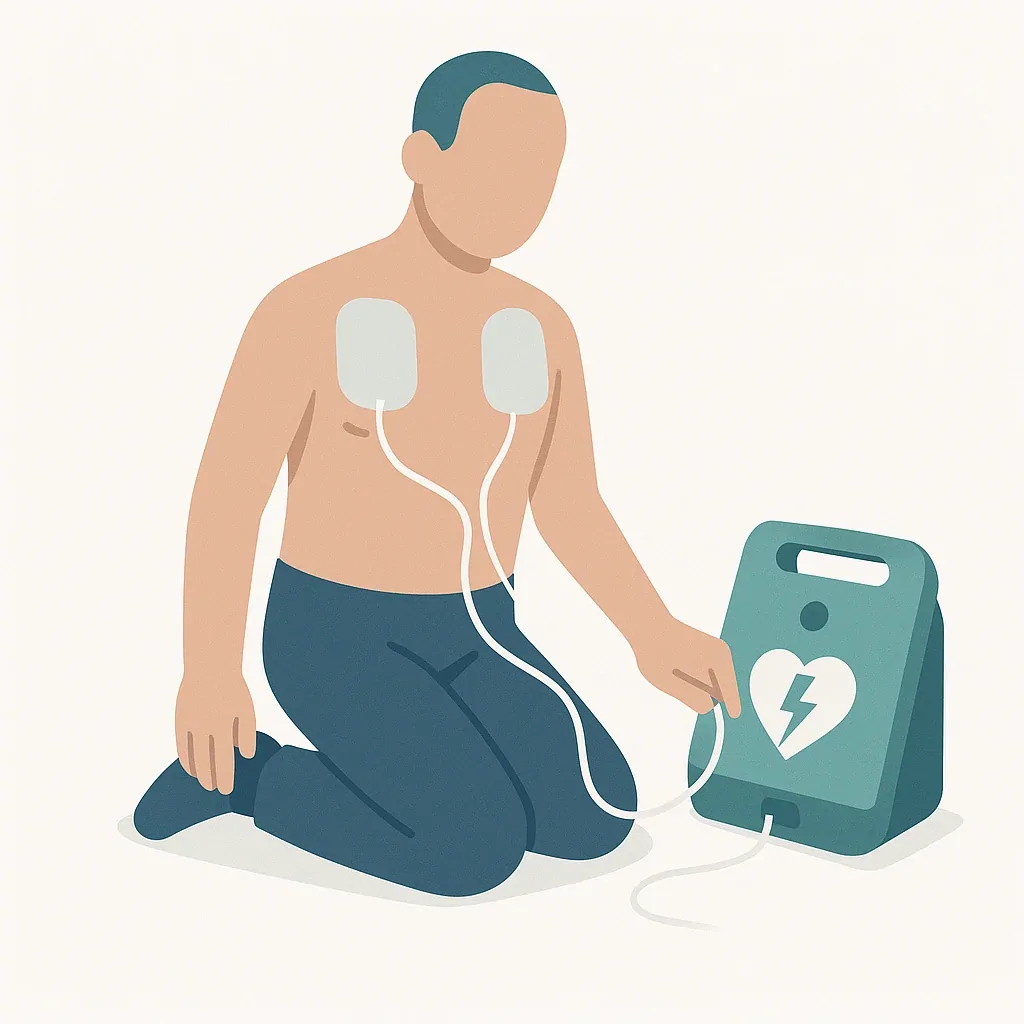

An defibrillator/" class="fag-auto-link">automated external defibrillator, usually called an AED, is a device used during cardiac arrest. It checks the heart rhythm and may tell you to give a shock. In first aid, an AED is used together with CPR, not instead of it.
What does automated external defibrillator mean?
An AED is designed to be used by bystanders as well as trained responders.
It can:
- analyse the heart rhythm
- tell the user what to do
- deliver a shock if the rhythm is one that needs Defibrillation
Modern AEDs give voice or visual prompts to guide the user.
When is an AED used?
An AED is used when a person:
- is Unresponsive
- is not breathing normally
- may be in cardiac arrest
In practical first aid, this sits inside the same early emergency pathway as Primary Survey, DRSABCD, and Basic Life Support.
In that situation:
- Call
000. - Start CPR.
- Use the AED as soon as it is available.
Why is an AED important?
During cardiac arrest, the heart may stop pumping effectively. An AED can help restore a shockable rhythm if one is present.
Early CPR and early Defibrillation together give the person a better chance of survival.
How is it different from the general term defibrillator?
Automated external defibrillator is the main plain-English first aid page on this site because it focuses on the public-use device found in places like schools, sports venues, and shopping centres.
Defibrillator is the broader device term, while Defibrillation is the action or process.
Quick answer
An automated external defibrillator is a device used during cardiac arrest to analyse the heart rhythm and, if needed, help deliver a shock. Use it with CPR as soon as it is available.
How this page is checked
Publisher: First Aid Glossary Editorial Team
Last reviewed: 28 April 2026
Reviewed against: ANZCOR Guideline 7 – Automated External Defibrillation in Basic Life Support, Healthdirect Australia defibrillator guidance, and Triple Zero emergency-call guidance.
This page is educational and explains first aid language in plain English. It is not personal medical advice, diagnosis, or a replacement for accredited first aid training. In an emergency in Australia, call Triple Zero (000).