
Compartment syndrome means pressure has risen inside a group of muscles held within a firm sheath of tissue called fascia. The pressure can restrict blood flow, leaving muscle and nerves without enough oxygen. The sudden, injury-related form is a medical emergency. It can develop after a fracture or crush injury even when the skin is unbroken.
A useful warning is pain that seems much worse than the injury looked at first, or pain that keeps increasing despite ordinary care. Nobody at the scene needs to prove the diagnosis. They need to recognise that the change is urgent and get the person assessed.
Why can pressure build up?
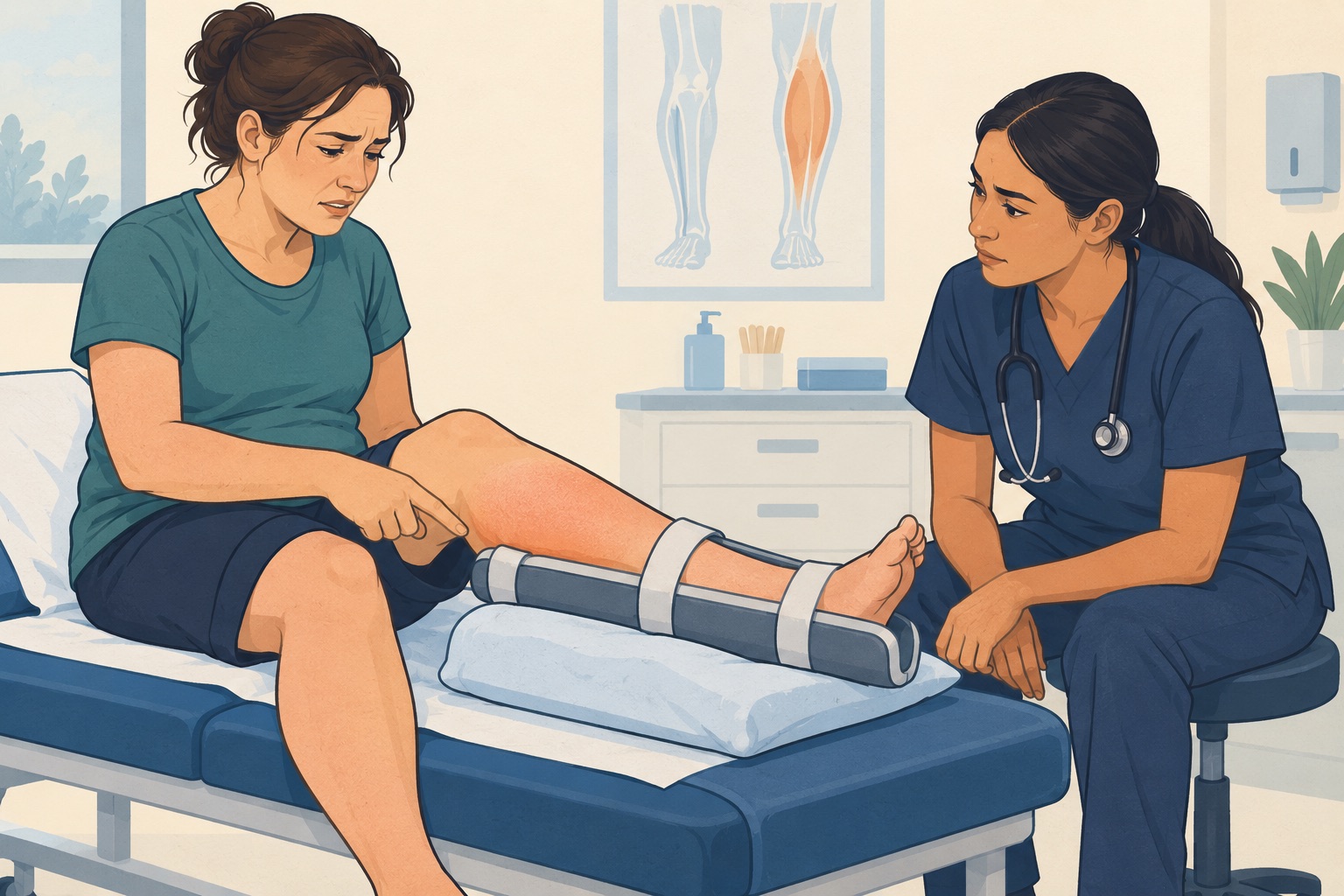
Muscles in the lower leg and forearm sit in spaces that do not stretch easily. Bleeding or swelling after a fracture, severe bruise, burn, penetrating injury or surgery can make pressure rise inside one of those spaces. A cast or bandage that is too tight may add to the problem. The result can be a worsening cycle: less blood reaches the tissue, while injured tissue continues to swell.
Compartment syndrome can also happen after an injury involving venom, including some bites or stings. The causes vary, but the first aider’s response is the same when acute symptoms appear: treat it as an emergency, not as routine post-injury soreness.
What signs should make you act?
- Severe, persistent pain, especially pain that is greater than expected or not settling with prescribed relief.
- A limb that feels increasingly tight or swollen, with pain made worse when the affected muscles are stretched.
- Tingling, numbness, weakness or increasing difficulty moving fingers or toes.
- Skin that becomes unusually pale or cold, or a firm feeling in the affected area.
These signs do not have to arrive together. A person can still have a pulse in the hand or foot while dangerous pressure is developing, and normal colour early on is not reassuring enough to rule it out. Equally, a first aider cannot diagnose it by pressing on the muscle. Listen to the pattern and the change over time, particularly after a recent injury or a newly fitted cast.
What should a first aider do?
For a suspected acute case, call Triple Zero (000) for an ambulance or go immediately to an emergency department. Healthdirect describes this as a condition that can need urgent surgery to release the pressure. Do not wait for numbness or loss of movement before seeking help; those can be late and serious signs.
Keep the person supported and avoid further injury to the limb. Do not massage the area or wrap it tightly. If there is a cast, splint or dressing, tell the ambulance crew or treating clinician that it feels too tight and that pain or swelling is increasing. Do not try to cut off a cast yourself or remove medical immobilisation without professional direction. Follow the emergency call-taker’s advice, particularly if the injury also involves significant bleeding or a possible fracture.
Note the time of the original injury, when pain began to worsen and what changed. If a bandage or cast was recently applied, say when. Tell clinicians about any medicines that affect bleeding if known. This concise history can help them decide how urgently the limb needs examination and treatment.
If the person is already in hospital or has recently gone home with a cast, report the new pain to the treating team immediately. Say clearly that it is worsening and whether there is numbness or trouble moving the digits. Do not assume that a previous examination or an earlier normal X-ray has ruled out a problem that developed later. The timing and progression deserve a fresh assessment.
Why speed matters
Muscle and nerve tissue can be damaged when blood flow is restricted for too long. Hospital clinicians may examine the limb and sometimes measure pressure inside the muscle compartment. If acute compartment syndrome is confirmed, the pressure may need to be relieved surgically. Painkillers alone do not fix the underlying pressure. Waiting until the limb is visibly pale, cold or unable to move risks missing a chance for earlier treatment.
Some people develop chronic exertional compartment syndrome during repeated intense exercise. Its discomfort typically comes on with activity and improves with rest. That pattern needs medical review, but it is a different situation from rapidly increasing pain after an injury. Do not use the exercise-related meaning to downplay a sudden, severe episode.
How does it differ from crush syndrome?
A crush injury describes tissue damage from compression. Compartment syndrome describes dangerous pressure inside a particular enclosed muscle space. Crush syndrome refers to wider effects on the body after severe muscle compression and release. These problems can overlap, but they are not interchangeable names.
Sources reviewed
- Healthdirect Australia: Compartment syndrome
- Royal National Orthopaedic Hospital: Acute compartment syndrome
- ANZCOR Guideline 9.1.7: Crush injury
This glossary entry is general education, not a diagnosis or a substitute for accredited first aid training. In an Australian emergency, call Triple Zero (000).