
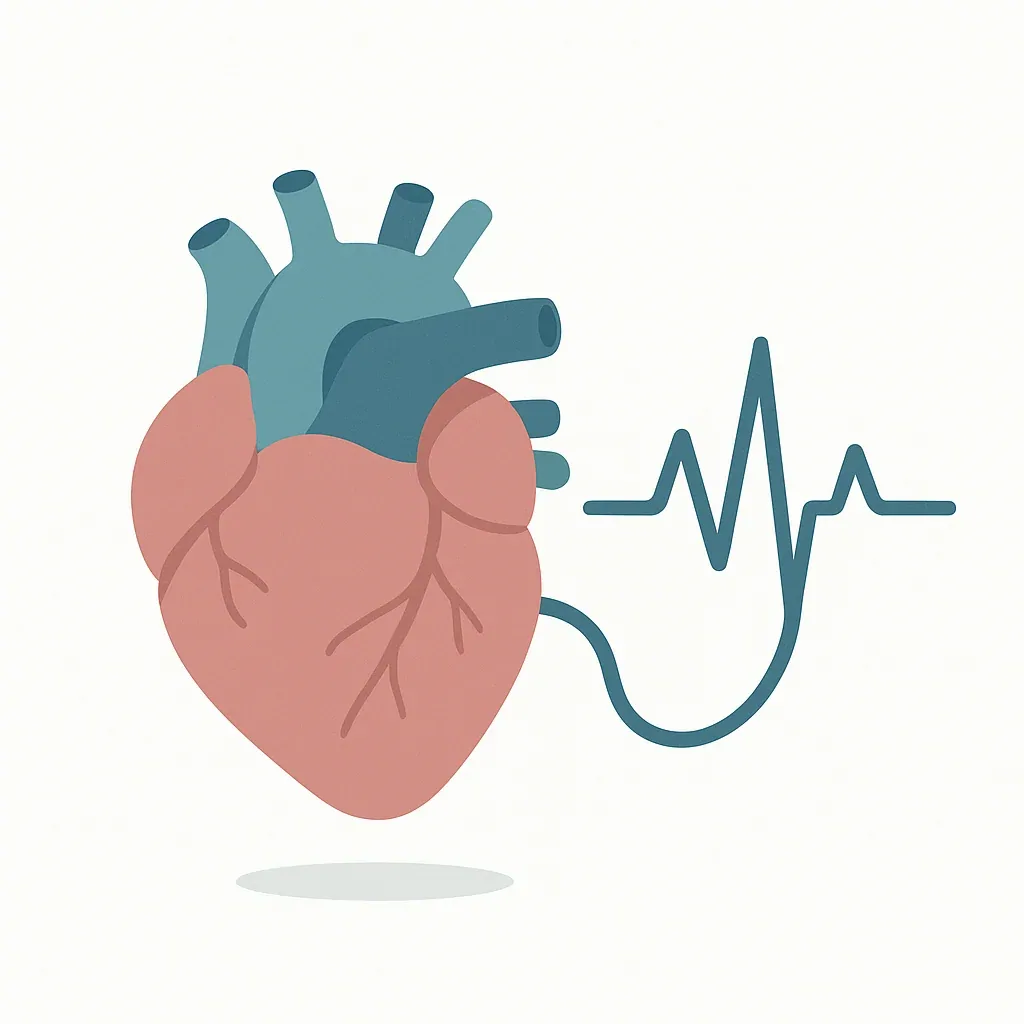

Atrial flutter is a type of heart arrhythmia where the upper chambers of the heart beat very fast in a regular but abnormal pattern. In first aid, it matters because it can cause palpitations, shortness of breath, dizziness, and sometimes more serious symptoms that need urgent care.
What is atrial flutter?
Atrial flutter is an abnormal heart rhythm that starts in the atria, the upper chambers of the heart. It is similar to Atrial Fibrillation, but the rhythm is usually fast and more regular rather than chaotic and irregular.
Atrial flutter is one specific type of Heart Arrhythmias. It is not the same as Cardiac Arrest, because the heart is still pumping, even though the rhythm is abnormal.
Why it matters in first aid
Some people with atrial flutter feel only mild symptoms. Others may become quite unwell. In first aid, the goal is not to diagnose the exact rhythm, but to recognise when someone may have an abnormal fast heartbeat with symptoms that need urgent medical attention.
Common symptoms
A person with atrial flutter may have:
- Palpitations
- a fast Heart Rate
- a fast or unusual Pulse
- shortness of breath
- dizziness
- weakness
- chest pain
- fainting or near-fainting
What to do in first aid
If someone may have atrial flutter:
- Help them stop activity and rest.
- Keep them calm.
- Ask whether they have chest pain, trouble breathing, dizziness, or feel faint.
- If safe and appropriate, check their Heart Rate or Pulse.
- Call
000if they have severe symptoms or look seriously unwell.
Do not try to correct the rhythm yourself. First aid focuses on rest, assessment, and escalation.
When it is an emergency
Call 000 urgently if possible atrial flutter happens with:
- chest pain
- severe shortness of breath
- collapse
- fainting
- confusion
- blue or grey lips
- severe weakness
If the person becomes Unresponsive and is not breathing normally, follow Primary Survey or DRSABCD and start CPR. Use an Automated External Defibrillator if one is available.
Atrial flutter compared with atrial fibrillation
Atrial Fibrillation and atrial flutter both come from the atria, but they are not identical:
- atrial fibrillation is usually irregular
- atrial flutter is often fast but more regular
For a first aider, the important part is not memorising the rhythm pattern. It is spotting when a person with a possible abnormal rhythm is unwell and needs urgent help.
Quick answer
Atrial flutter is a fast abnormal heart rhythm that starts in the upper chambers of the heart. In first aid, help the person rest, check for danger signs like chest pain or fainting, and call 000 if they look very unwell or are getting worse. If they become unresponsive and are not breathing normally, start CPR immediately.
Sources reviewed
- Healthdirect: heart arrhythmias
- Healthdirect: atrial fibrillation
- Triple Zero: official emergency calling guidance
Reviewed against current Australian cardiac, first aid and emergency guidance by the First Aid Glossary Editorial Team. This article is general information and does not replace emergency-operator directions, professional medical advice or hands-on first aid training.