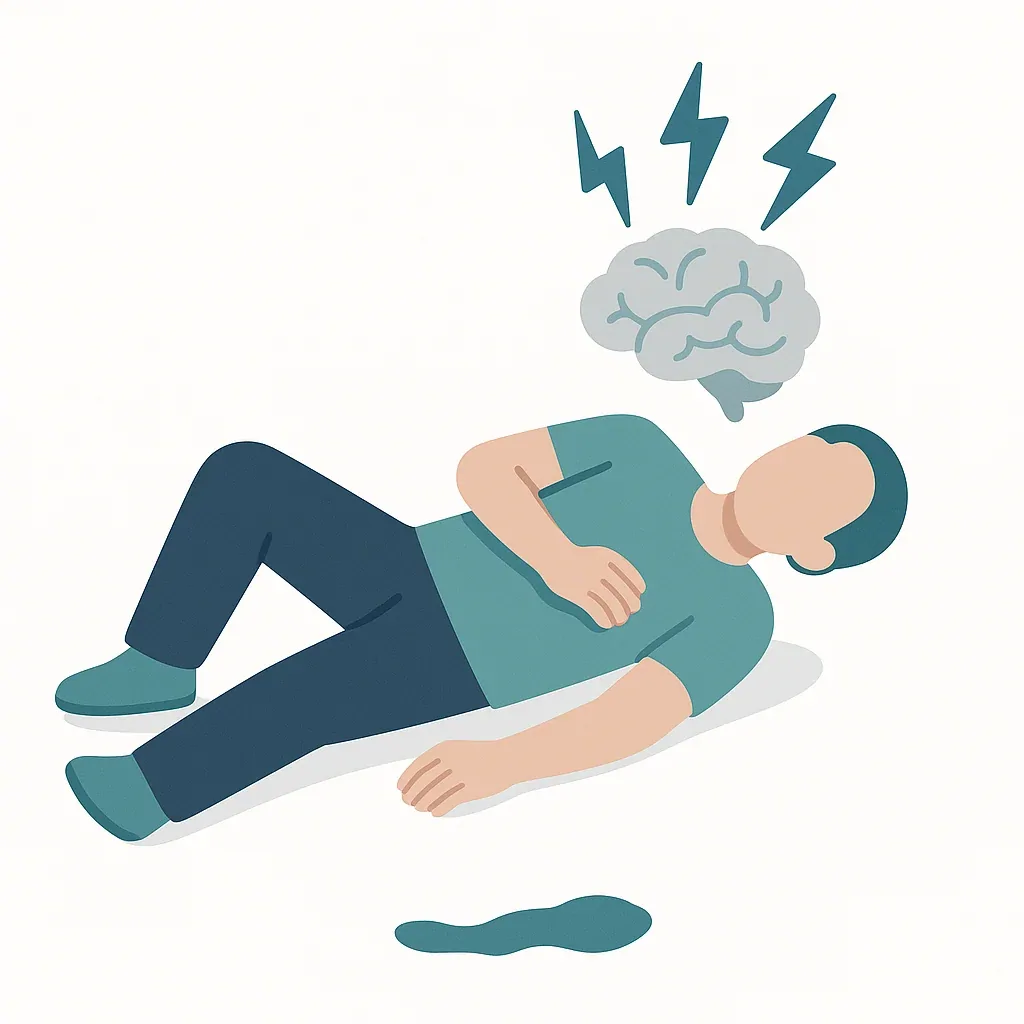

Epilepsy is a long-term brain condition that can cause repeated seizures. In first aid, it helps to understand that epilepsy is the underlying condition, while a Seizure is the event you may actually witness.
What is epilepsy?
This condition affects how the brain sends electrical signals. Some people with epilepsy have occasional seizures. Others may have them more often.
Epilepsy is not contagious, and many people with epilepsy live full and active lives.
Is epilepsy the same as a seizure?
No.
Epilepsyis the longer-term conditionSeizureis the event that happens at the time
Someone can have a seizure without having epilepsy. For example, seizures can also be triggered by fever, illness, head injury, low blood sugar, or other medical problems.
What should a first aider know?
If a person with epilepsy has a seizure, the basic first aid is the same as for other seizures:
- keep them safe
- protect their head
- do not hold them down
- do not put anything in their mouth
- time the seizure
- check breathing afterwards
Use the Recovery Position after the seizure if appropriate and safe.
When should you call 000?
Call 000 if:
- the seizure lasts longer than 5 minutes
- the person has repeated seizures without recovering
- the person is injured
- breathing does not return to normal
- the seizure seems unusual for that person
- you are not sure what is happening
If the person becomes Unresponsive and is not breathing normally, start CPR.
Why does this page matter if seizure already exists?
This page explains the condition behind repeated seizures. The Seizure page is still the better place for step-by-step emergency response during the event itself.
In other words:
Seizureis the first-aid event pageEpilepsyis the underlying-condition page
Quick answer
Epilepsy is a long-term brain condition that can cause repeated seizures. In first aid, it is useful to understand the condition, but the emergency response steps are usually best covered by the seizure page.
Sources reviewed
Reviewed against current Australian neurological, first aid and emergency guidance by the First Aid Glossary Editorial Team. This article is general information and does not replace emergency-operator directions, professional medical advice or hands-on first aid training.