
A seizure happens when there is a sudden burst of abnormal electrical activity in the brain. In first aid, the most important job is to keep the person safe, time the seizure, and get urgent help when needed.
What is a seizure?
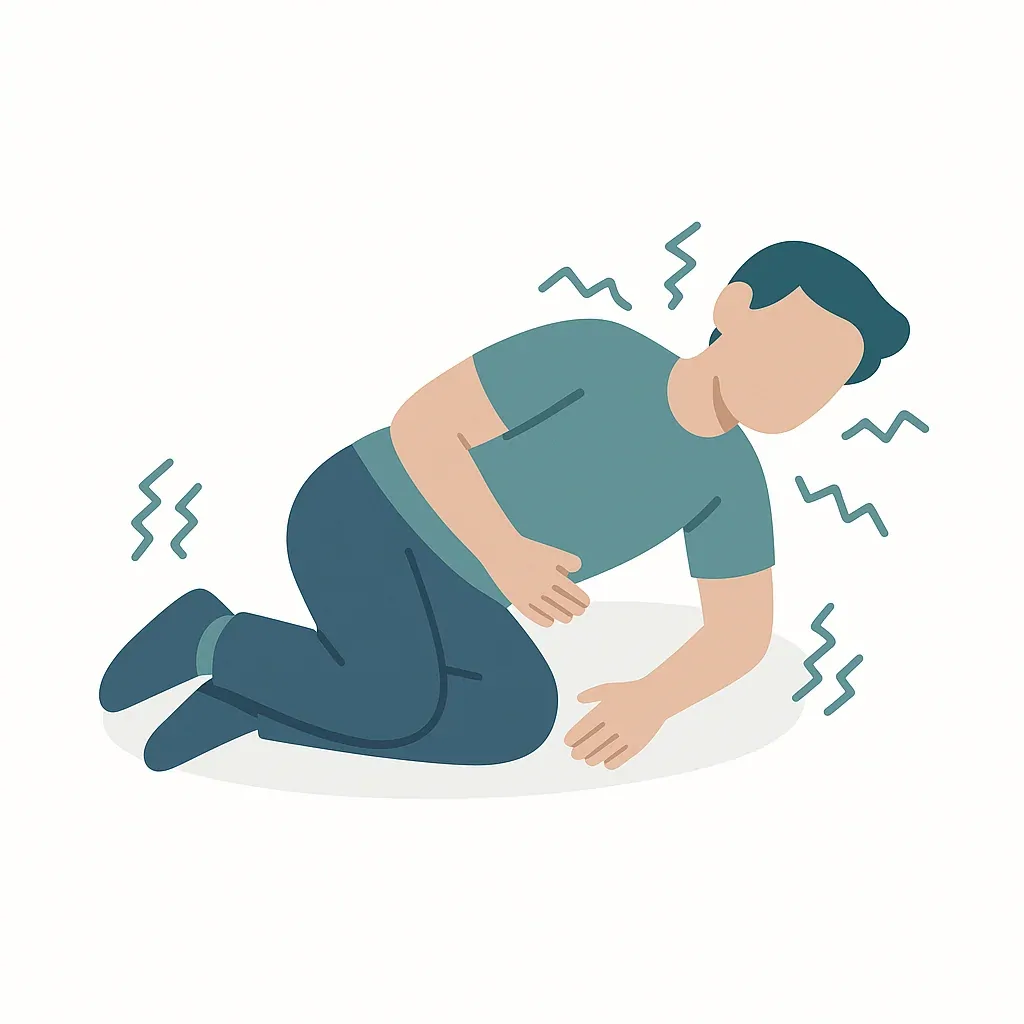
Seizures can look very different from one person to another. Some people fall and shake. Others may stare, seem confused, or become briefly unresponsive.
A seizure is the event that happens at that moment. It can have many different causes.
The recovery period after a seizure is often called the post-ictal state. During that time, the person may be confused, sleepy, or slow to respond.
What might you notice?
Depending on the type of seizure, you might notice:
- sudden collapse
- stiffening or jerking movements
- blank staring
- unusual behaviour
- confusion
- loss of awareness
- brief Unresponsive behaviour
- tiredness or confusion afterwards
What should you do in first aid?
- Stay calm.
- Move hazards away if you can.
- Protect the person’s head.
- Do not hold them down.
- Do not put anything in their mouth.
- Time the seizure.
- Once the seizure stops, check breathing and place them in the Recovery Position if needed and appropriate.
When should you call 000?
Call 000 if:
- the seizure lasts longer than 5 minutes
- another seizure follows without recovery
- the person is injured
- the person is pregnant
- the person has trouble breathing afterwards
- this is the first known seizure
- you are worried for any other reason
If the person becomes unresponsive and is not breathing normally after the seizure, start CPR.
Is seizure the same as epilepsy?
No. Epilepsy is a long-term condition that causes repeated seizures. A seizure can also happen for other reasons such as high fever, head injury, low blood sugar, stroke, poisoning, or illness.
That means seizure is the event, while epilepsy is one possible underlying condition.
Why does repeated observation matter?
What happens after the seizure can matter a lot. Watch breathing, responsiveness, injuries, and how quickly the person recovers. That is where Reassessment becomes important.
Quick answer
A seizure happens when there is a sudden burst of abnormal electrical activity in the brain. First aid focuses on keeping the person safe, timing the seizure, and getting urgent help if red flags are present.
How this page is checked
Publisher: First Aid Glossary Editorial Team
Last reviewed: 28 April 2026
Reviewed against: Healthdirect Australia seizure guidance, Queensland Ambulance Service Clinical Practice Guideline: Neurological/Seizures, and Triple Zero emergency-call guidance.
This page is educational and explains first aid language in plain English. It is not personal medical advice, diagnosis, or a replacement for accredited first aid training. In an emergency in Australia, call Triple Zero (000).
Sources reviewed
Reviewed against Australian first aid and emergency guidance by the First Aid Glossary Editorial Team. This article is general information and does not replace emergency-operator directions, professional medical advice or hands-on first aid training.