
- First aid for camping definition
- Plan the trip before packing the kit
- Build a practical camping first aid kit
- Make the campsite safer
- Cuts, burns and everyday injuries
- Bites, stings and wildlife encounters
- Heat, cold and hydration
- Water safety and drowning risk
- When weather or access changes the plan
- When to call Triple Zero (000)
- Related glossary terms
- Sources reviewed
First aid for camping definition
First aid for camping is the immediate care and emergency preparation used when someone is hurt or becomes unwell away from normal services. It combines ordinary first aid skills with practical planning for distance, limited phone reception, weather, water, wildlife and unfamiliar terrain.
Camping does not require an enormous medical kit or a person pretending to be an expert. It does require a realistic plan. The most important choices are often made before leaving: where you are going, how you will call for help, what hazards are likely, who knows your route and whether you have enough water, shelter and appropriate supplies.
Plan the trip before packing the kit
Tell a reliable person where you are going, who is with you and when you expect to return. Include the campsite name, trail, road or coordinates where possible. If the plan changes, update them. This simple step makes a major difference if a group does not return or cannot contact anyone.
Check the forecast, fire conditions, road closures, park alerts and local hazards. Learn whether mobile reception is likely and take a charged phone, spare battery or suitable communication device. Download maps for offline use if you rely on a phone. Do not assume a map app will work in a valley, forest or remote road.
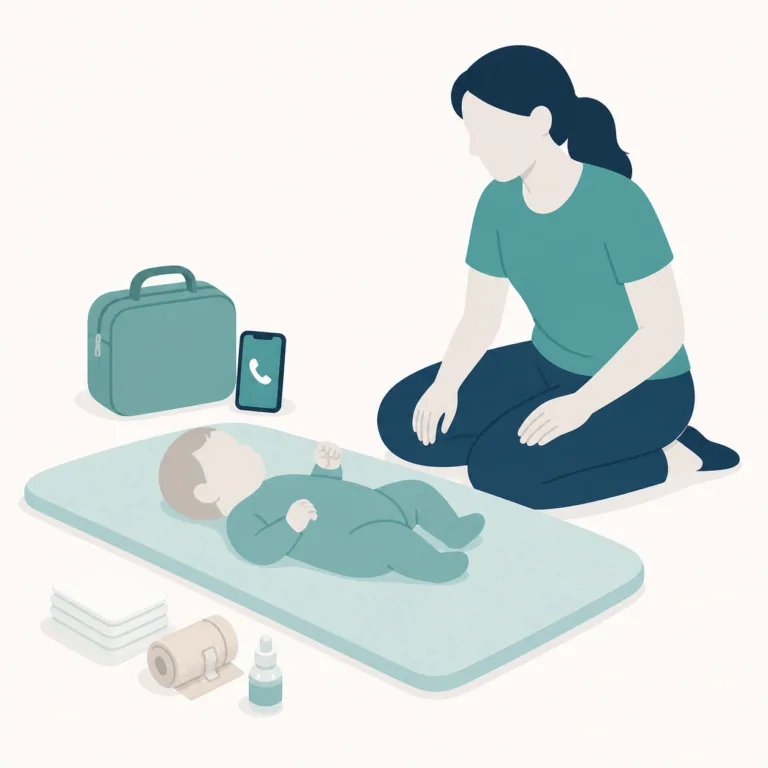
Think about the group. Babies, children, older people, people with chronic conditions and anyone who uses regular medication need extra preparation. Bring enough personal medication in original packaging, keep it dry and accessible, and make sure more than one person knows where it is. A shared first aid kit should not replace individual health plans.
Build a practical camping first aid kit
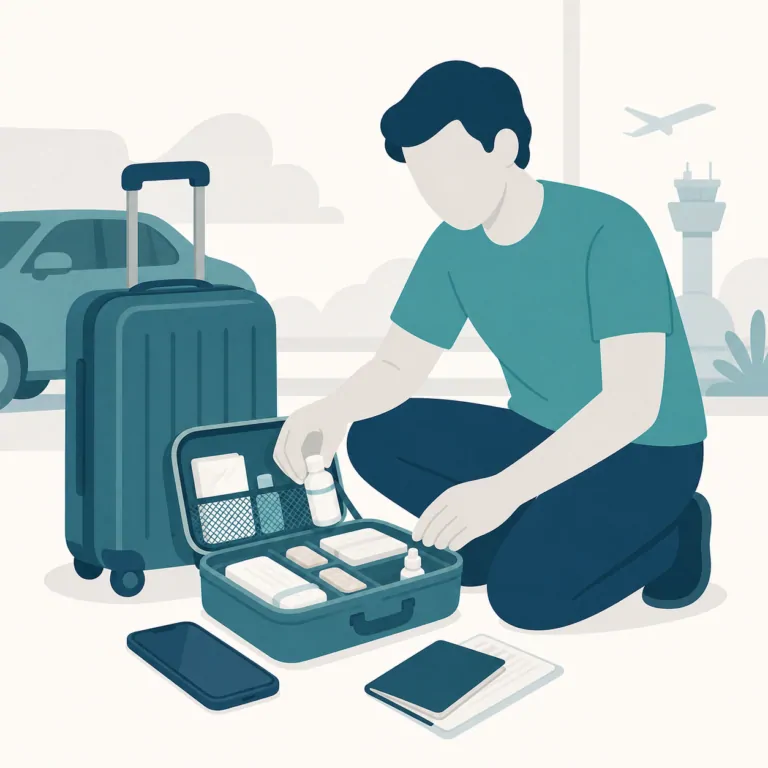
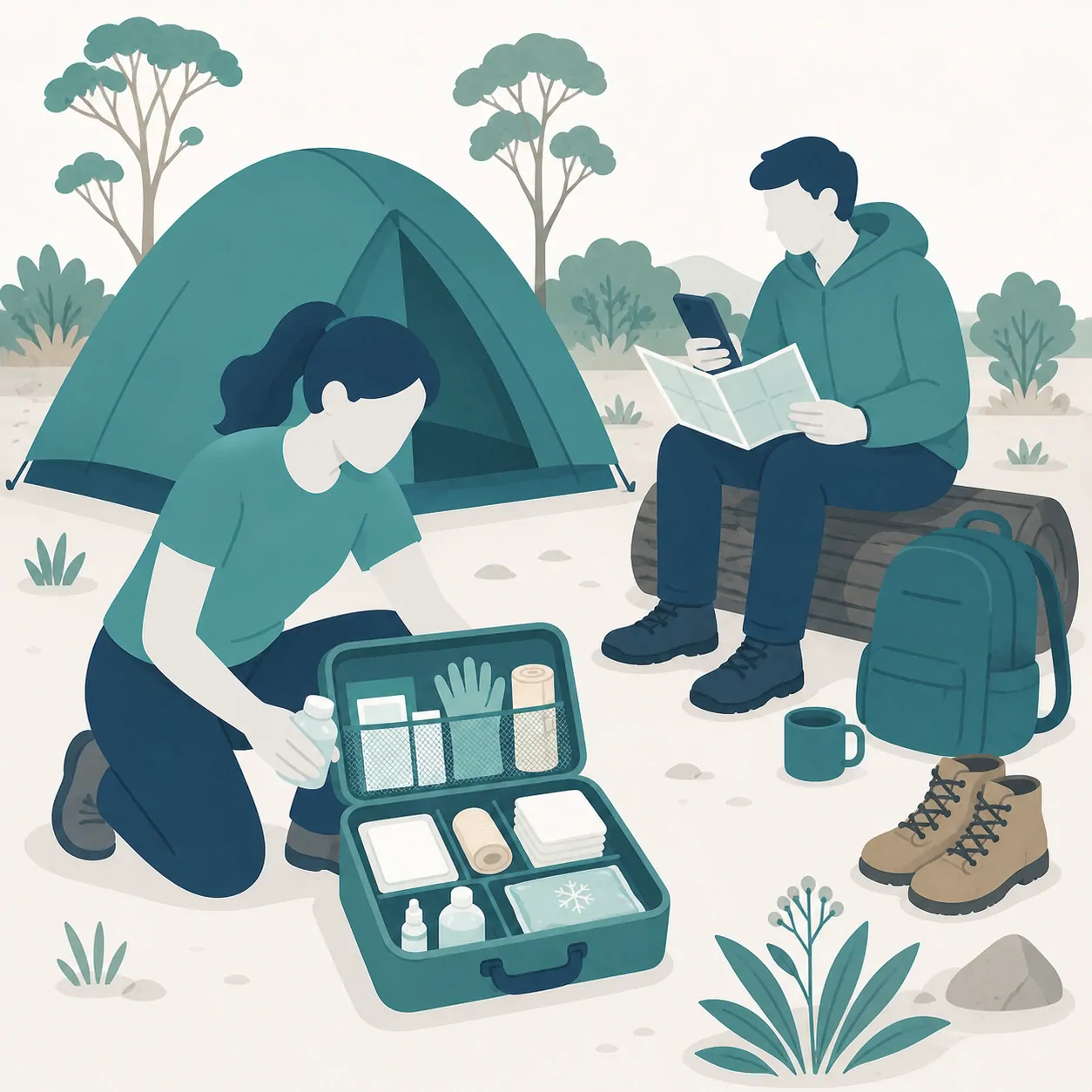
Start with basic supplies that can be used safely: disposable gloves, sterile dressings, gauze, adhesive strips, medical tape, bandages, saline, scissors, tweezers, a triangular bandage, a cold pack and a thermal emergency blanket. Add a first aid guide, emergency contacts and a notebook and pen for recording times, symptoms and advice received.
Pack supplies in a waterproof, clearly marked container. Keep it somewhere reachable rather than buried under food or camping gear. Check it before every trip for expired, opened or damaged items. Bring more gloves and dressings if the group is large or the trip is long.
Avoid carrying equipment you cannot use. A professional-looking tool can create false confidence and delay a sensible decision to get help. Current training, a working communication plan and a clear head are more valuable than a kit packed with unfamiliar items.
Make the campsite safer
Choose a stable site away from falling branches, flood-prone ground, cliff edges and obvious animal paths. Keep tents, cooking equipment and fuel separate. Store food securely, use lights around trip hazards after dark and keep children within sight around water, fire and vehicles.
Keep a fire small, supervised and completely extinguished when finished. Do not use fuel to start or revive a fire. Burns often happen when someone stumbles near a campfire, handles hot cookware or spills a hot drink. Make a clear no-go zone for children and do not leave boiling water at ground level.
At night, use a torch rather than walking barefoot or reaching into dark spaces. Shake out footwear left outside and avoid putting hands where you cannot see. These simple habits reduce the chance of bites, stings, cuts and falls.
Cuts, burns and everyday injuries
For a small cut, wash hands, use gloves if available and apply pressure with a clean dressing. Rinse a minor wound with clean running water when bleeding is controlled, then cover it. Seek advice for deep cuts, bites, puncture wounds, wounds with embedded material or signs of infection.
For a thermal burn, remove the person from danger if safe and cool the burn with cool running water for at least 20 minutes as soon as possible. Remove loose clothing or jewellery near the burn if it is not stuck to the skin. Do not use ice, butter, toothpaste, oils or adhesive dressings. Cover the cooled burn loosely with a clean non-stick dressing or cling film placed lengthways.
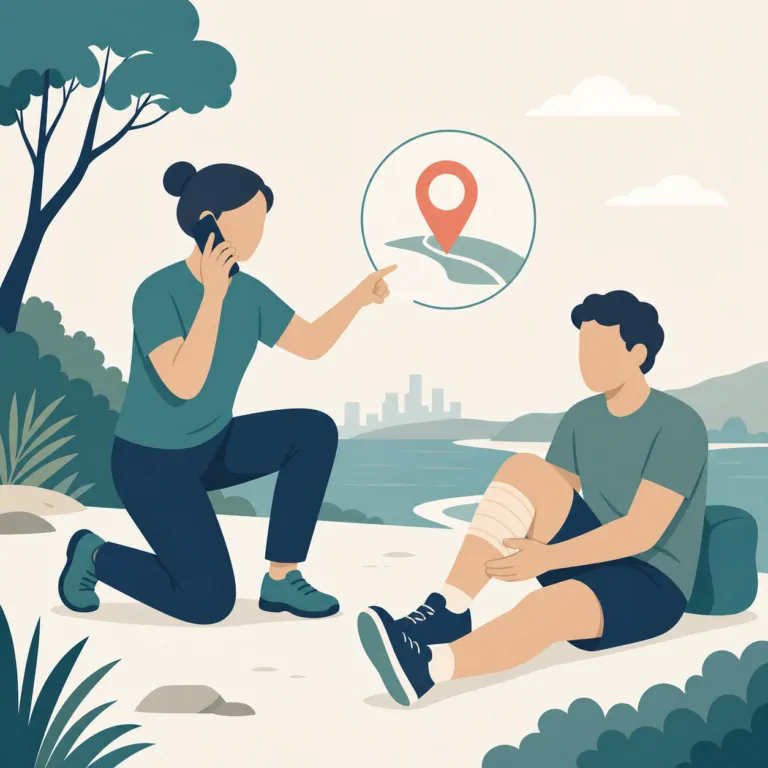
Call Triple Zero (000) for a serious burn, severe bleeding, major fall or worsening condition. In remote places, it can be tempting to wait until the next morning or try to drive a long distance. Consider whether movement, delay or a rough road could make a serious injury worse, and seek emergency advice early.
Bites, stings and wildlife encounters
The best first aid for many Australian bites and stings is prevention: wear enclosed shoes, use gloves for firewood or gardening, avoid touching animals and watch where you step. Do not try to identify, capture or kill an animal after a bite. The first aider’s job is to care for the person, not collect evidence.
For a suspected snake bite, keep the person still, call Triple Zero (000) and follow current pressure immobilisation guidance if you are trained. Do not wash the bite, cut it, suck it, apply a tourniquet or let the person walk around. Keep reassurance calm and note the time of the bite.
For a spider, marine creature or insect injury, the appropriate first aid can differ. Use the site’s existing specific pages and current Australian guidance rather than applying a one-size-fits-all remedy. Call emergency services for breathing difficulty, collapse, severe pain, widespread hives, a severe allergic reaction or a suspected dangerous bite or sting.
Ticks should be managed carefully because squeezing or irritating them can increase risk for some people. Seek current Australian guidance and advice, especially if the person has a history of allergic reactions. Do not use folk remedies that delay safe removal or assessment.
Heat, cold and hydration
Heat can turn a pleasant trip into an emergency. Carry more water than you expect to need, seek shade, wear sun-protective clothing and plan physical activity for cooler parts of the day. Watch for headache, nausea, dizziness, cramps, weakness, confusion, collapse or a person who does not improve with rest, cooling and fluids.
Heatstroke is life-threatening. Call Triple Zero (000), move the person to a cool place and begin active cooling while following emergency instructions. Do not dismiss confusion or collapse as “just dehydration.” Children, older people and those not used to hot conditions can become ill quickly.
Cold, rain and wind can also be dangerous. Change wet clothing, use dry layers and a thermal blanket, and insulate the person from the ground. Seek urgent help for confusion, severe drowsiness, worsening shivering or a person whose condition is deteriorating. Avoid alcohol as a warming strategy; it can increase heat loss and impair judgement.
Water safety and drowning risk
Never assume a familiar river, dam, beach or pool is safe. Water depth, current, tide, temperature and submerged hazards change. Supervise children closely, use lifejackets where appropriate and avoid swimming alone or after drinking alcohol.
If someone is in trouble in water, call for help and use a reach-or-throw response where possible. Do not enter the water unless you are trained, conditions are safe and you can do so without becoming another casualty. Once the person is out, check their response and breathing. If they are unresponsive and not breathing normally, call Triple Zero (000), start CPR if trained and use an AED when one is available.
Anyone who has had a drowning incident should be medically assessed, even if they seem to recover quickly. Breathing problems can develop after the event, and a person who is tired, coughing, confused or unwell needs prompt attention.
When weather or access changes the plan
Be prepared to turn back. A rising creek, extreme heat warning, bushfire alert, damaged road, unexpected injury or exhausted group member can make the original plan unsafe. Pride or a tight schedule should not decide whether to continue.
If you need help, give the best location information available: campsite name, track, road, coordinates, landmarks, vehicle description and direction of travel. Conserve phone battery, keep the group together where safe and protect the injured person from heat, cold or rain while waiting.
Do not leave an injured person alone to search for help unless emergency advice or the immediate situation makes that necessary. If someone must go, leave clear information about the location, condition and planned route, and take a communication device if possible.
When to call Triple Zero (000)
Call Triple Zero (000) for an unresponsive person, someone not breathing normally, severe bleeding, a serious burn, suspected snake bite, serious drowning incident, severe allergic reaction, major trauma, heatstroke or a rapidly worsening condition. Stay on the line, follow the operator’s instructions and send someone to meet responders when possible.
For suspected poisoning, call the Poisons Information Centre on 13 11 26. In remote areas, early contact gives emergency services the best chance to plan an appropriate response.
Related glossary terms
Sources reviewed
- Healthdirect Australia: first aid advice
- ANZCOR: first aid guidelines
- NSW National Parks safety advice
- Triple Zero (000): emergency calling information
Reviewed against Australian first aid and emergency guidance by the First Aid Glossary Editorial Team. This article is general information and does not replace emergency services, professional medical advice or hands-on first aid training.