

- Triangular bandage definition
- When a triangular bandage may help
- Before making a sling
- How an arm sling works
- Check circulation after applying it
- Securing a dressing
- Common injuries that need assessment
- Slings for children and sport
- Storage and maintenance
- Common mistakes to avoid
- Related glossary terms
- Sources reviewed
Triangular bandage definition
A triangular bandage is a large piece of cloth cut into a triangle. It is a versatile first-aid item that can support an injured arm in a sling, secure a dressing, provide gentle padding or help immobilise part of a limb while medical advice is arranged. It is not a tool for forcing a bone or joint back into place.
The most useful principle is comfort and protection. Support an injured part in the position found, avoid unnecessary movement and check circulation after applying a bandage. A sling can reduce pulling and pain while waiting for help, but it cannot diagnose a fracture, dislocation, tendon injury or serious shoulder problem. Seek assessment when injury features are concerning.
When a triangular bandage may help
A triangular bandage can be useful after a fall, collision or sporting injury when an arm, wrist, hand or shoulder is painful and needs temporary support. It may also secure a sterile dressing over a wound or provide a broad, gentle support for a limb that must be kept still.
Use it only after a basic safety check. If the person is unresponsive, not breathing normally, bleeding severely, has an obvious serious deformity, severe chest pain, major trauma, a neck injury or signs of shock, call Triple Zero (000) and follow emergency guidance. Do not spend critical time making a perfect sling.
For a suspected fracture, dislocation or serious soft-tissue injury, do not try to straighten the limb or “test” movement. Support it where it is comfortable and seek medical care. If a bone is visible, control bleeding around the wound, cover it loosely and obtain urgent help.
Before making a sling
Explain what you are doing and ask an alert person for consent. Check the hand and fingers before applying the sling: look for colour, warmth, swelling, numbness, tingling, severe pain and ability to move fingers if the injury allows. Remove rings, watches or bracelets gently if swelling is likely and they come off easily. Do not force stuck jewellery off an injured limb.
Place a soft pad or clothing between the arm and chest if it improves comfort. Ask the person to support their own arm gently with the uninjured hand while you position the bandage. This reduces pulling on the injury.
Choose a clean triangular bandage with no tears. If a commercial bandage is unavailable, a clean folded cloth may provide temporary support, but avoid using rough fabric, narrow cord or anything that could cut into skin.
How an arm sling works
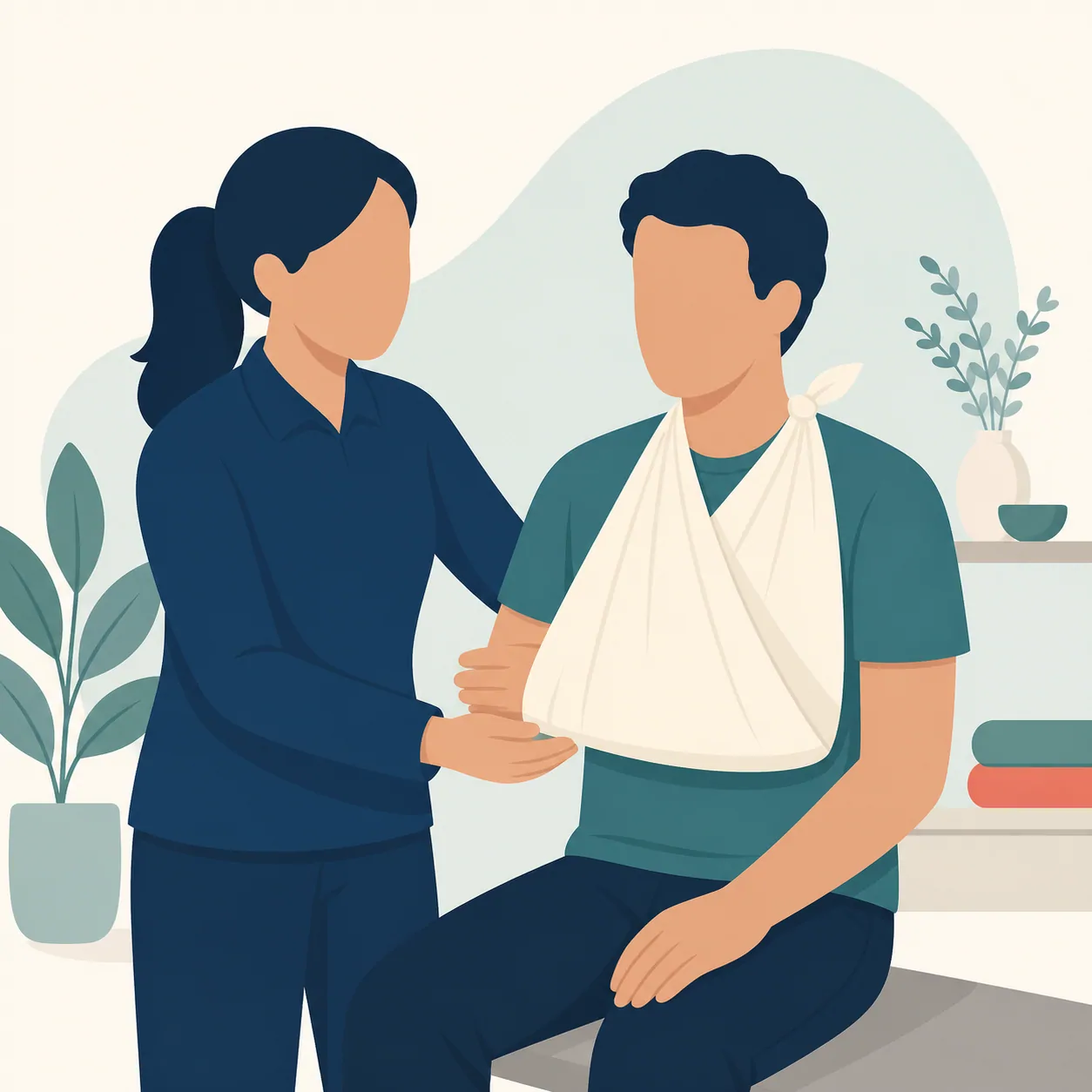
An arm sling supports the forearm across the front of the body. Place the long edge of the triangle under the injured arm, with one end over the uninjured shoulder and the other end over the injured shoulder. Bring the lower point up at the elbow and tie the ends together at the side of the neck, not directly over the spine.
Adjust the sling so the hand is slightly higher than the elbow if comfortable and the fingers remain visible. Tuck or secure the point near the elbow so it does not flap. The arm should feel supported, not tightly compressed against the chest.
Avoid complicated knots that are difficult to undo. Use a knot that can be loosened quickly if swelling, pain or circulation changes. If the person has neck pain or the knot causes discomfort, use padding, a broad support or another method while arranging assessment.
Check circulation after applying it
After the sling is in place, compare the injured hand with the uninjured one. Ask about numbness, pins and needles, coldness or increasing pain. Look for pale, blue or swollen fingers. If circulation seems reduced or discomfort increases, loosen and reapply the sling.
Check again regularly while waiting for help, because swelling can change over time. Do not cover the fingertips unnecessarily; seeing them makes circulation checks easier. If a person’s pain or hand colour changes suddenly, seek urgent medical advice.
A sling should not make a person feel worse. If it does, remove or adjust it and support the limb in the most comfortable safe position while arranging care.
Securing a dressing
A triangular bandage can secure a sterile dressing on a head, hand, foot or limb when tape is unavailable. Place the clean dressing over the wound first, then use the bandage to hold it in position without direct tight pressure over an embedded object.
For bleeding, direct pressure with an appropriate dressing is the priority. If blood soaks through, add another pad over the first and keep pressure on. Do not repeatedly remove the original dressing to inspect. For severe or uncontrolled bleeding, call 000 early.
Do not use a triangular bandage to tightly wrap a limb like a tourniquet. A tourniquet has specific life-threatening bleeding indications and should be used only by someone trained and equipped. An improvised tight bandage can cause harm.
Common injuries that need assessment
Seek medical assessment for severe pain, deformity, a suspected fracture or dislocation, inability to use the limb, numbness, a wound over the injury, severe swelling, pain after a major fall or collision, or an injury that is not improving. Children may not be able to describe pain accurately, so use a lower threshold for advice after a significant fall or sport impact.
Call Triple Zero (000) for major trauma, an open fracture, severe bleeding, altered consciousness, breathing difficulty, chest pain, a serious neck or back injury, or when the person is rapidly becoming unwell. Do not move someone with a suspected spinal injury unless there is immediate danger.
A shoulder injury can be associated with neck, chest or head injury. Do not assume a sling alone is enough after a high-impact event.
Slings for children and sport
For a child, use a small enough bandage and check that the knot is comfortable. Explain that they should not swing the arm or remove the sling to play. Tell the parent, guardian, teacher or coach and arrange assessment where indicated.
At sport, remove the person from play after a suspected fracture, dislocation, significant shoulder injury or head impact. A sling is a temporary support, not clearance to return. Record the incident and communicate with the responsible adult or club medical process.
Do not use a sling to mask pain so someone can continue manual work, driving or playing. The underlying injury still needs an appropriate decision about rest, assessment and return to activity.
Storage and maintenance
Keep triangular bandages clean, dry and folded in the first-aid kit. Check them after each use and replace any that are stained, damaged or missing. A triangular bandage is inexpensive but highly useful when the kit contains clear instructions and first aiders have practised using it.
During training, practise on a willing partner so you know how to position the cloth, tie a comfortable knot and check circulation. Real injuries are stressful; familiarity helps you work more gently and efficiently.
Common mistakes to avoid
Do not force a limb straight, tie a knot too tightly, hide the fingers, use a sling to delay care, place pressure on an embedded object or use a triangular bandage as an improvised tourniquet. Do not forget to check circulation before and after applying the support.
Keep the person comfortable, warm and reassured. Seek help early when an injury could be serious.
Related glossary terms
Sources reviewed
- Healthdirect: first aid basics
- Healthdirect: hand and finger fractures
- Healthdirect: spinal cord injuries
- ANZCOR: first aid guidelines
Reviewed against Australian first aid and emergency guidance by the First Aid Glossary Editorial Team. This article is general information and does not replace emergency services, professional medical advice or hands-on first aid training.


