
- First aid room definition
- Decide whether a dedicated room is needed
- Choose an accessible, private location
- Essential hygiene and furniture
- Stock the room for the assessed risks
- Make emergency equipment easy to find
- Infection control and cleaning
- Keep the room available and maintained
- Training and communication
- What a first aid room is not
- Related glossary terms
- Sources reviewed
First aid room definition
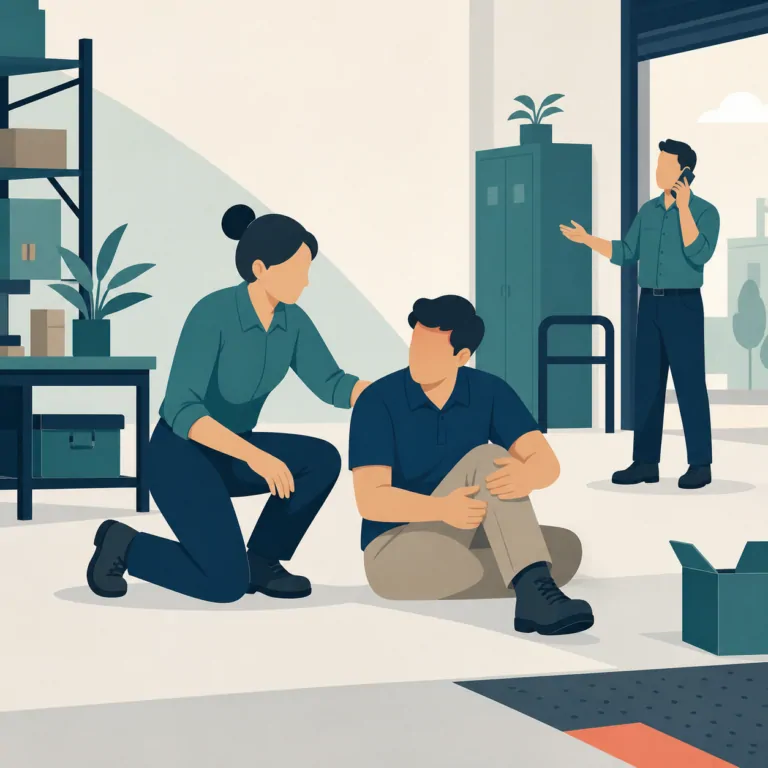
A first aid room is a dedicated, accessible space where first aid can be provided with privacy, basic hygiene and appropriate equipment. It is most useful in larger, higher-risk, remote or complex workplaces and venues where a small portable kit alone is not enough for the number of people, likely injuries or distance from medical care.
A first aid room should help a trained person care for someone safely while further help is arranged. It is not a substitute for an emergency department, a medical clinic or a reason to delay calling Triple Zero (000) for serious illness or injury. Its purpose is practical: make first aid quicker, cleaner, more private and better organised.
Decide whether a dedicated room is needed
The right first-aid facilities depend on risk. Consider how many people are present, the type of work or activity, known hazards, public access, remoteness, shift patterns, travel time for ambulances, injury history and the availability of trained first aiders. An office with a small team may need well-stocked portable kits; a large factory, warehouse, school, event venue, remote site or high-risk facility may benefit from a dedicated room.
Do not choose a room simply because one is spare. It must be easy to reach, clearly known to users and available when incidents occur. A locked office at the far end of a site, a storeroom full of boxes or a room shared with noisy unrelated activity will not support good care.
Review your local work health and safety requirements and the current guidance from the relevant regulator. Requirements can differ by state, territory and workplace risk profile. A risk assessment is a better foundation than copying another organisation’s layout.
Choose an accessible, private location
Place the room close to the main work or activity areas and on an accessible route for a person with an injury, a wheelchair or emergency responders. Keep corridors and doorways clear. Display clear first-aid signage according to local standards and include the room on site maps and induction material.
Privacy matters. A person receiving care may be distressed, bleeding, unwell, breastfeeding, experiencing a personal medical issue or simply want to be away from colleagues and bystanders. Choose a room with a door or appropriate screen, while maintaining safe access for a first aider and emergency responders.
Think about ambulance access. Can paramedics reach the room without navigating stairs, locked doors or crowded work areas? Is the building address, floor, access point and gate information displayed nearby? Include these details in the emergency action plan.
Essential hygiene and furniture
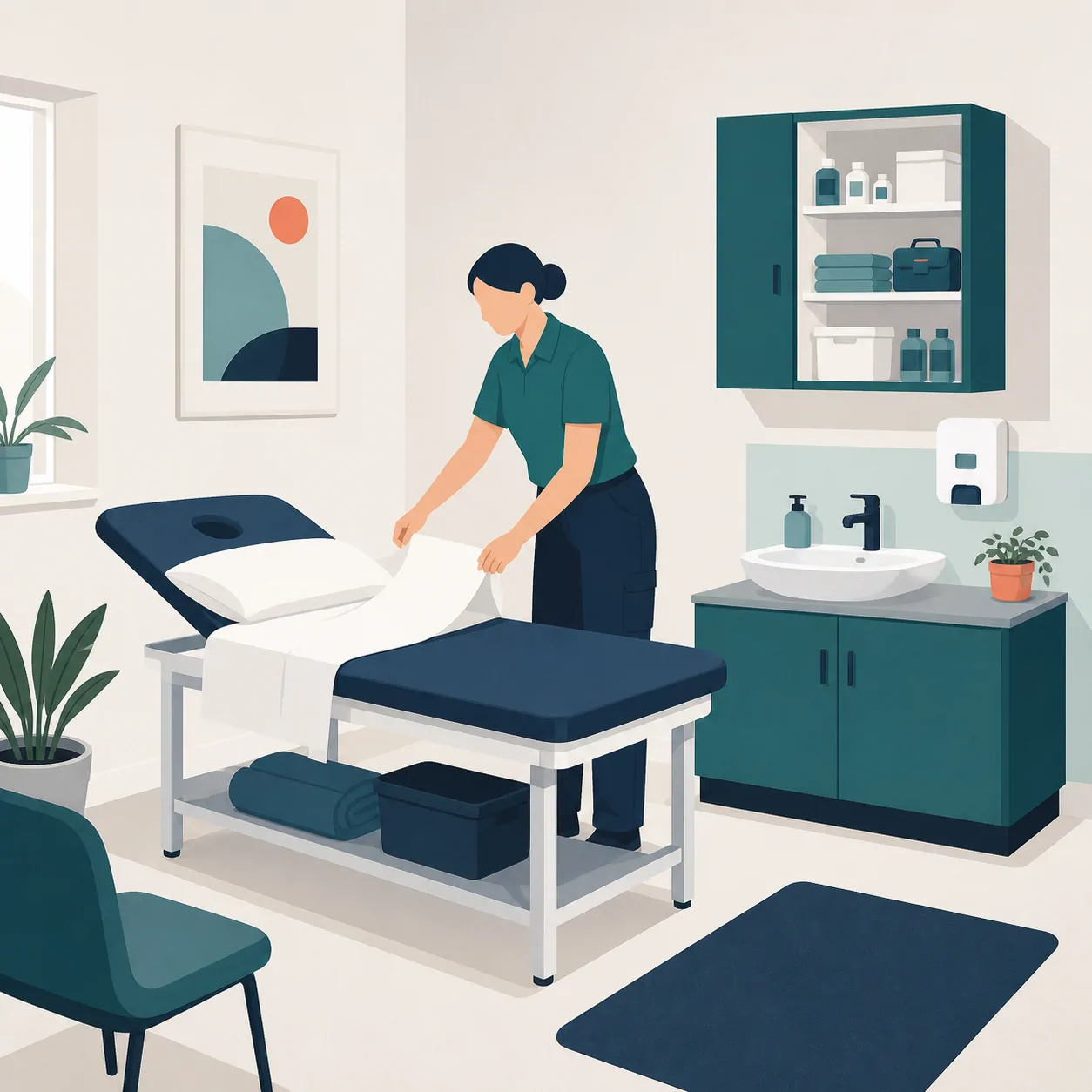
The room should be clean, well lit, ventilated and easy to clean after an incident. A handwashing facility with running water, soap and drying supplies is highly useful. Where that is not immediately possible, provide hand hygiene supplies and plan for safe cleaning. Keep surfaces uncluttered and choose furniture that can be cleaned easily.
A stable treatment couch or bed allows a person to lie down when safe and needed. Provide a clean pillow or head support, a chair for the first aider or support person, a table or bench for supplies and a bin for general waste. Depending on risk and local requirements, a clinical waste system, sharps container, eyewash station or emergency shower may also be needed.
Avoid turning the room into a storage area. Boxes, chemicals, personal belongings and unused furniture create trip hazards, reduce privacy and delay access to equipment. Store only first-aid and emergency items that belong there.
Stock the room for the assessed risks
Start with a properly stocked first-aid kit: disposable gloves, sterile dressings, gauze, adhesive strips, bandages, saline, tape, scissors, tweezers, a cold pack, thermal blanket, resuscitation barrier and first-aid instructions. Add equipment based on the setting and risk assessment, not because it looks impressive.
A chemical workplace may need an eyewash station and safety-data access. A remote site may need communication equipment and extra trauma supplies. A sports venue may need an AED, stretcher plan, cold packs and a way to contact parents or guardians. An office may need facilities for a person feeling faint, a basic kit and a clear emergency-calling process.
Keep medicines separate and only include them where policy, training and individual action plans make their use appropriate. Do not stock prescription medicines for general use. Personal medication should remain with the person or be stored according to the relevant plan.
Make emergency equipment easy to find
If an AED is available, its location should be clearly marked and reachable quickly. Do not hide it inside a locked room if it may be needed elsewhere. Check battery and pad expiry dates according to the manufacturer’s schedule, and make sure staff know where it is and how to call 000.
Display emergency contacts, the full site address, access instructions, the nearest emergency exit and an emergency action plan. A first aider should not have to look up the suburb while someone is unresponsive. Include local non-emergency contacts separately from Triple Zero (000).
Provide an incident-report form or a secure way to record care after the person is safe. Keep individual medical action plans accessible to authorised people while protecting privacy.
Infection control and cleaning
Use standard precautions: hand hygiene, suitable PPE, safe sharps handling, spill management and cleaning procedures. Keep disposable gloves in more than one size, eye protection where splash risk exists and a resuscitation barrier for trained use. Clean and restock after every incident.
Have a clear method for cleaning blood or body-fluid spills and for disposing of contaminated materials. Do not allow untrained staff to handle sharps. If a sharp is found or someone receives a puncture, follow the sharps-injury procedure and seek prompt medical advice.
Protect the privacy of the person receiving care. Clean quietly after handover, store records securely and do not discuss their health information with people who do not need to know.
Keep the room available and maintained
Assign a responsible person or team to inspect the room on a schedule and after every use. Check supply quantities, expiry dates, packaging condition, cleanliness, signage, lighting, access, PPE, AED status and emergency-contact details. Replace used or expired stock promptly.
Record inspections so gaps are visible. A checklist can include date, inspector, items replaced, issues found and action owner. If an item is missing or a door is blocked, fix it before the next emergency rather than noting it for a later meeting.
Test access at different times: early shift, after hours, public events and power outages. An emergency can occur when the usual key holder is absent. Put clear access procedures in place and ensure appropriate people know them.
Training and communication
Tell workers, visitors and volunteers where first-aid facilities are during induction. Introduce trained first aiders, show kit and AED locations and explain how to call help. Use signs and site maps rather than relying only on verbal instructions.
Run brief drills: can someone give the exact address? Can they retrieve a kit and AED? Can they guide an ambulance through the building? Can the treatment couch be accessed without moving storage? Exercises reveal practical issues that policy documents miss.
Review the room after a serious incident, near miss, workplace change, expansion, new hazard or staff feedback. The room should evolve with the work, not remain a forgotten snapshot of a previous setup.
What a first aid room is not
It is not a place to send a person who may have a life-threatening emergency instead of calling an ambulance. It is not a general staff break room, chemical store or private office. It is not a medical clinic unless it is staffed, equipped and authorised as one.
If someone is unresponsive, not breathing normally, bleeding severely, experiencing severe chest pain, showing signs of stroke, having a serious allergic reaction or rapidly worsening, call Triple Zero (000) immediately. Use the room only if moving them is safe and does not delay care.
Related glossary terms
Sources reviewed
- Safe Work Australia: First aid in the workplace
- Safe Work Australia: PPE overview
- Healthdirect: first aid basics
- Triple Zero: official emergency calling guidance
Reviewed against Australian first aid and emergency guidance by the First Aid Glossary Editorial Team. This article is general information and does not replace workplace-specific safety advice, emergency services, professional medical advice or hands-on first aid training.