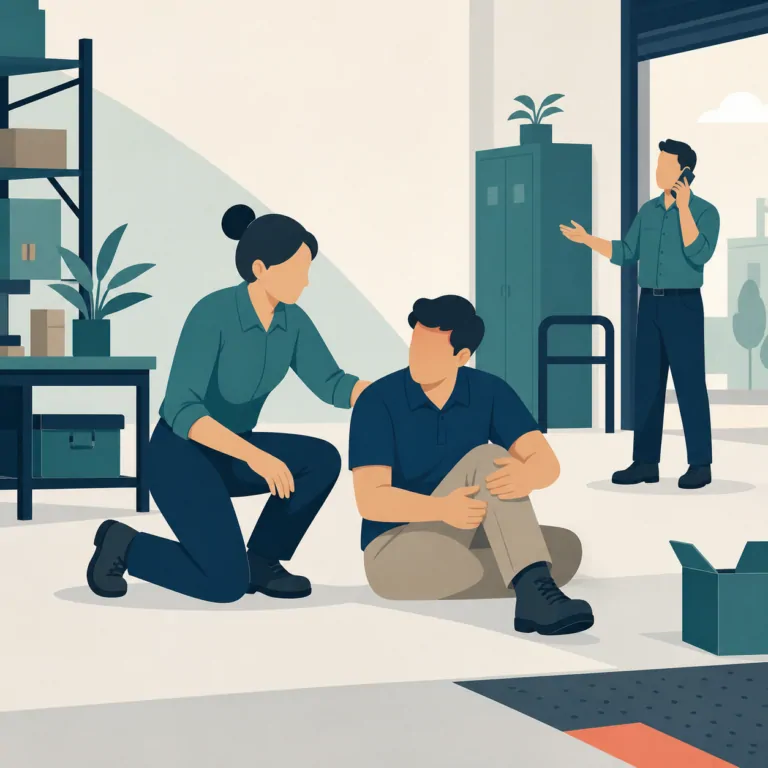


A hazard in first aid is anything at the scene that could harm you, the injured or unwell person, or other people nearby. It can be obvious, such as traffic, fire, electricity, a sharp object or an aggressive animal. It can also be less obvious, such as smoke, fumes, an unstable surface, moving machinery, floodwater or a person who is becoming violent.
In Australia, checking for danger is the first step of the DRSABCD action plan. Before approaching, pause and look, listen and smell for risks. Do not become another casualty. If the scene is unsafe, move away, warn others and call Triple Zero (000).
Why hazards come before first aid
First aid only helps when it can be given safely. Rushing into an unsafe area can expose you to the same danger and make it harder for emergency services to help everyone. A safe response may be as simple as keeping clear of traffic, turning off power only if it is safe to do so, or asking bystanders to create space.
You do not need to solve every hazard yourself. Your job is to recognise the risk, avoid it where possible and get the right help. For a dangerous scene, call 000 and follow the operator’s instructions.
Common hazards at an emergency scene
- Traffic and moving vehicles: roadside crashes, driveways, car parks and machinery areas can remain dangerous after the initial incident.
- Electricity: fallen powerlines, damaged cords, appliances, wet areas and electrical equipment can cause serious injury. Keep clear and do not touch a person who may still be in contact with electricity.
- Fire, smoke, gas and fumes: flames, heat, smoke, carbon monoxide, chemical vapours or a gas smell can make breathing unsafe.
- Water: surf, rivers, pools, floodwater and wet rocks can put rescuers at risk as well as the casualty.
- Violence or aggressive behaviour: an agitated person, weapon, unsafe crowd or family conflict may make it unsafe to approach.
- Animals, bites-and-stings/" class="fag-auto-link">bites and stings: a frightened dog, snake, spider, marine animal or swarm of insects can still be present.
- Biological hazards: blood and body fluids can carry infection. Use gloves or a barrier if available and avoid contact with sharps.
- Unstable surroundings: broken glass, a slippery floor, loose debris, a damaged building, a steep slope or poor lighting can cause a second injury.
A quick danger check
Take a few seconds to scan the area. Look for what could hurt you or other people. Listen for traffic, alarms, shouting, electrical arcing or machinery. Smell for gas, smoke, fuel or chemicals. If you cannot make the scene reasonably safe, keep your distance.
Use only actions that are within your ability and do not create a greater risk. For example, you may be able to ask someone to stop traffic from a safe position, move bystanders away from a hazard, put on disposable gloves or switch off a household appliance at the power point. Do not enter water, a burning building, a traffic lane, a contaminated area or a violent situation to provide first aid.
What to do when the scene is unsafe
- Move yourself and other bystanders to a safer place if you can do so without increasing risk.
- Call Triple Zero (000) for an ambulance, fire or police response as needed. Give the location and describe the hazard.
- Do not move the casualty unless there is immediate danger and you can do so safely. Moving a person can worsen some injuries.
- Follow instructions from the Triple Zero operator and emergency services.
- Begin first aid only once the area is safe enough and within your training.
Hazards in workplaces and public places
At work, first aid arrangements should reflect the hazards, size and location of the workplace. Safe Work Australia advises workplaces to assess their first-aid needs, including the risks people may face, and to ensure workers can access suitable equipment, facilities and trained first aiders.
A first aider at work still follows the same immediate principle: assess the scene before helping. Report hazards through the workplace process so they can be controlled, and do not rely on this glossary entry as a workplace emergency plan.
Hazard versus risk
A hazard is something that can cause harm. Risk is the chance that the hazard will cause harm and how serious that harm could be. In a first-aid emergency, you do not need a formal risk assessment before calling for help. You do need to notice urgent danger and avoid exposing yourself or others to it.
Related glossary terms
- Primary Survey
- Calling Triple Zero (000)
- Personal Protective Equipment (PPE)
- Duty of Care in First Aid
- First Aid at Work
Sources reviewed
- Healthdirect: first aid basics and the DRSABCD action plan
- Safe Work Australia: first aid
- Triple Zero: official emergency calling guidance
Reviewed against Australian first aid and safety guidance by the First Aid Glossary Editorial Team. This article is general information and does not replace emergency-operator directions, professional medical advice or hands-on first aid training.