
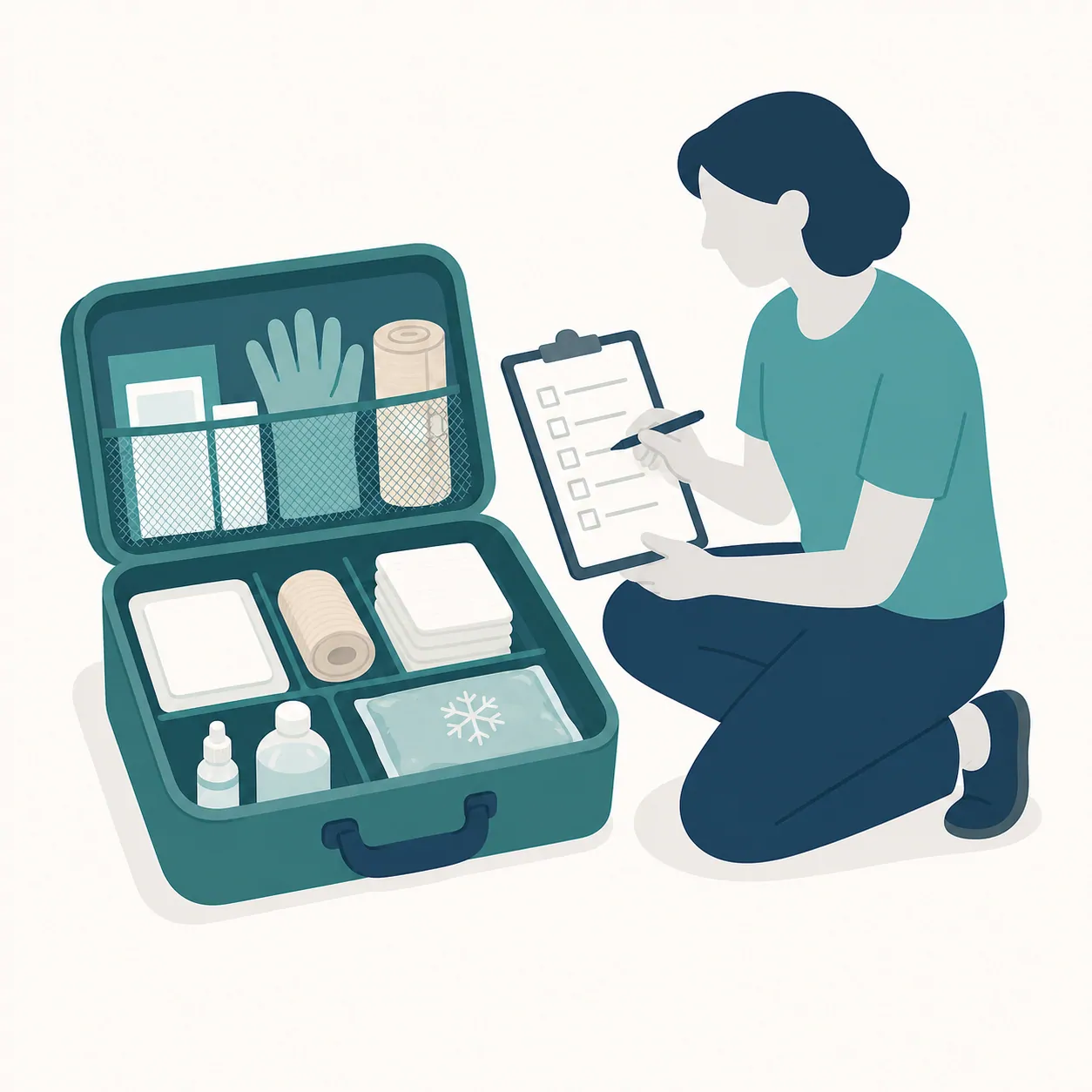

- First aid kit checklist definition
- Start with the risks, not a shopping list
- Essential protective and wound-care supplies
- Items that make everyday care easier
- What to include for a car, bag or travel kit
- What workplaces and organised groups should add
- Medicines and personal health items
- A simple maintenance routine
- Common checklist mistakes
- When to call for urgent help
- Related glossary terms
- Sources reviewed
First aid kit checklist definition
A first aid kit checklist is a written list of the supplies, contact details and maintenance tasks needed to keep a first aid kit ready for use. It does more than tell you what to buy. It helps you check that items are clean, in date, suited to the setting and still there after someone has used the kit.
The point is not to build the biggest possible box. A useful checklist focuses on simple items that people can recognise and use safely, then matches additional supplies to real risks. A home with young children, a work vehicle, a sports club and a workshop need different emphasis. In all settings, the checklist should sit alongside a simple emergency plan: know the address, know where the kit is and know when to call Triple Zero (000).
Start with the risks, not a shopping list
Before buying supplies, consider who will use the kit and what may happen nearby. Think about the number of people, their ages, the activities involved and how far away professional help is. A compact car kit has different needs from a childcare service, a building site or a weekend hiking group.
Write down the most realistic hazards. At home, that might include cuts, minor burns, falls, choking risks and outdoor bites or stings. A sports kit needs basic wound care, cold packs and a plan for head injury. A workplace may have particular risks from machinery, chemicals, heat, sharps or isolation. If the risk is specialised, get advice from a suitable first aid trainer, safety professional or workplace policy rather than guessing.
Avoid filling a general kit with unfamiliar equipment. An item is only helpful when the person using it understands its purpose. Quality basics, accessible training and early escalation are safer than a crowded box of products no one has practised with.
Essential protective and wound-care supplies
Every practical first aid kit should start with supplies that reduce contact with blood or body fluids and protect a minor wound. Check the packaging remains sealed and replace items straight after use.
- Disposable gloves: choose non-latex gloves where possible so they are suitable for more people. Keep several pairs in different sizes if the kit is shared.
- Sterile dressings and non-stick pads: useful for covering cuts, grazes and small burns once appropriate cooling or cleaning has been completed.
- Gauze and adhesive strips: useful for small wounds and for adding pressure or coverage where needed.
- Medical tape and bandages: use these to secure a dressing or provide gentle support. A bandage must not be so tight that it causes tingling, numbness, blue fingers or toes, cold skin or increasing pain.
- Scissors and tweezers: keep them clean and used for first aid only. Tweezers are for a shallow, visible splinter—not an object in an eye or a deeply embedded item.
For a bleeding wound, direct pressure is the priority. Do not keep lifting a dressing to check it; add another dressing over the top if needed and keep pressure on. Severe or life-threatening bleeding needs an emergency call and immediate first aid, not a search through the kit for the perfect product.
Items that make everyday care easier
The following supplies often make a kit more useful without turning it into a treatment room:
- sterile saline for rinsing a minor wound or a loose eye irritant
- a wrapped instant cold pack for short-term comfort after a minor bump, bruise or soft-tissue injury
- a triangular bandage, which can help support an arm or secure a dressing
- a thermal emergency blanket to reduce heat loss while help is arranged
- a first aid instruction card, notebook and pen
- a contact sheet with the site address, access information and key phone numbers.
Check the labels and instructions before relying on a product. Do not use ice directly on skin, and do not use a cold pack to decide whether a serious injury is safe to ignore. Saline and eye wash can help with a loose irritant, but they should never delay continuous flushing with clean running water after a chemical splash.
What to include for a car, bag or travel kit
A travel kit should be smaller than the main kit, but it still needs to cover the most likely problems. Use a durable case that will not spill in a car and keep it out of extreme heat where possible. Include gloves, dressings, adhesive strips, a small bandage, a cold pack, saline, a blanket and emergency contacts.
If you travel in remote areas, prepare more than a first aid kit. Take water, sun protection, a torch, charged communication equipment and location details. Let someone know your intended route and return time. Do not expect a small kit to solve a serious injury hours from help; early contact with emergency services is especially important when access is difficult.
When travelling overseas, check the local emergency number before you go. In Australia, call Triple Zero (000) for life-threatening or time-critical emergencies. Calls are free, and the operator needs to know what service you need and exactly where you are.
What workplaces and organised groups should add
Workplaces, schools, sports clubs and community groups should use their own risk assessment and legal obligations when deciding on first aid equipment. A generic checklist is only a starting point. Consider the number of people present, shifts, public access, distance from medical care and hazards specific to the work or activity.
For example, a workshop may need suitable eye-rinsing arrangements and stronger protection from sharps. A club needs a process for incident records, parent or guardian contacts and a clear decision about who can return to activity after injury. A remote crew may need communications planning and trained first aiders. Keep the kit location marked, make sure access is not blocked and let new staff or volunteers know where it is.
Medicines and personal health items
Be cautious about putting medicines into a shared first aid kit. Different people have allergies, health conditions and reasons a medicine may not be appropriate. Keep personal medication with the person it is prescribed for, unless there is an established care plan and trained people responsible for it.
An adrenaline auto-injector, asthma reliever or diabetes supply needs its own care plan, expiry checks and clear understanding of who can assist. Do not borrow a person’s prescribed medicine for someone else. For a suspected poisoning in Australia, call the Poisons Information Centre on 13 11 26 rather than trying to treat it from a kit.
A simple maintenance routine
Set a calendar reminder every three to six months and check the kit after every incident. Open the case and look for used, wet, torn, expired or unsealed items. Count gloves, dressings and bandages. Confirm scissors and tweezers are clean. Replace cold packs that have been activated or damaged.
Update the contact sheet at the same time. Check addresses, access gates, building names and emergency contacts. For a workplace or club, record who checked the kit, what was replaced and whether the risk assessment has changed. A check is also a good time to remind people where the kit is and who holds current first aid training.
Common checklist mistakes
The most common problem is a kit that looks full but is not usable: empty glove packets, opened dressings, no tape, an expired cold pack or a contact list that belongs to a previous address. A regular check prevents this.
Another mistake is adding equipment because it looks professional. Avoid products that require training or create a risk of misuse. Do not rely on antiseptic, a cold pack or a dressing to manage a deep wound, suspected fracture, serious burn, severe allergic reaction or person who is unresponsive.
Finally, do not put the kit somewhere convenient only for the person who stocked it. Everyone who may need it should be able to find it quickly. A clear sign and a short explanation during induction or family conversations are part of keeping the checklist useful.
When to call for urgent help
Use the kit only after you have made the scene safe and assessed the person. Call Triple Zero (000) for an unresponsive person, someone who is not breathing normally, severe bleeding, serious burns, major trauma, a severe allergic reaction, chest pain with concerning symptoms or a rapidly worsening condition. Stay on the line and follow the operator’s instructions.
The kit is a support for early action, not a reason to delay emergency care. If you are unsure whether a condition is serious, seek professional advice. Prompt escalation is often the most important item on the checklist.
Related glossary terms
Sources reviewed
- Healthdirect Australia: first aid advice
- ANZCOR: first aid guidelines
- Triple Zero (000): emergency calling information
Reviewed against Australian first aid and emergency guidance by the First Aid Glossary Editorial Team. This article is general information and does not replace emergency services, professional medical advice or hands-on first aid training.


