

- Foreign object in the eye definition
- Stop rubbing and assess what happened
- Simple first aid for loose dust or grit
- When flushing is not enough
- Never remove an embedded object
- Contact lenses and eye debris
- Children and outdoor play
- Workplace and DIY prevention
- Chemical exposure is different
- Related glossary terms
- Sources reviewed
Foreign object in the eye definition
A foreign object in the eye is anything that should not be there, such as dust, sand, sawdust, a metal shaving, an eyelash, an insect or a fragment of glass. Some loose surface particles can be flushed away gently. An object that is embedded, associated with high-speed work, causing vision changes or following a significant injury must be treated as an urgent eye injury, not a home-removal job.
The eye can feel intensely uncomfortable even with a tiny particle. Tearing, blinking and a scratchy sensation are common. The practical question is not “Can I see a speck?” but “Is this clearly a minor, loose surface irritant with normal vision—or could there be deeper damage?” When in doubt, protect the eye and get professional assessment.
Stop rubbing and assess what happened
Ask the person to stop rubbing their eye. Rubbing can scratch the cornea, press a particle into the surface or make a small injury larger. Move away from dust, wind, machinery or the chemical source. Wash hands before touching the eyelids or helping with irrigation.
Ask what caused the problem. A speck of dust while walking is different from a fragment generated by drilling, grinding, mowing, cutting metal or using a hammer. High-speed particles can enter the eye even when the person thinks they only felt a brief sting. Treat any high-speed mechanism as urgent and seek medical care immediately.
Check whether the person has blurred, double or reduced vision, severe pain, bleeding, marked light sensitivity, a visible object, swelling that stops the eye opening, nausea, a headache or an irregular-looking pupil. These are warning signs. Do not force the eyelids open or keep testing vision if it is painful; arrange urgent assessment.
Simple first aid for loose dust or grit
If the person has normal vision, no chemical exposure, no high-speed mechanism and a minor loose particle is likely, encourage gentle blinking and natural tears. Then flush the eye with clean running water or sterile saline. Keep the affected eye lower than the unaffected eye so water runs out and away from the other eye.
They can lean over a sink, use a gentle shower stream or pour clean water carefully from a cup. Blink during flushing if possible. Do not use a high-pressure stream. A few minutes of gentle irrigation can remove dust and grit without touching the eye surface.
If you can clearly see a loose particle on the lower eyelid—not on the eyeball—a clean, moistened corner of cloth may sometimes lift it away. Do not sweep across the eye, use tweezers, use a cotton bud or attempt to turn an eyelid inside out without training. If it does not come away easily, stop and get help.
When flushing is not enough
Cover the affected eye loosely and seek medical advice if the object will not flush out, the feeling persists, pain becomes worse, redness is significant, light hurts, tears continue excessively or vision is anything but normal. A clinician, optometrist or emergency department can examine the eye using the correct equipment and safely remove retained material.
Do not drive with blurred vision. Ask someone else to take the person, use safe transport or call an ambulance for serious symptoms. At work, report the injury and do not return to the same hazard before a suitable assessment and eye-protection check.
An eye may feel scratchy after a particle has gone because the surface is irritated. Avoid rubbing, contact lenses and eye make-up while it settles. If it is not clearly better within one or two days, see an optometrist or doctor. Do not use antibiotic, steroid, numbing or “redness relief” drops unless they were specifically prescribed for this injury.
Never remove an embedded object
If a piece of glass, metal, wood or another object is stuck in the eye, do not pull it out. Do not press on the eyelid, patch tightly or apply drops. Keep the person still and arrange emergency assessment. A penetrating object can be held in place by the tissue around it; removing it can cause severe bleeding or further vision damage.
You may place a loose protective shield over the eye only if it can be done without touching or moving the object. A clean paper cup can sometimes shield the area; secure it lightly to the bony face, not with pressure over the eye. Never apply a compressive bandage. Protect the person from bumping the eye while help is arranged.
Call Triple Zero (000) for an ambulance for a penetrating injury, a serious eye trauma, sudden major vision loss, severe bleeding, collapse or another life-threatening emergency. Tell the operator what happened and whether an object is visible or still in place.
Contact lenses and eye debris
Contact lenses can trap particles against the eye or make it hard to see what is happening. Do not rub or keep wearing the lens. For a simple loose particle, remove the lens only if it comes out easily during gentle flushing and the eye is otherwise not seriously injured. If pain, redness or blurred vision remains, leave lenses out and seek professional advice.
Do not insert a fresh lens to see whether the eye “feels better.” A lens can worsen irritation and increases infection risk after a scratch. Use glasses until the eye is healed and a clinician has said it is safe to resume lenses.
Children and outdoor play
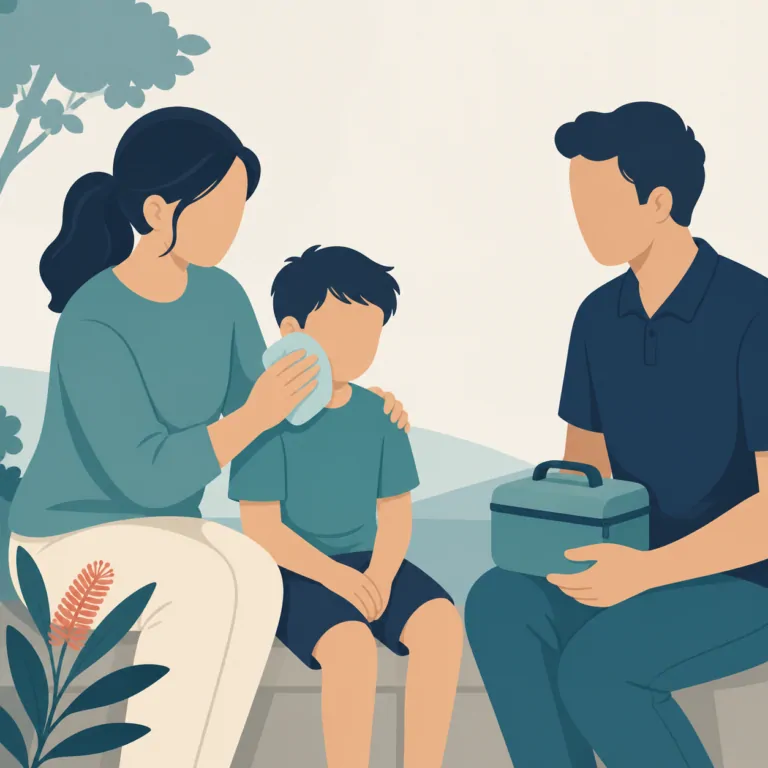
Children may be unable to describe whether something is in the eye, so observe their behaviour: persistent rubbing, tears, keeping one eye closed, light sensitivity or reluctance to open the eye deserves attention. Do not let a child use fingers or a toy to try to remove a particle. A calm adult can rinse a likely loose speck, but repeated attempts are not helpful.
Seek prompt care after a projectile injury, a suspected sharp object, a high-speed toy or a fall with facial trauma. Store sharp tools, batteries and chemicals safely, and make protective eyewear routine for gardening, woodworking and science activities.
Workplace and DIY prevention
Wear task-appropriate safety glasses, goggles or a face shield before starting work that produces dust, fragments or splashes. Eye protection should fit, be clean and have side protection where needed. Prescription glasses alone may not provide adequate impact protection. For chemical work, choose splash goggles or suitable face protection according to the Safety Data Sheet.
Review why a particle reached the eye. Was eye protection missing, damaged or inappropriate? Was a guard removed, the work area windy, compressed air used unsafely, or debris directed toward another person? First aid is only one part of prevention; fixing the hazard prevents the next injury.
Chemical exposure is different
Treat an unknown chemical or cleaning-product splash as an emergency. Begin continuous irrigation immediately and seek urgent medical care. Do not use the same brief flushing approach used for dust. See Chemical Splash in the Eye for the dedicated first-aid steps.
Similarly, a flash burn, a thermal burn or an injury from a firework should be assessed urgently. Do not place creams, ointments or pressure dressings directly on the eye.
Related glossary terms
- Eye Injury
- Chemical Splash in the Eye
- Personal Protective Equipment
- First Aid at Work
- Calling Triple Zero (000)
Sources reviewed
- Healthdirect: objects or chemicals in the eye
- Better Health Channel: foreign body in the eye
- Better Health Channel: eye safety at work
- Healthdirect: first aid basics
Reviewed against Australian first aid and emergency guidance by the First Aid Glossary Editorial Team. This article is general information and does not replace emergency services, professional medical advice or hands-on first aid training.