
- Emergency contacts definition
- Start with Triple Zero (000)
- Build a simple emergency contact list
- Include accurate location and access details
- Personal medical information: useful but private
- Contacts for children and dependants
- Keep phones useful in an emergency
- Keep workplace contact information current
- Review and practise
- Common mistakes to avoid
- Related glossary terms
- Sources reviewed
Emergency contacts definition
Emergency contacts are the phone numbers, addresses and key details that help you get the right assistance quickly when someone is seriously ill, injured, missing or in danger. A good list includes emergency services, trusted personal contacts, health contacts, accurate location information and any essential details that can be shared safely during an emergency.
The list is not just a collection of phone numbers. In a stressful moment, people also need to know the exact home, workplace or venue address; where first-aid equipment is stored; who can make decisions for a child; what medicines or action plans may be relevant; and how responders can enter the property. Preparing this information before an emergency makes it much easier to speak clearly and act promptly.
Start with Triple Zero (000)
In Australia, call Triple Zero (000) for police, fire or ambulance when a situation is serious, urgent or life-threatening. Examples include someone who is unresponsive, not breathing normally, severely bleeding, having chest pain with concerning symptoms, showing stroke signs, experiencing a severe allergic reaction, seriously injured or in immediate danger.
Save and display 000, but teach everyone in the household or workplace when it is appropriate. It is not a general health-advice line or a way to arrange routine transport. For non-life-threatening health advice, Healthdirect can be contacted on 1800 022 222. In a true emergency, do not call multiple people for permission before calling 000.
The person calling needs more than the number. Keep the full street address, unit or building number, suburb, nearest cross street, gate or entrance details and any relevant floor or room information visible. Mobile location technology can help, but you should still tell the operator where to come.
Build a simple emergency contact list
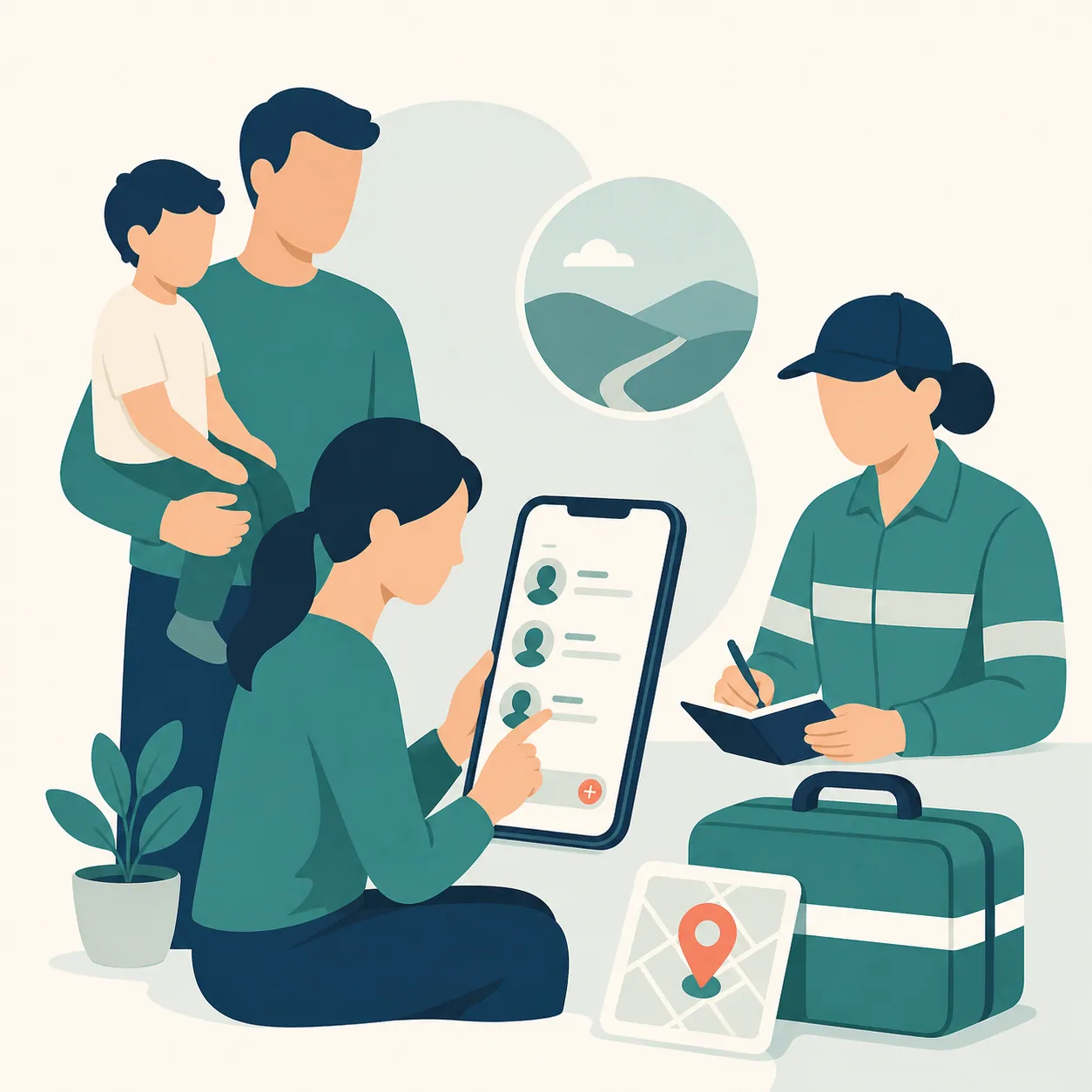
For a household, include the names and numbers of parents, guardians, close relatives, trusted neighbours, GP or regular clinic, dentist, pharmacy, school or child-care contacts, and relevant specialist or support services. For a workplace, include the site address, manager, first aiders, security, building management, maintenance, after-hours contacts and local emergency information.
For a club, camp or event, add the venue address, access gate, organiser, coach, child safeguarding contact, first-aid lead, transport contact and the nearest suitable medical service. Travellers should carry accommodation details, insurer assistance contact, local emergency number, travel companion and medication list.
Keep the list short enough to scan. Group it by purpose, for example: “Call now,” “Family and carers,” “Health,” “Workplace and venue,” and “Property access.” Include a printed copy in a safe, visible location and a secure digital copy on a phone.
Include accurate location and access details
Location is often the hardest question during a call. At home, write the legal street address, not only a suburb nickname. For an apartment, include building name, unit, floor, lift or stair access and the best entrance. For a rural property, include the property name, road, gate instructions, nearest town, landmarks and coordinates if useful.
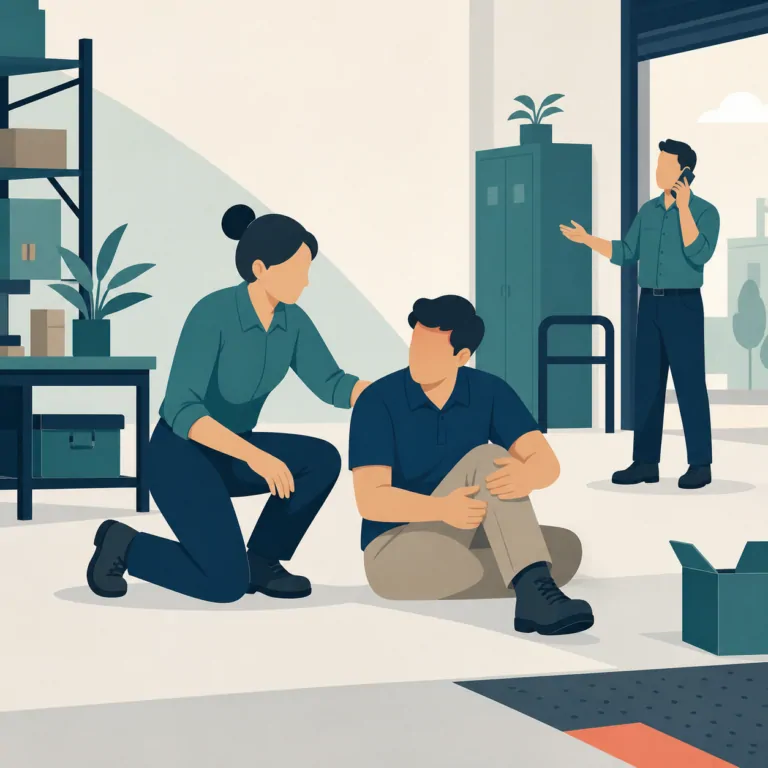
At work, display the address near phones, in first-aid rooms, at reception and in staff induction material. Make sure a new staff member or visitor could direct an ambulance without guessing. At a sports ground, record the oval, field, gate, car-park entrance and closest road access—not just the club name.
Prepare a plan for a person to meet emergency responders. They may need to open a gate, guide an ambulance through a large site, clear a path, secure pets or take a lift key. This lets the first aider stay with the person needing care.
Personal medical information: useful but private
Some information can be important in an emergency: major allergies, regular medicines, health conditions, individual action plans, communication needs, mobility needs, emergency contact preferences and the name of a regular doctor. Keep it current and share only with people who need to know.
Do not post sensitive medical information on a public noticeboard. For children, ask parents or guardians how action plans and medication details should be stored and who may access them. For adults, seek consent to retain and share emergency information unless an emergency prevents it.
Use original medicine packaging where possible and keep a list of current medicines and doses rather than relying on memory. Do not include passwords, bank details or unrelated private information in a first-aid file.
Contacts for children and dependants
Teach children their full name, home address and how to seek a safe adult’s help. Older children can learn that 000 is for a serious emergency and practise saying their location. Keep instructions calm; the aim is confidence, not fear.
For child care, school, sport and camps, confirm which adults are authorised to collect a child, who can consent to non-emergency care, what communication method is preferred and whether any medical action plan must be followed. Check phone numbers before each season, excursion or camp. A contact list from last year may be useless when a number, custody arrangement or medication has changed.
For older adults or people who may need extra support, include carers, neighbours, health services, mobility information and a plan for pets or dependants if ambulance transport is needed. Discuss the plan with the person rather than creating it around them.
Keep phones useful in an emergency
Store key contacts under clear names, such as “ICE—Partner” or “Emergency Contact—Mum,” but do not rely only on a locked phone. Keep a printed copy in a visible home location, wallet, car kit, workplace first-aid kit or travel folder. Make sure household members know where it is.
Keep phones charged, especially before a long drive, camping trip, heat event or severe-weather period. Carry a car charger or power bank where sensible. Know that no mobile number works without network coverage; remote travel may require satellite communication, a personal locator beacon or a route and check-in plan.
If your phone supports medical ID or emergency contact features, set them up and check how they work. Do not assume every responder can access a particular app or that an app replaces a spoken location.
Keep workplace contact information current
Workplaces should include current first-aid officers, emergency wardens, site address, after-hours manager, security, building maintenance and emergency-equipment locations in the emergency action plan. Post this information where it can be accessed after a power, network or phone-system failure.
Review it when people change roles, a business moves, a new building entrance opens, site access changes or a new hazard is introduced. Include contractors and visitors in the system: a person unfamiliar with the site needs to know where to find help.
Separate emergency contacts from incident-report information. During an emergency, people need a quick list; after an incident, they need a secure factual record. Both are important, but they serve different purposes.
Review and practise
Check contacts every few months and before travel, new school terms, sports seasons, events and major household changes. Ring a number only where appropriate to confirm it is current, and update names, addresses, medical plans and access instructions.
Run a short practice: can each responsible person find the address, call 000, name the nearest cross street, find the first-aid kit and say who will meet the ambulance? Practice identifies gaps without waiting for a real emergency.
After an incident, ask whether the list helped. If someone could not find the gate code, did not know the venue address or called the wrong person first, improve the list while the learning is fresh.
Common mistakes to avoid
Do not save only personal numbers and forget the address. Do not assume everyone knows the postcode, unit number or rural property access. Do not store the only list on one person’s phone. Do not share a person’s health information widely without their permission. Do not use an old action plan or expired medication list.
Most importantly, do not delay calling 000 because a contact person is not answering. Emergency services come first in a serious and urgent situation.
Related glossary terms
- Calling Triple Zero (000)
- Emergency Action Plan
- First Aid While Travelling
- First Aid for Kids
- First Aid Kit
Sources reviewed
- Triple Zero: official emergency calling guidance
- Healthdirect: calling Triple Zero (000)
- Healthdirect: how healthdirect can help
- Healthdirect: first aid basics
Reviewed against Australian first aid and emergency guidance by the First Aid Glossary Editorial Team. This article is general information and does not replace emergency services, professional medical advice or hands-on first aid training.