

- Needlestick injury definition
- Immediate first aid steps
- Report and seek assessment straight away
- Why timing matters
- Handling the sharp safely
- Exposure to eyes, mouth and broken skin
- At a healthcare, cleaning or community workplace
- Tetanus and other routine wound care
- Common mistakes to avoid
- Related glossary terms
- Sources reviewed
Needlestick injury definition
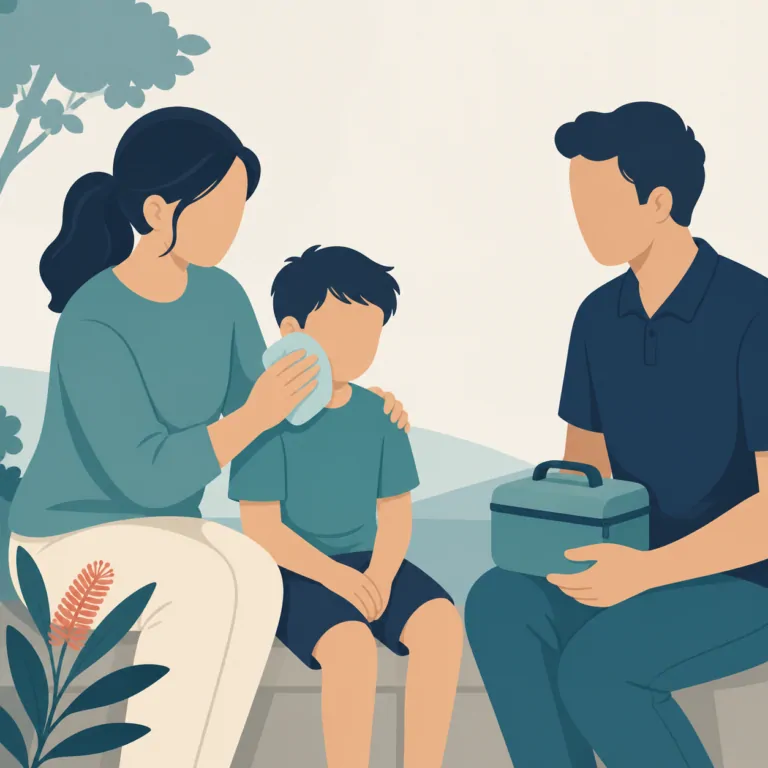
A needlestick injury happens when a needle, syringe or other sharp object accidentally breaks the skin. The term can also include a sharps injury from a lancet, scalpel, broken glass or other item that may be contaminated with blood or body fluid. First aid is simple but time-sensitive: wash the site, do not squeeze or suck it, cover it, report it immediately and seek prompt medical assessment.
The injury may look like a tiny dot, but the right response should not be based on how little it hurts. A clinician or occupational health service needs to assess the type of sharp, the circumstances, whether a source is known, immunisation status and whether time-sensitive preventive treatment or testing is appropriate. Do not make assumptions about risk from the person, the setting or the appearance of the needle.
Immediate first aid steps
If a sharp has punctured the skin, encourage gentle bleeding if it happens naturally, but do not squeeze, scrub, suck or cut the wound. Wash the area promptly with soap and running water. Do not use harsh chemicals, bleach or strong disinfectant in the wound. Pat dry and cover it with a clean dressing or adhesive plaster.
If blood or body fluid has splashed into an eye, nose or mouth, flush the area with plenty of clean water. Do not rub the eyes. Chemical splashes and blood exposures have different risks, but both need prompt washing and professional advice.
Remove contaminated gloves carefully and wash hands. If you are helping another person, use appropriate gloves or other personal protective equipment, but do not delay basic washing because you are searching for supplies. Dispose of contaminated items according to workplace or local procedures; do not carry an uncovered sharp around to deal with later.
Report and seek assessment straight away
At work, report the injury immediately to the supervisor, manager, first-aid officer or occupational health contact. Follow the workplace exposure-control procedure. Reporting is not about blame. It gets the injured person timely assessment and allows the organisation to investigate whether equipment, disposal systems or training need improvement.
Outside work, seek urgent medical advice from a GP, urgent care service, hospital emergency department or appropriate local service as soon as possible. In Australia, Healthdirect on 1800 022 222 can help direct care for non-life-threatening concerns. Call Triple Zero (000) for an ambulance if there is a serious injury, severe bleeding, collapse, breathing difficulty or another emergency.
Tell the clinician when the injury occurred, what the sharp was, whether it had been used, where it was found, whether blood or fluid was visible, what first aid was given and any relevant vaccination history. Bring any available workplace incident information, but do not bring an unsafe sharp object with you.
Why timing matters
Some blood-borne infections can be transmitted through sharps injuries, and some preventative treatments work best when started quickly. Only a clinician can assess whether they are needed. This is why “I washed it, so it’s fine” is not a safe conclusion, and why waiting until the next day can be unhelpful.
At the same time, avoid panic. Modern clinical assessment considers the actual exposure and may find the risk low. The useful action is to seek qualified advice quickly, follow the recommended testing or treatment plan and attend follow-up appointments. Do not self-test, borrow medicines or rely on internet anecdotes to decide whether care is necessary.
Keeping vaccinations current, particularly hepatitis B for people at occupational risk, is an important preventive measure. A clinician can check whether further vaccination, blood tests or follow-up are appropriate for this particular event.
Handling the sharp safely
Do not recap, bend, break, cut or manipulate a used needle. Do not try to remove a needle from a syringe by hand. If the sharp is still in a person’s body, do not pull it out unless trained and it is safe to do so; seek medical help.
If you find a discarded needle in public, keep children and others away. Do not pick it up with bare hands. Contact the local council, property manager or a sharps-disposal service for advice. In an urgent situation, use appropriate tools and a puncture-resistant sharps container only if you have been trained and local procedures allow it. Never place needles in a household rubbish bin, recycling bin or loose bottle.
If a child has been injured by a found needle, wash the puncture site and obtain immediate medical assessment. Stay calm; do not interrogate the child or try to identify the original user. The clinician will assess the injury and arrange appropriate follow-up.
Exposure to eyes, mouth and broken skin
Needlestick injuries are not the only occupational exposure. Blood or body fluid on broken skin, in an eye or in the mouth also needs immediate rinsing and prompt reporting. For skin, wash with soap and water. For eyes, irrigate with clean water or saline. For the mouth, spit out the fluid and rinse with water; do not swallow.
Do not use contact lenses after an eye exposure until you have received advice. Remove contaminated clothing and wash exposed skin. Keep a note of the time and circumstances, because this can be important during assessment.
At a healthcare, cleaning or community workplace
Follow standard precautions every time, not only when a person is known to have an infection. Use suitable gloves where there is likely contact with blood or body fluids, perform hand hygiene and place sharps straight into an approved container at the point of use. Containers should be upright, within reach, correctly assembled and not overfilled.
Employers should provide training, suitable safety-engineered devices where relevant, clear exposure procedures and non-punitive reporting. A delay caused by uncertainty about whom to call is a systems problem worth fixing. Review incidents for factors such as rushed work, poor lighting, overfilled bins, missing PPE, unsafe recapping or inadequate staffing.
For cleaners and first aiders, do not reach blindly into waste bags, laundry, pockets or under furniture. Use tongs or other approved equipment, wear appropriate PPE and ask for assistance when a sharp is found. Safe work design is more reliable than asking someone to “be more careful.”
Tetanus and other routine wound care
A sharps injury can also be a puncture wound. If the object was dirty, the wound is deep or vaccination status is uncertain, ask the clinician about tetanus protection. Keep the small wound clean and covered. Seek medical care for increasing redness, warmth, swelling, pus, fever, red streaks or worsening pain.
Do not take leftover antibiotics or use topical products as a substitute for assessment. Infection prevention after a needlestick is not something a first-aid kit can fully manage; appropriate care depends on the exposure and the person’s health history.
Common mistakes to avoid
Do not squeeze the wound to make it bleed more. Do not suck the wound. Do not use bleach or caustic substances. Do not hide the incident, wait for symptoms or assume gloves eliminated all risk. Do not test or seek private information about a possible source person without following lawful workplace and clinical procedures.
It is also unhelpful to blame the injured person. A clear, supportive response encourages timely reporting and helps identify preventable hazards. The goal is care, documentation and safer systems.
Related glossary terms
Sources reviewed
- Healthdirect: needlestick injuries
- Safe Work Australia: managing risks of hazardous chemicals
- Australian Government: Australian Immunisation Handbook
- Healthdirect: first aid basics
Reviewed against Australian first aid and emergency guidance by the First Aid Glossary Editorial Team. This article is general information and does not replace emergency services, professional medical advice or hands-on first aid training.